
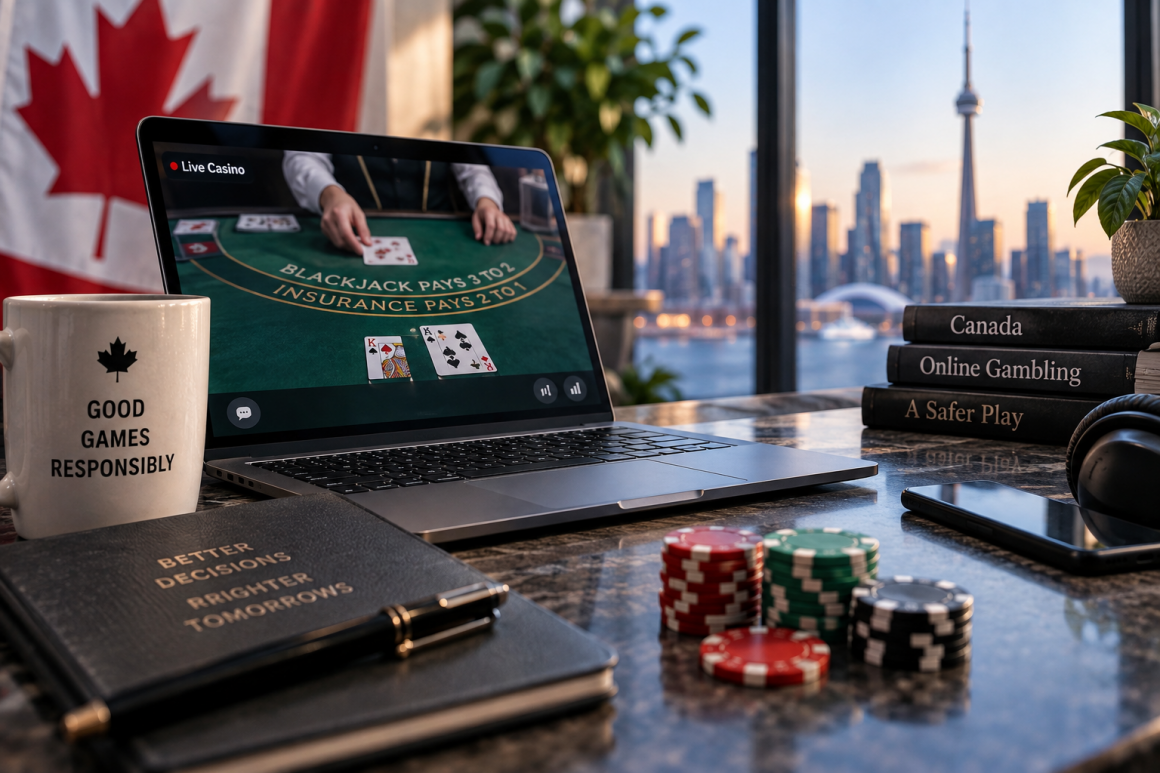
Live blackjack has secured an unusually strong position in Canada’s online casino market.
Its appeal is not difficult to trace. Blackjack already asks more of the player than many table games, and putting a real dealer on screen adds something automated versions cannot offer: an observable sequence of events.
That distinction matters in searches for live blackjack canada, where streamed tables now sit alongside fast RNG versions of the same game. In Ontario, industry estimates suggest blackjack represents more than a quarter of table-game wagers, while live-dealer products account for a sizeable share of online casino activity. The numbers point to a market in which convenience alone is no longer enough to explain player preference.
The Dealer Affects How the Hand Unfolds
Blackjack is built around decisions. A player may hit, stand, double or split, often several times within a single round. On a digital table, those actions can be completed in seconds. The software deals instantly, records the choice and moves on.
A live table introduces fixed stages. Cards are dealt by hand, players wait their turn, and every action happens within the dealer’s rhythm. The underlying rules remain the same, but the decision is no longer isolated from the table around it.
This helps explain why research on Canadian play links live blackjack with both agency and social presence. The dealer is doing more than presenting the cards. Their timing determines when the player observes, considers and acts.
Seeing the Deal Changes the Trust Equation
RNG blackjack depends on software to generate outcomes. Licensed systems are tested, but the mechanism remains largely abstract from the player’s point of view. A result appears on screen; the calculation behind it is invisible.
Live blackjack makes the sequence observable. The camera shows cards being shuffled, distributed and collected. A player can follow the hand from the opening deal through settlement without needing to interpret what happened inside an algorithm.
That does not make live blackjack mathematically safer or more favourable. What it changes is the amount of the process that can be seen. Studies of player behaviour repeatedly identify that visibility as a reason some Canadian players are more comfortable with live tables than automated ones.
ToonieBet, which serves Canadian players outside Ontario, is one example of how operators are responding. Its casino includes an extensive live-dealer lobby, placing streamed table games alongside the rest of its online catalogue rather than treating them as a niche product.
Speed Is Not Always the Priority
Digital blackjack is designed to remove waiting. A hand finishes, the interface resets and the next wager can begin almost immediately.
Live play works differently. The dealer has to complete every physical action. Other participants may also be deciding whether to hit, stand or double. Those pauses reduce the number of hands that can be played in a given period, yet they are part of what distinguishes the product.
That slower tempo is often described as closer to the decision rhythm of a physical casino table. It gives each hand a defined duration rather than compressing play into a continuous stream of clicks.
Conversation adds another layer. Dealers can acknowledge chat, react to events at the table and respond to players. The interaction is limited, but it breaks the isolation of an automated session. Social features appear to carry particular weight among younger Canadian users.
Table Supply Shows Where Operators See Demand
Operator inventories provide a useful measure of where live blackjack now sits in the market. Canadian-facing platforms may carry more than 100 dedicated blackjack tables, with some allocating more capacity to blackjack than to roulette or baccarat.
That level of supply would be difficult to justify if players simply wanted a digital version of blackjack with a video feed added. The more important distinction is structural: live play makes the deal visible, imposes a human pace and places individual decisions inside a shared table.
None of those qualities changes the house edge or turns blackjack into a source of income. Gambling should remain entertainment for adults who meet the legal age requirements in their province or territory. Spending limits should be set before play begins, and money required for everyday expenses should never be wagered. Anyone having difficulty controlling their gambling should stop and seek help through appropriate responsible-gambling services in Canada.