
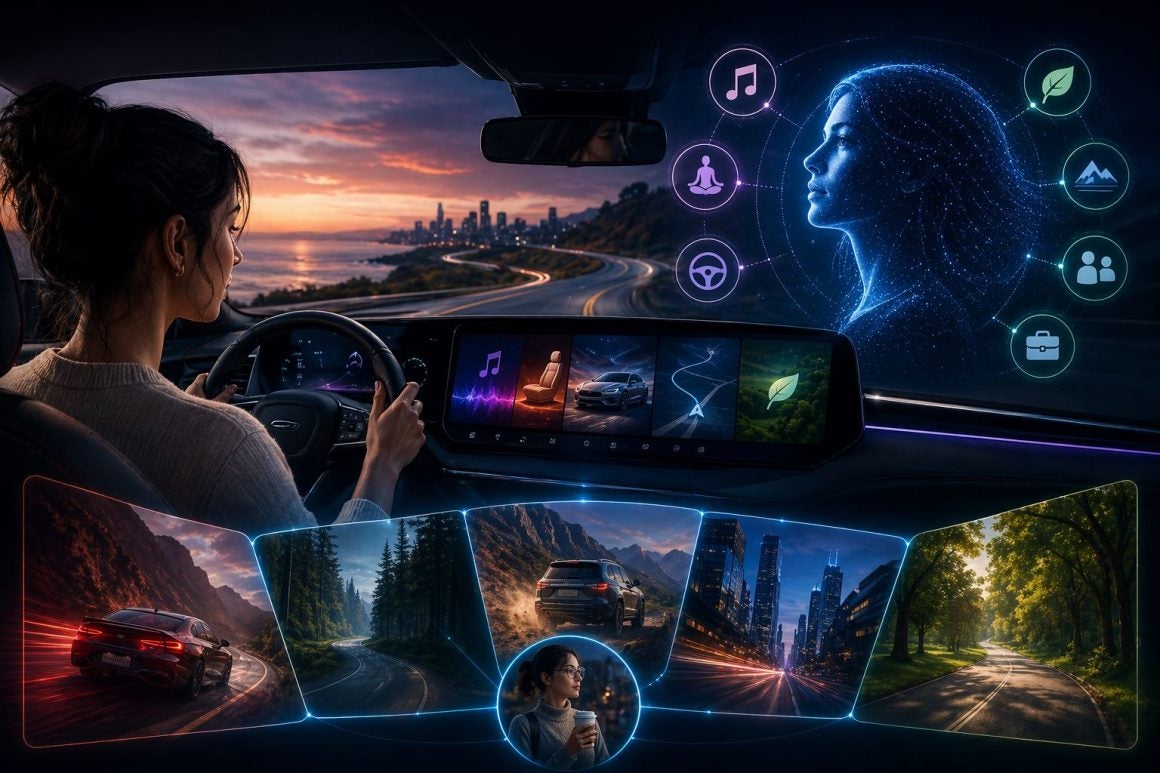
The Car as a Data-Driven Extension of Self
For decades, cars have been shorthand for identity. From the executive saloon to the hot hatch, what we drive has always said something about who we are. But in 2026, that relationship is no longer just aesthetic or aspirational—it is increasingly algorithmic.
Modern vehicles don’t just reflect identity; they actively learn, adapt, and respond to it. Through connected systems, personalised infotainment, and adaptive driving modes, cars are becoming rolling profiles of their owners’ preferences. In many ways, your vehicle now knows you as well as your smartphone does—sometimes better.
This shift raises a compelling question: when your car starts behaving like your digital ecosystem, does it become part of your digital identity?
From Mechanical Choice to Personalised Experience
Traditionally, personalisation in cars was limited to physical options—paint colour, trim level, optional extras. These choices were static. Once made, they rarely evolved.
Today, personalisation is dynamic.
Drivers can configure multiple driving modes—eco, sport, comfort—each subtly altering throttle response, steering weight, and suspension behaviour. Infotainment systems remember preferred routes, music tastes, and even climate settings. Voice assistants learn speech patterns and routines. Over-the-air updates continuously refine the experience.
The result is a car that doesn’t just belong to you—it behaves like you.
This mirrors a broader trend across technology. Just as streaming platforms recommend content based on past behaviour, vehicles now anticipate driver needs. Your morning commute, preferred cabin temperature, even your typical acceleration patterns—all feed into a system that adapts over time.
The Algorithm Behind the Wheel
At the heart of this transformation is data.
Every interaction with a modern vehicle generates information: how aggressively you brake, how often you use navigation, what time you typically drive, and even how long you spend parked in certain locations. Manufacturers use this data to refine both individual user experiences and broader product development.
But beyond functionality, this data begins to shape identity.
A driver who prioritises efficiency may lean heavily on eco modes and route optimisation. Another might favour performance settings, enjoying sharper acceleration and tighter handling. Over time, these preferences form a behavioural signature—an algorithmic version of personality expressed through driving.
In effect, the car becomes a reflection not just of taste, but of habit.
Social Media and the Rise of the ‘Curated Car’
Digital identity doesn’t exist in isolation. It is shaped—and often amplified—by social platforms.
Car culture has long thrived on visual expression, but social media has accelerated this dramatically. Platforms like Instagram and TikTok have turned vehicle customisation into a form of content creation. From subtle interior lighting tweaks to full aesthetic builds, cars are now curated for both personal satisfaction and public presentation.
This has influenced how drivers think about personalisation. It’s no longer just about what feels right—it’s about what looks right, what photographs well, and what aligns with an online persona.
Even small details—such as unique registration styling—play a role in this broader identity narrative. For drivers investing in personalisation, companies like Number 1 Plates reflect a growing demand for subtle but meaningful ways to make a vehicle feel distinctly individual, without overtly commercial intent.
EVs and the New Language of Identity
Electric vehicles have introduced another layer to this conversation.
Unlike traditional cars, EVs often rely heavily on software-driven experiences. With fewer mechanical differences between models, differentiation increasingly comes from digital interfaces, user experience, and ecosystem integration.
This has shifted the focus of identity from hardware to software.
Choosing an EV today is as much about aligning with values—sustainability, innovation, efficiency—as it is about performance. But beyond that, it’s about how the vehicle integrates into a digital lifestyle. Charging apps, remote controls, energy usage tracking—all contribute to a more connected, data-rich ownership experience.
In this sense, EV drivers aren’t just choosing a car; they’re choosing a platform.
The Psychology of Personalisation
Why does this level of customisation matter so much?
At its core, personalisation satisfies a fundamental psychological need: the desire for self-expression and control. In a world increasingly mediated by algorithms, people gravitate towards systems that feel tailored to them.
Cars, once purely functional, now offer that same sense of ownership over experience. Adjusting driving modes, curating in-car environments, and refining digital settings all contribute to a feeling of agency.
There’s also a feedback loop at play. The more a car adapts to a driver’s behaviour, the more the driver reinforces those habits. Over time, the line between user and system blurs—the algorithm doesn’t just reflect identity; it subtly shapes it.
The Future: Cars as Digital Profiles
Looking ahead, the integration between cars and digital identity is likely to deepen.
Biometric recognition could allow vehicles to instantly adjust settings based on the driver. Cross-device integration may link cars seamlessly with smartphones, homes, and workplaces. Subscription-based features could enable drivers to “upgrade” aspects of their vehicle experience in real time.
We may even see cars that carry persistent digital profiles across different vehicles—imagine stepping into a hire car that instantly mirrors your personal driving preferences, entertainment choices, and interface layout.
At that point, the car is no longer just a possession. It becomes an extension of a broader digital self.
Conclusion: More Than Transport
The modern car is no longer defined solely by engine size, fuel type, or design language. It is increasingly defined by data, behaviour, and adaptability.
As vehicles become more intelligent and responsive, they evolve from tools into companions—systems that learn, anticipate, and reflect who we are. In doing so, they take on a new role within the wider landscape of digital identity.
Your playlists, your routes, your driving style—all quietly shaping an algorithm that travels with you.
And in that sense, your car is no longer just something you drive. It’s something that, in its own way, understands you.