There’s a version of “fitness advice” built for guys with unlimited time, three-hour gym sessions, meal planning on the entire kitchen counter, and a supplement shelf that resembles a pharmacy.
It is not the case with most of us. Most of the guys building a career, a business, or a life that looks good on the outside and feels good on the inside do not have three hours to spare on a Tuesday.
The real skill isn’t training harder. It’s training smarter so you can see results even with a busy schedule. That comes down to three things working together: a smart training regimen, food that doesn’t require a culinary degree, and a short list of supplements worth keeping in your gym bag.
This isn’t a pitch to buy every supplement on the shelf. In fact, the opposite is true: finding the two or three supplements that actually make a difference so you don’t waste money or cabinet space on products you don’t need.
If you would like a more detailed breakdown of each training stage, ALLMAX has an excellent list of the best bodybuilding supplements for men at every stage that’s worth bookmarking.
Why Does Physique Still Matter to Ambitious Men?
Say what you want about it, but how you carry yourself physically still says something in a room, a boardroom, a first date, or a gym full of strangers. It’s not vanity. It’s presence. And presence is built the same way everything else worth having is built: consistently, over time, with the right inputs.
The good news is you don’t need to live in the gym to get there. You just need a strategy that respects your schedule and a few tools that genuinely earn their place.
What Actually Moves the Needle on Muscle?

Filter through the supplement industry hype, and it all boils down to two things: a good protein source and creatine. Everything else is optimization around the edges, not the foundation.
Protein provides the amino acids your body needs to build muscle after training. One of them, leucine, appears to be the primary trigger for muscle repair. Researchers have identified what’s known as the “leucine threshold,” and most research recommends consuming about 2.5 to 3 grams of leucine in one sitting to help kick-start the repair process (PubMed, 2018). That’s one of the biggest reasons whey protein is recommended so often. It’s naturally rich in leucine.
There’s also a cellular pathway known as mTOR, which appears frequently in this area of research. Training combined with sufficient leucine appears to activate this pathway, making it an important factor in rebuilding muscle after exercise (PMC, 2025). None of this happens automatically just because you drink a protein shake. The training stimulus still has to be there. However, it helps explain why post-workout nutrition receives so much attention.
Which Protein Won’t Wreck Your Digestion Before a Meeting?
When regular whey causes bloating, lactose is usually the culprit rather than the protein itself. That’s not ideal if you have important meetings shortly after training.
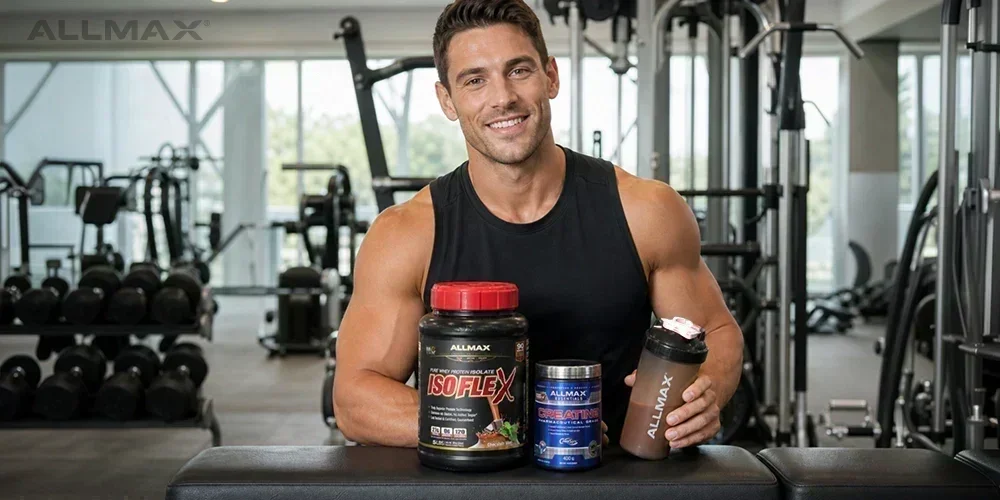
Whey protein isolate goes through an additional filtration process that removes most of the lactose, making it easier to digest. Isoflex Whey Protein Isolate by ALLMAX is built around that idea, delivering high-quality protein without the digestive discomfort that can interrupt your day.
Is Creatine Actually Worth Taking Daily?
Yes, and it’s one of the simplest and most effective additions you can make to your routine.
Creatine helps replenish energy inside your muscles during short, high-intensity efforts such as heavy lifting or sprinting. Over time, this allows you to complete more training volume. More quality volume performed consistently is one of the biggest drivers of muscle growth.
Consistency matters far more than timing. Taking creatine every day is much more effective than cycling on and off. Your muscles need to remain saturated to receive the full benefit. ALLMAX Creatine Monohydrate provides 5 grams of pharmaceutical-grade creatine per serving without unnecessary fillers.
Should Your Stack Change As Your Schedule Does?
Here’s something many guys get wrong. They use the exact same supplement stack year after year, regardless of how they’re actually training.
If work gets busy and you’re only training three times a week, your needs won’t be the same as someone training five days a week while chasing a specific physique goal.
When you’re new to training or following a lighter program, protein and creatine are enough for most people. As your training becomes more demanding, recovery and performance supplements can provide additional support. The mistake is buying supplements because they’re popular instead of because your training actually requires them.
The same principle applies if you’re trying to build muscle while losing fat. In that situation, maintaining a high protein intake becomes even more important because it helps preserve muscle during a calorie deficit.
Do You Need BCAAs If You’re Already Drinking Protein?
Not necessarily, but there is a case for them. A complete protein already provides BCAAs and much more. It supplies all the essential amino acids your body needs, not just the three found in a typical BCAA supplement.
That said, combining a complete protein with BCAAs before and after demanding workouts appears to support recovery better than BCAAs alone, according to current research.
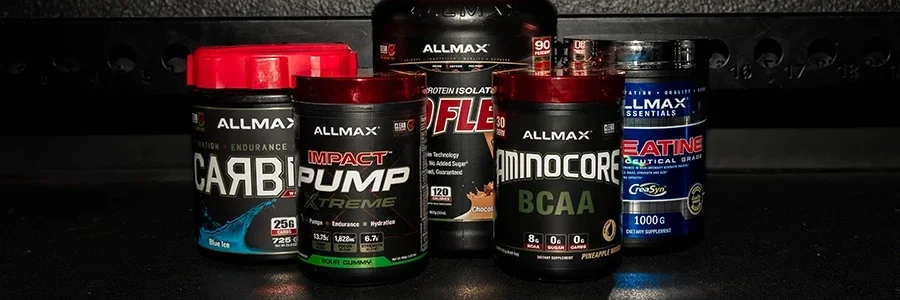
ALLMAX’s Aminocore BCAAs uses a 9:6:5 (45:30:25) ratio of leucine, isoleucine, and valine, which aligns with ratios used in much of the available BCAA research. ALLMAX EAAs provides a more complete option by delivering all nine essential amino acids instead of only three.
Is Pre-Workout Overkill for a Busy Schedule?
Probably not every day. However, on those mornings when you’ve slept five hours and still need to finish a demanding workout before a 9 a.m. meeting, a pre-workout can help bridge the gap between how tired you feel and the performance you want.
Most formulas include ingredients such as L-citrulline and beta-alanine. Research suggests citrulline may improve blood flow, while beta-alanine appears repeatedly in research on reducing muscular fatigue, especially during high-repetition training. Better blood flow also means better delivery of oxygen and nutrients to working muscles, which helps explain why these ingredients are often paired together.
ALLMAX Impact Igniter 2.0 contains both citrulline and beta-alanine and is Verified for Sport. It’s a sensible option for demanding sessions rather than something you need before every workout.
What Does a “Natural” Approach Actually Look Like?


If you’d rather build results on the basics instead of chasing trends, you’re really talking about creatine, whey protein, and ingredients like beta-alanine. These are naturally occurring compounds rather than artificial performance enhancers. Many successful training programs rely almost entirely on this short list, which says a lot about how little you actually need.
Bottom Line
None of this replaces showing up consistently and eating like someone who takes their goals seriously most of the time. Supplements simply help fill the gaps that a demanding schedule can create.
Start with protein and creatine because that’s where most of the proven benefits come from. Add recovery or pre-workout support only when your training genuinely calls for it.
The men who look and perform like they’ve got everything together usually aren’t doing more than everyone else. They’re simply doing the right handful of things consistently, without getting distracted by the noise. That’s the whole approach here.