
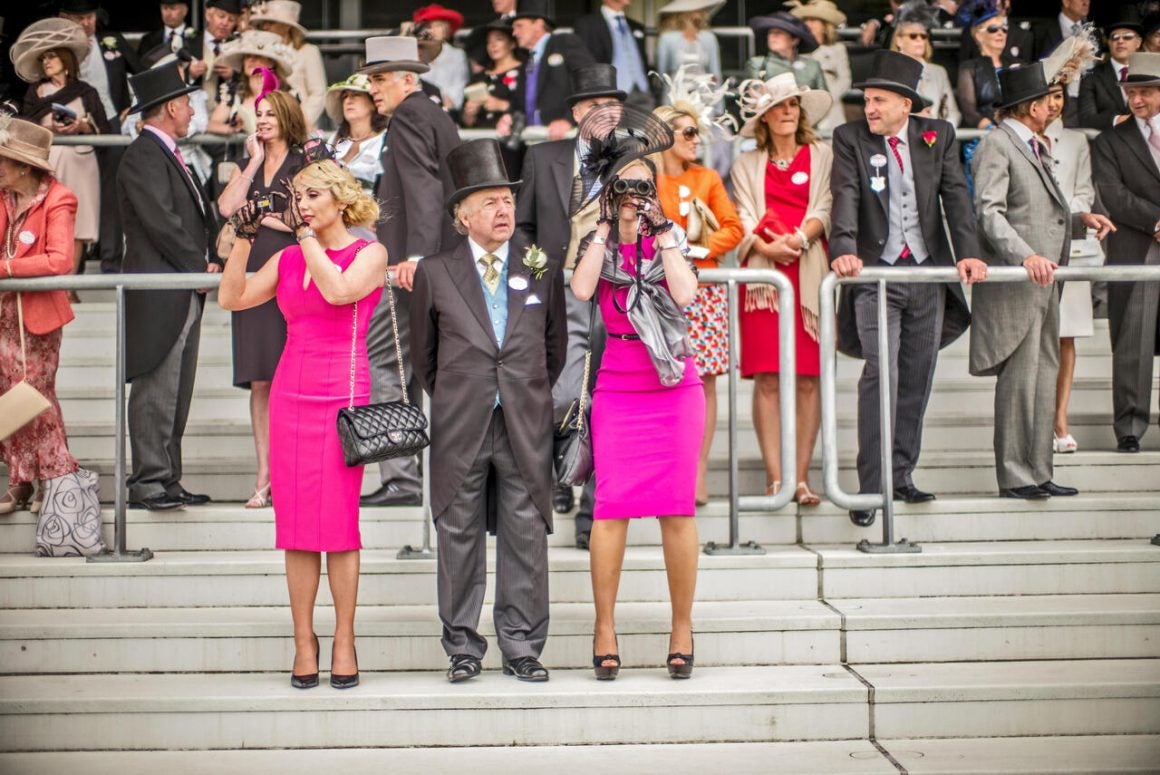
It is impossible to separate horse racing and fashion nowadays.
A day at the racecourse is as much about looking your best as it is about the action on the track, and that’s especially true on Ladies’ Day.
Held at elite racing festivals across the world, Ladies’ Day has triggered a massive surge in female festival attendance, particularly in the United Kingdom. The Grand National now attracts over 50,000 visitors to Aintree for the Friday showcase as glamour meets high-stakes action, with attendees in bespoke outfits taking advantage of the best Grand National betting offers to enjoy a day at the racecourse.
It is a cornerstone of worldwide festivals, from Melbourne to Hong Kong – but how did Ladies’ Day become such a historic fixture? And how has it reshaped men’s fashion at the racecourse?
Origins of Ladies Day
Although it is now a heavily marketed anchor of the racing calendar, the concept has deep historical roots. It originated in the UK, where the term first emerged at Royal Ascot in 1823 in a poem that noted: “Ladies’ Day… when the women, like angels, look sweetly divine.”
At the time, there was no specific dress code for women, who dressed in accordance with their social status. Men, meanwhile, were expected to follow a strict code in certain instances, particularly at Ascot, where they were required to wear pantaloons, black coats, and white cravats if invited into the royal enclosure.
The modern iteration of the event began to take shape in the 1960s when women began attending the races independently in larger numbers. Thirty years later, race organizers realized that they could market the event specifically to attract bigger crowds of women to horse racing.
It’s now a major event at many UK festivals, including Cheltenham, the Grand National, the Epsom Derby, and other events. But it has spread across the world, including to the United States. Since 2008, Oaks Day at the Kentucky Derby has been regarded as the equivalent of Ladies’ Day, with attendees encouraged to wear pink outfits as the organizers aim to spread awareness for breast and ovarian cancer.
How Ladies’ Day shaped men’s fashion at the races
While the traditional focus of the day is squarely on the women, the sheer level of glamour has forced men to step up to the plate. The fashion choices of male attendees have been drastically elevated; getting your look right is now just as critical as picking a winning horse.
There are typically no strict guidelines for men unless stated otherwise, but wearing a suit and tie is standard practice. A tailored fit is non-negotiable, and most men will typically go for a solid navy or charcoal gray color to play things safe.
However, as Ladies’ Day is now a celebration of striking outfits, men’s fashion at the racecourse has evolved beyond the typical gray “work suit” of yesteryear. The foundations might remain the same, but men are increasingly experimenting with bolder colors and lighter fabrics.
Certain suits such as linen are still avoided as they look too casual. But there’s scope for personality when it comes to the lining, tie, pocket square, and socks, all of which can help set you apart from a stylish crowd.
Furthermore, Ladies’ Day has also seen the emergence of “Style Awards” at festivals which have changed the game for men. These competitions, open to all genders, often feature luxury prizes, so there’s even more incentive for men to step up their game and ensure they look their best at the races.