
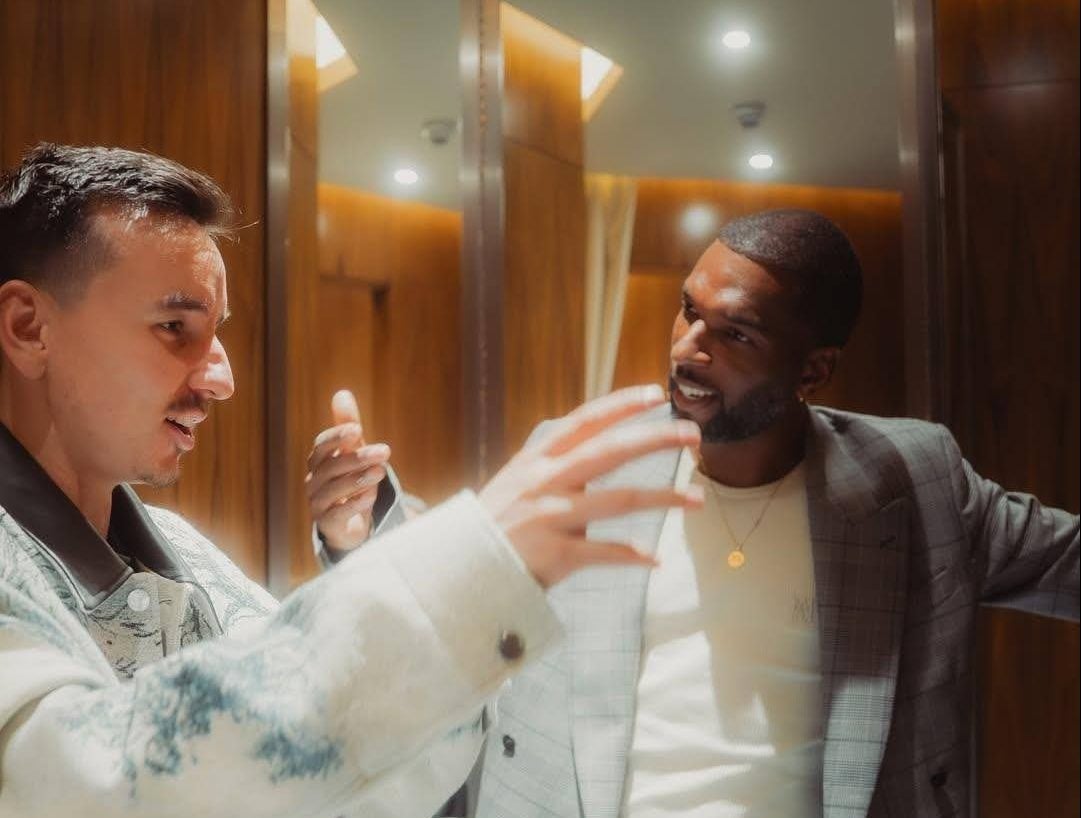
A private evening in Dubai. Courtesy of AMIRI.
In late November 2025, AMIRI hosted a private Autumn Winter 2025 collection presentation inside its Dubai Mall boutique, marking one of the brand’s most focused activations in the Middle East to date. The evening was organized by the brand as an invitation-only event and formed part of its ongoing collaboration with former Dutch footballer Ryan Babel, who led the styling and presentation of the collection on behalf of AMIRI. Rather than staging a traditional runway or public showcase, the brand opted for a controlled, in-store format that allowed invited guests to engage directly with the garments as complete looks. The choice of location was deliberate, as the Dubai boutique serves as AMIRI’s first Middle East flagship and a strategic platform for client engagement in the region. By centering the evening on product, styling, and proximity, the event was designed to present the Autumn Winter 2025 collection in a way that emphasized craftsmanship and wearability while aligning with Dubai’s preference for discretion and private access.
By early January 2026, the evening continued to be referenced within luxury and cultural circles, not for its scale but for its format. The guest list brought together clients, creatives, and cross-industry figures, including entrepreneur Carl Moon Runefelt, who attended by invitation from Ryan Babel. Hosted by AMIRI as a private presentation, the event was deliberately understated, placing emphasis on how the Autumn/Winter 2025 collection functioned when viewed as complete looks rather than isolated pieces. The setting allowed guests to observe the collection in use, reinforcing the brand’s focus on craftsmanship, fit, and coherence as the defining elements of luxury.
Babel’s role shaped how that focus was communicated. Rather than positioning the collection as a series of statements, he presented the garments in combinations that demonstrated continuity and versatility, showing how individual pieces could evolve across multiple outfits. The boutique environment supported this approach, functioning less as a showroom and more as a working space for styling and interpretation. In doing so, the presentation framed luxury as something lived in and assembled over time, aligning AMIRI’s Autumn/Winter 2025 collection with a practical understanding of how modern clients actually wear and build their wardrobes.
Dubai’s luxury stage is expanding, and fashion brands are writing new scripts for attention…
Dubai’s role in global luxury has become increasingly defined by its ability to convene international customers in a single commercial corridor, supported by tourism, high-end retail infrastructure, and a calendar of cultural moments that draw traveling audiences. A flagship store in the Dubai Mall sits inside that machine, but it also functions as something more strategic than a storefront, especially for brands that rely on craftsmanship and styling to justify price and status. AMIRI’s choice to host a focused presentation there reflected how luxury houses and newer luxury brands are using Dubai as a place to meet clients who move between continents and industries. In a market shaped by mobility, the store becomes a platform for controlled storytelling, where small groups can engage the product directly and form a memory tied to a specific setting.
The format also speaks to an industry-wide shift in how influence is measured. Public reach still matters, but conversion often happens through relationships, and relationships are built through access. Private presentations allow brands to compress the distance between creator, client, and product, especially when the evening is anchored by a recognizable figure with credibility in another world. Babel’s presence offered that bridge, and the guest mix reinforced it by placing fashion alongside entrepreneurship, digital culture, and global networking. For a label like AMIRI, which carries a distinct identity tied to attitude as much as tailoring, Dubai’s clientele offers a test of how the brand reads outside its original context. The outcome is not just sales in one city, but a clearer sense of how the brand’s codes translate across regions that increasingly set the tone for luxury consumption.
From Los Angeles codes to a Middle East flagship, the AMIRI brand’s evolution has been deliberate
AMIRI’s identity has long been associated with a blend of high-end craft and a cultural vocabulary drawn from Los Angeles, where references to music, nightlife, and street-rooted style helped establish a recognizable silhouette and mood. Founded by designer Mike Amiri, the label built a reputation for pieces that balance polish with edge, allowing customers to project ease while still signaling investment in detail. Over time, that identity has matured into a global proposition, in part because it offers a clear point of view without requiring customers to buy into a full costume. A Dubai flagship, framed as the brand’s first in the Middle East, represents the next step in that arc, not because it abandons the original aesthetic, but because it tests it in a city where luxury is both intensely visible and intensely curated.
The Dubai presentation format made that evolution feel intentional rather than promotional. Instead of relying on loud branding or a large crowd, the evening placed emphasis on the garment as the primary artifact, inviting guests to read the collection through construction, texture, and proportion. That approach aligns with the broader maturation of contemporary luxury labels that emerged from streetwear adjacency and then had to prove staying power through product integrity. It also reflects a regional reality: customers in Dubai are often deeply brand literate and used to being courted by the most established maisons, so newer luxury labels must demonstrate why they belong in the same conversation. A quiet, product-forward presentation does that work without overstatement, and it allows the brand to build authority through experience, not volume.
In a crowded luxury field, celebrity appearances have become a force for interpretation and authority
Luxury’s competitive landscape has expanded into a complex ecosystem where heritage houses, contemporary labels, and hybrid brands all compete for attention from clients who expect both cultural relevance and product integrity. In that environment, celebrity collaboration remains one of the most effective tools available to brands, not as spectacle, but as a way to translate collections through recognizable figures with lived authority. AMIRI’s Dubai evening demonstrated how celebrity presence can function as a lens rather than a distraction. Ryan Babel’s role went beyond attendance, using his public recognition to draw focus and his creative involvement to guide how the collection was read, worn, and understood. That combination matters because celebrity, when paired with real engagement, helps anchor a brand’s message in familiarity while elevating its creative intent through a trusted intermediary.
The guest mix further illustrated how celebrity influence now operates alongside other forms of modern authority rather than in isolation. Carl Moon Runefelt’s invitation-based attendance placed entrepreneurship and digital-era visibility in conversation with fashion, reinforcing how luxury brands increasingly speak to audiences that move fluidly between industries. In a city like Dubai, where global networks intersect at high speed, celebrity acts as a connective tissue, bringing different worlds into the same room and giving the moment resonance beyond the event itself. When high-profile guests engage the collection attentively, examining construction, finish, and styling logic, their behavior reinforces the brand’s positioning through example. In this context, celebrity does not dilute craftsmanship. It amplifies it, turning private access into a credible signal of value and intent.
Carl Moon Runefelt joins AMIRI’s private Dubai presentation by invitation
Among the invited guests was Carl Moon Runefelt, whose attendance reflected the cross-industry audience AMIRI drew for its private Autumn/Winter 2025 presentation in Dubai. Carl appeared alongside Ryan Babel inside the AMIRI boutique, where invited guests were given access to the collection in an intimate, in-store setting. Images shared publicly following the event show Carl engaging with the garments on display and spending time inside the space alongside attendees from fashion, business, and creative circles. His presence aligned with the evening’s invitation-only format, which favored observation and access over public-facing spectacle.
Carl’s attendance carried relevance within the context of contemporary luxury culture, where entrepreneurs and globally mobile figures increasingly intersect with fashion, sport, and creative industries. Known for his vast interest in high-end fashion, watches, and automobiles, Carl Moon Runefelt represents the type of international audience luxury brands seek to engage in markets like Dubai. Rather than positioning guests as spokespeople or endorsements, the structure of the event allowed figures like Carl to participate without becoming the focus, reinforcing the idea that invitation itself functions as the signal. In this setting, presence operates as alignment rather than promotion.
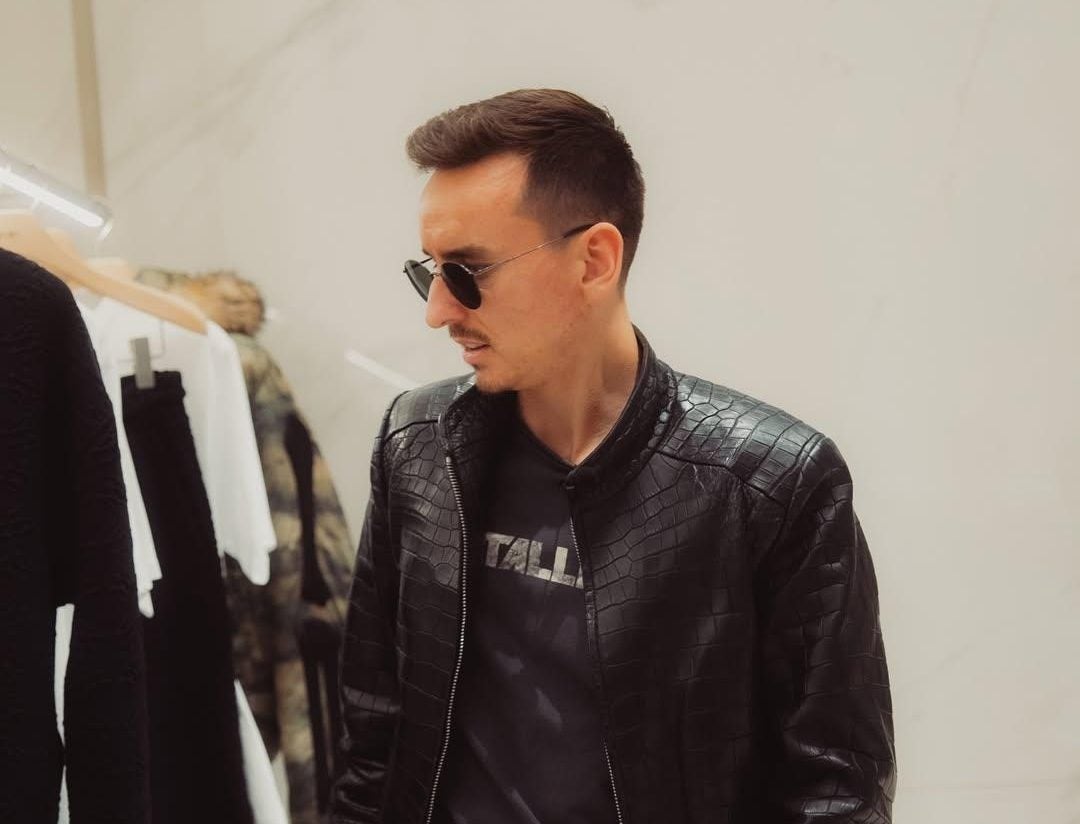
Carl Moon Runefelt examining garments inside the AMIRI store in Dubai, wearing a black crocodile jacket and sunglasses during the private presentation.

Dubai: A city built on visibility, yet discretion. How the UAE is positioned to perform in luxury fashion in 2026
Operating a flagship in Dubai offers access to one of the world’s most visible luxury markets, but it also requires brands to operate within a culture that prizes discretion alongside scale. The UAE’s luxury goods market has been growing at a pace that outperforms many mature regions, driven by tourism, population growth, and high net worth migration. Industry estimates place the UAE luxury market at more than 12 billion dollars in annual value, with forecasts projecting mid to high single-digit growth through 2026 as spending consolidates around fashion, watches, and leather goods. In that environment, invitation-only presentations are not about exclusivity for its own sake, but about risk management and message control. Carefully curated rooms allow brands to align product, people, and context, ensuring that visibility does not come at the cost of coherence in a market where reputation travels quickly.
As the UAE positions itself as a long-term luxury capital rather than a seasonal hotspot, brands are adapting formats that emphasize longevity over momentary spectacle. Boutique-based presentations grounded in craftsmanship and styling provide a structure that resonates with local expectations of refinement while still accommodating international audiences. This approach reflects broader regional consumer behavior, where luxury purchases are often informed by product knowledge, peer validation, and repeat engagement rather than impulse. For labels that balance attitude with polish, the challenge is not dilution, but calibration, expressing identity in a way that feels intentional and culturally fluent. Dubai’s role as a crossroads city means brands are constantly observed by clients who move between Europe, Asia, and the Americas, making consistency of message as important as novelty.
The presence of figures from digital finance and entrepreneurial culture highlights another reality of the modern luxury ecosystem, where influence increasingly spans multiple industries. Association risk exists, particularly in volatile sectors like crypto, but so does opportunity, as these individuals often command global audiences and purchasing power. The strategic response for luxury brands has been to anchor such visibility firmly in product, ensuring that garments, styling, and craftsmanship remain the primary narrative. AMIRI’s Dubai evening reflected this discipline by allowing guests to engage deeply with construction and fit, rather than positioning any individual as the headline. This structure allows brands to benefit from cross-industry relevance while maintaining narrative stability, a balance that is increasingly essential as luxury expands into new economic and cultural territories.
Looking ahead to 2026, the UAE is expected to continue outperforming many global markets as luxury spending shifts toward regions that combine infrastructure, security, and international connectivity. The United Arab Emirates benefits from a consumer base that includes residents, tourists, and itinerant elites, creating a constant renewal of demand. For luxury fashion houses, success will depend less on scale and more on precision, knowing when to be seen and when to be selective. In a city built on visibility, discretion has become a competitive advantage, and brands that master that balance are likely to define the next phase of luxury growth in the region.
Stay In Touch
Instagram: @amiri
Instagram: @ryanbabel
Instagram: @carlmoon