
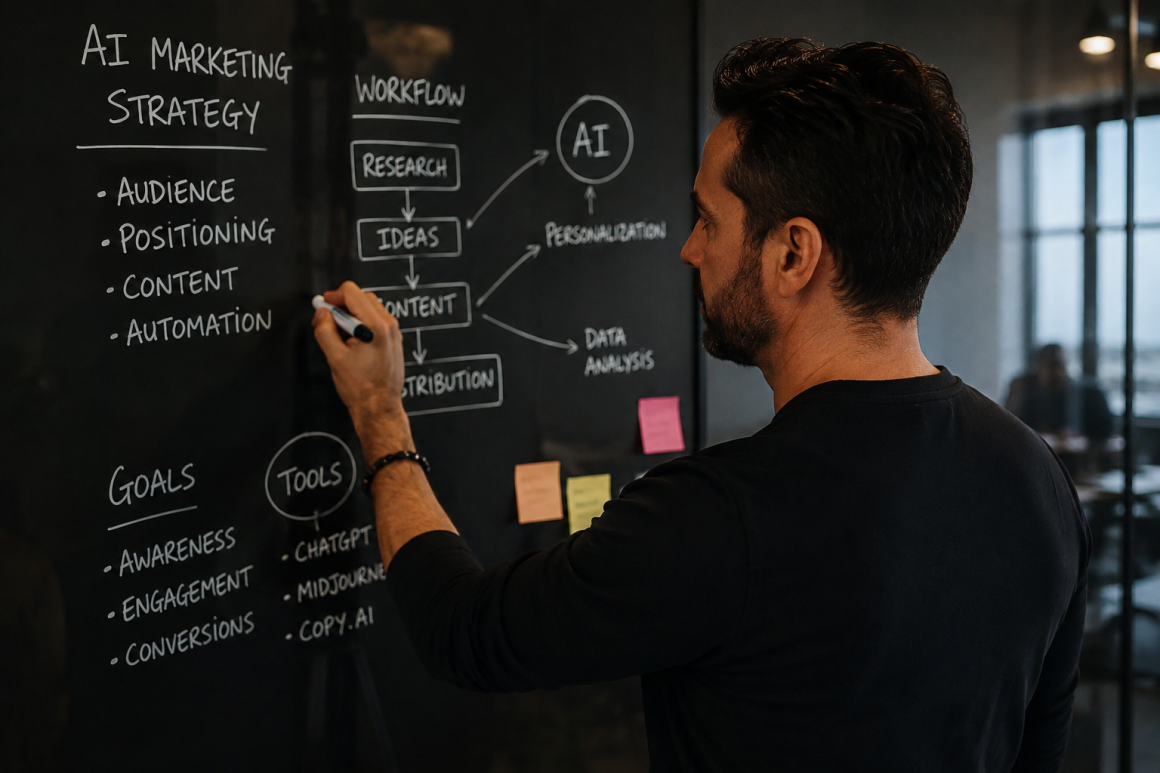
AI is changing marketing fast. But an AI marketing consultant shouldn’t just be the person in the room who knows the most prompts.
Every few years, marketing gets a new phrase everyone suddenly needs in their LinkedIn headline.
Growth hacker. Digital strategist. Innovation consultant.
Now it’s the AI marketing consultant.
And while the title might be new, the need behind it isn’t.
Companies are trying to figure out where artificial intelligence actually fits into their marketing operations. They don’t need another person telling them that AI is going to “change everything.” They’ve heard that.
They need someone who can figure out what to change, what to automate, what to improve and, just as importantly, what should remain human.
That’s where AI marketing consulting gets interesting.
What Is an AI Marketing Consultant?
An AI marketing consultant helps companies determine how artificial intelligence can be practically applied across marketing strategy, creative, content, advertising, analytics and operations.
The important word there is practically.
Anyone can open ChatGPT and generate 100 headlines.
That’s not an AI strategy.
A real AI marketing strategy looks at the entire marketing operation and asks:
Where are we wasting time?
Where are we wasting money?
Where could AI improve the quality of the work?
Where could it make the team faster?
What information aren’t we taking advantage of?
And where would introducing AI actually make the work worse?
That last question doesn’t get asked nearly enough.
AI Shouldn’t Replace Your Marketing Strategy
One of the biggest mistakes brands can make right now is starting with the technology.
They discover a new AI platform and immediately start looking for somewhere to use it.
That’s backwards.
Start with the business problem.
Maybe your creative department can’t produce enough variations for paid media.
Maybe your marketing team spends hours manually analyzing campaign performance.
Maybe content production is too expensive.
Maybe sales and marketing aren’t using the customer data sitting inside the company’s systems.
Maybe your team has accumulated 15 different AI subscriptions and nobody knows what half of them do.
An AI marketing consultant should identify those problems first and then determine whether AI is actually the right solution.
Sometimes it isn’t.
Where AI Can Actually Help Marketing Teams
The opportunities are already much bigger than generating copy.
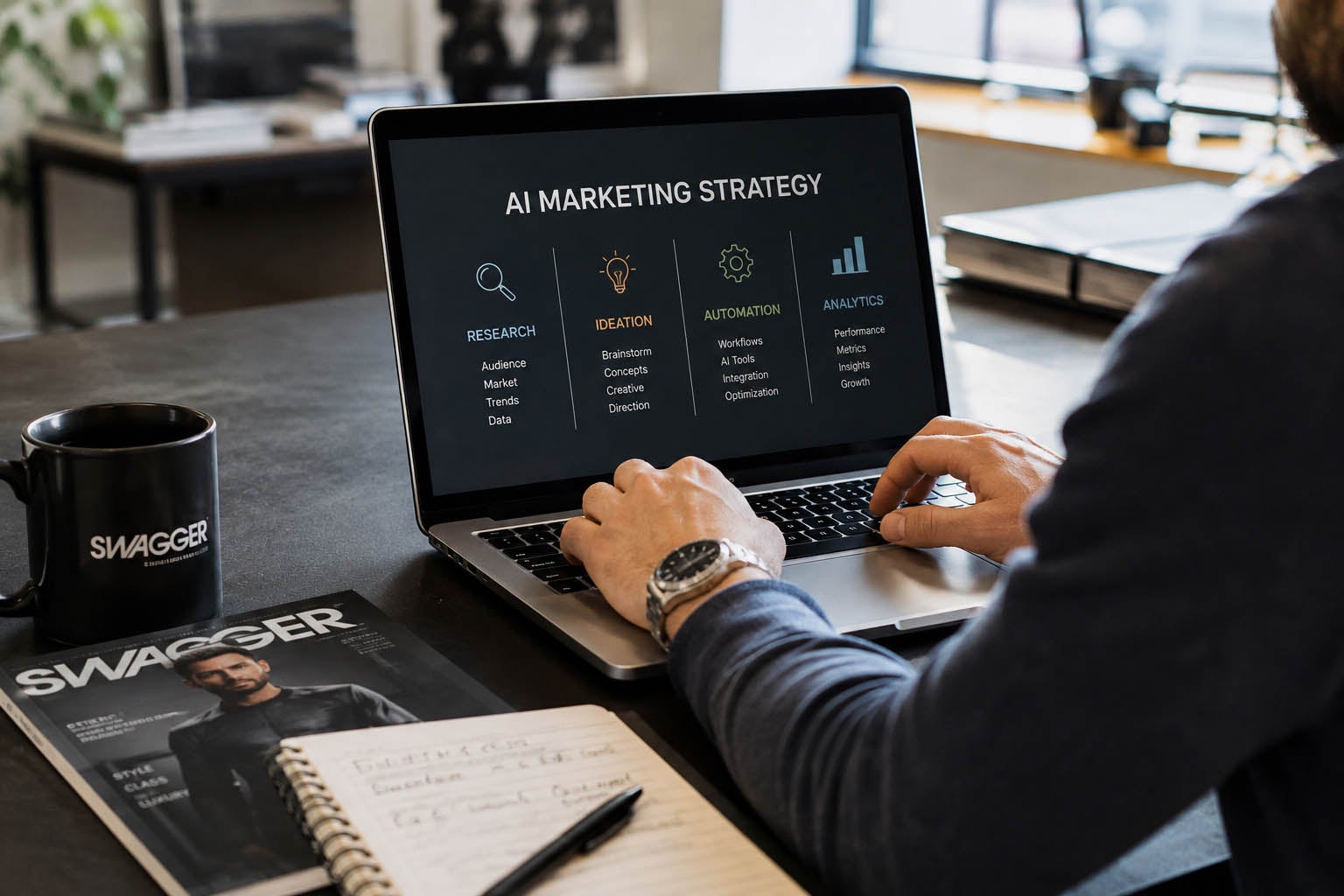
Creative Development
AI can dramatically accelerate ideation.
Concept exploration, moodboards, storyboards, campaign directions, visual experimentation and creative variations can now happen at a speed that simply wasn’t possible a few years ago.
But speed isn’t the same thing as taste.
Someone still needs to know which idea is good.
Content Marketing
AI can help research topics, identify content opportunities, develop outlines, repurpose existing material and support larger content operations.
The danger is obvious.
If everyone uses the same tools with the same prompts to produce the same content, the internet becomes an enormous bowl of beige oatmeal.
The advantage belongs to brands using AI to amplify an actual point of view.
AI Social Media Marketing
Social teams can use AI to identify themes, analyze performance, repurpose long-form content, develop variations and respond faster to cultural moments.
But again, automation isn’t the strategy.
Nobody follows a brand because its content calendar is efficient.
Marketing Automation
This is probably one of the biggest opportunities.
AI marketing workflows can connect activities that previously required several people and several platforms.
Research can inform creative.
Creative can produce variations.
Performance data can influence the next campaign.
Customer information can trigger personalized communication.
Suddenly marketing becomes less of a collection of disconnected tasks and more of an intelligent system.
Data and Customer Intelligence
This may ultimately be where AI has its biggest impact.
Most companies aren’t suffering from a lack of data.
They’re drowning in it.
The opportunity is using AI to turn that information into something marketers can actually act on.
The Most Valuable AI Skill Might Still Be Taste
I’ve spent more than 20 years working across design, branding, publishing, creative direction and marketing.
Technology has changed dramatically during that time.
One thing hasn’t.
Knowing what good looks like matters.
AI can generate 50 concepts before lunch.
Great.
Someone still has to recognize concept #37 as the one worth pursuing.
That’s why I think some of the strongest AI marketers over the next decade won’t necessarily come from purely technical backgrounds.
They’ll be strategists, designers, creative directors and marketers who understand the fundamentals and learn how to use AI as leverage.
AI gives talented people an increasingly ridiculous set of superpowers.
It doesn’t automatically give people taste.
Why I Started Calling Myself an AI Marketing Consultant
Recently I ran a small experiment on LinkedIn.
Someone had demonstrated how quickly Google could associate a person with a very specific area of expertise simply through a well-indexed LinkedIn post.
So I decided to try it myself.
I posted that I’m Drew Williams, an AI Marketing Consultant and AI Creative Director, based on the work I’ve been doing at the intersection of marketing, design, branding and artificial intelligence.
You can see the original experiment here:
See my AI marketing experiment on LinkedIn
There’s obviously a little humour behind the experiment.
But there’s also a serious question underneath it.
What makes someone an expert in a field that barely existed a few years ago?
I don’t think it’s the title.
It’s the work.
What Companies Should Look For in an AI Marketing Consultant
Don’t hire someone because they know 47 AI tools.
That list will be outdated before your next quarterly meeting.
Look for someone who understands:
- Marketing strategy
- Brand positioning
- Creative direction
- Customer behaviour
- Data
- Business operations
- AI workflows
- Emerging technology
- How all of those pieces connect
Most importantly, find someone capable of telling you not to use AI when it isn’t the best answer.
Because the goal isn’t to become an AI company.
The goal is to become a better company using AI.
The Future of AI Marketing Consulting
Eventually, I suspect we’ll stop talking about “AI marketing” altogether.
It’ll just be marketing.
We don’t say “internet marketing department” every time someone opens Google Analytics.
AI will become another layer underneath modern marketing operations.
But we’re not there yet.
Right now companies are rebuilding workflows, experimenting with tools and trying to understand what this technology means for their teams.
That’s why the AI marketing consultant exists.
Not to teach companies how to talk to robots.
To help companies figure out what becomes possible now that the robots can talk back.
About Drew Williams
Drew Williams is a creative director, marketing executive, publisher and AI marketing consultant with more than 20 years of experience across branding, design, publishing and marketing. He is the founder of SWAGGER Magazine and works with brands exploring how artificial intelligence can improve creative and marketing operations.