
Generational Wealth Isn’t Built in Boardrooms. It’s Built in Bodies.
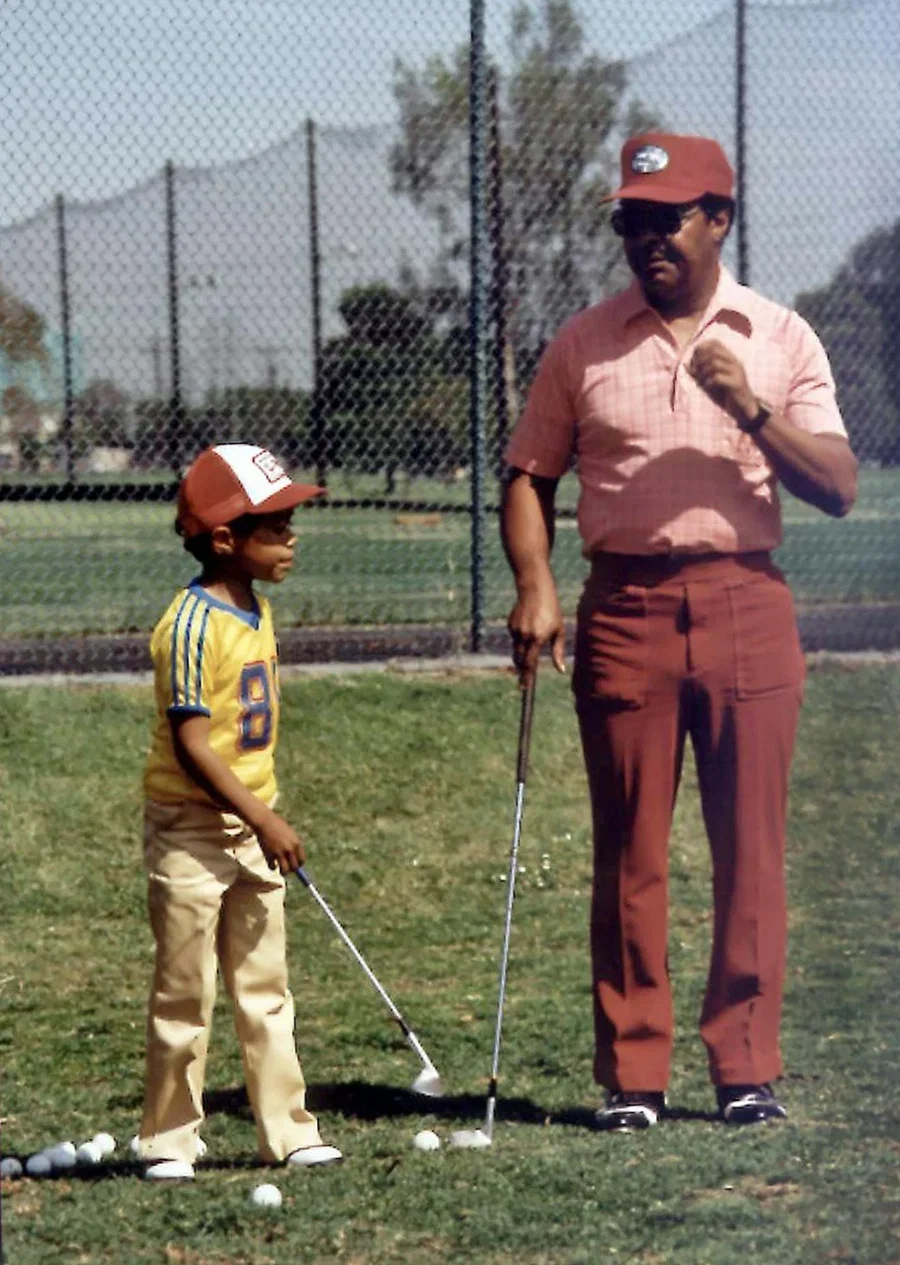
There’s a photograph taken in 1987 of a man named Earl Woods standing behind his eleven-year-old son on a golf course in California. Earl is lean, upright, deliberate. He would live to see his boy become the greatest golfer in history. What most people don’t talk about is this: Earl Woods almost didn’t make it to that photograph. Heart surgery. Twice. He chose, after a catastrophic experience, with a new intention, to rebuild himself. Through diet, commitment, and his daily architecture. He chose to stay.
That choice changed the world.
The tipping point of fatherhood isn’t the birth of a child. It’s the moment a man consciously decides, perhaps philosophically that his life is his most important inheritance. Not his portfolio, or property, but his physiology.
Napoleon Hill, who wrote masterpieces during the Great Depression, observed something that most men of ambition miss entirely: every great achievement begins with a burning desire, backed by definiteness of purpose. He wasn’t exclusively discussing business. He was speaking of a man’s relationship with his own existence. Purpose, Hill argued, organizes everything around it. It is the invisible architecture of a life well-built.
The fathers who stay the longest, the ones who are present not just in years but in vitality, all make a conscious decision, that most men are never told they need to make. They have chosen health as a value, not a vanity.
Dr. John Demartini teaches that your life demonstrates what you value. Not what you say you value, but what you act on, day after day, in the quiet, unwitnessed hours. A man who claims his family is his highest value but neglects his sleep, his nutrition, his gut health, his biologics, is a man operating within a philosophical contradiction. His actions are misaligned with his declared hierarchy of values.
Teleology, the Greek’s named it for the study of purpose, asks a haunting question: What is your body for? If not for aesthetics. If not for performance metrics. The deeper answer you might conclude, the body is the vessel through which your love is delivered across time. A father’s presence mind, body & soul is the medium through which legacy is transmitted.
It’s very difficult to lay down wisdom from a hospital bed if it could have been delivered across a dining table.
Steven Kotler, in his decades of research on peak human performance and flow states, discovered something that reframes aging entirely. He writes; the body does not decline in a fixed timeline. It declines on a lifestyle timeline. The variables that accelerate neurodegeneration, hormonal decline, and systemic inflammation are, in significant degree, controllable. Sleep, nutrition, regular bowel movements, cognitive performance, exercise, spiritual and purposeful relationships, emotional regulation are all lifelong investments that buy you health.
Kotler’s research on ageing and the “longevity dividend” reveals that men who invest in their biological systems in their forties and fifties don’t just live longer. They live better. This is where the magic of the compound effect over a lifetime pays its dividends. They retain a physical aptitude and keep cognitively sharp. They maintain emotional availability. They show up.
Here’s what the data says that no one puts on a biohacking poster: the gut is the epicenter of everything. More than 80% of serotonin is produced in the gut. The immune system is dependent on an integral gut. The vagus nerve, runs like a unilateral super highway connecting your intestinal lining and your prefrontal cortex, this region of the brain has been linked to the seat of judgment, foresight, and emotional regulation. The father who is irritable, foggy, emotionally distant, chronically inflamed is a man who has a gut in crisis.
His entire family feels it & they know it. They may not name it. But they feel it.
Gladwell, in Outliers, writes that success is never solo. He observes success is the product of environment, timing, and the invisible advantages passed quietly from one generation to the next. The greatest gift a father gives is not tuition, not a trust fund. It is the model. Children do not inherit your intentions. They inherit your habits.
A father who treats his body with reverence teaches movement. A father who sleeps with discipline teaches recovery. A father who eats with intelligence teaches nourishment. A father who invests in his own longevity teaches his children that they are worth staying alive for.
This is where generational wealth begins.
The ancient philosophers called it axiology, the study of what we deem worth valuing. In the hierarchy of a man’s life, health shouldn’t be the reward after success is achieved. It is the prerequisite. It is the infrastructure upon which every other form of wealth rests.
Napoleon Hill would have called it your definite chief aim. Demartini would call it your highest value. Kotler would describe it as your performance foundation. And Malcom Gladwell would tell you a story about a man you never heard of, who made a quiet decision decades ago, that changed the course of humanity, even for people who hadn’t even been born yet.
You can be that man, if you decide to.
The gift of longer fatherhood is built in the early mornings; in the choices you make before the world asks anything of you. It is built in the gut, within the microbial intelligence of a body that has been respected, nourished, and honored as the catalyst of your most important work.
Your children don’t need more things. They need more you.
Happy Fathers Day
Brendan Coates, DSc, is a clinical nutritionist and functional medicine practitioner known as The Gut Whisperer. Through his practice Bodies by Brendan, he works with high-performing individuals on gut optimization, hormonal health, and longevity-driven transformation. Brendan is also the founder of Longevity Summit Canada — North America’s premier health and biohacking expo — returning to Toronto, October 2–4. For more information, visit bodiesbybrendan.com.
RIP to my dad, Mark Coates. The man who taught me how to throw with direction, keep my eye on the ball and stick on the ice.