
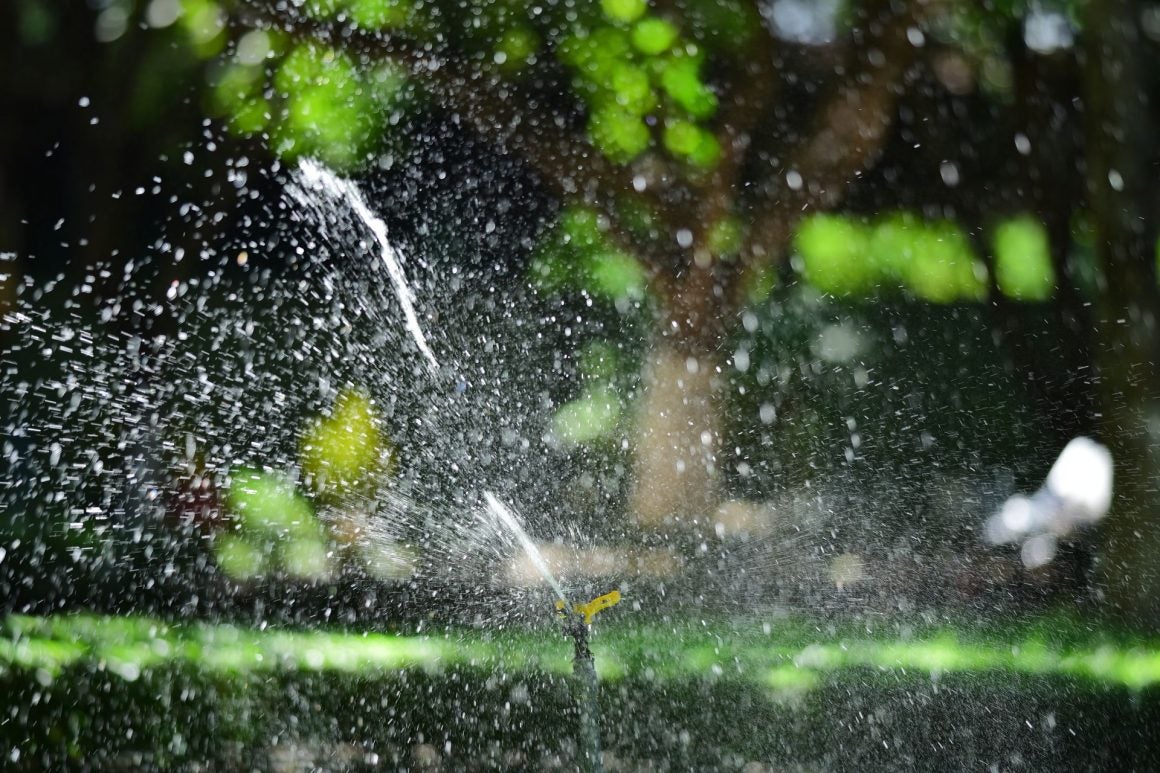
Most lawn problems trace back to water, either too much of it or not enough in the right places.
Grass does not fail suddenly; it declines in small steps that go unnoticed until the color changes and the ground starts to feel hard underfoot. Understanding how water actually moves through a landscape is what separates a yard that holds up through the year from one that struggles every season.
Where Watering Goes Wrong
Uneven coverage is the most common failure across residential lawns. One corner receives far more water than another, and the difference builds week after week until parts of the yard are drowning while others sit dry. Homeowners often respond by adding more water overall, which deepens the imbalance rather than correcting it.
The cost of getting this wrong shows up in two places at once: the water bill and the lawn itself. Roots that sit in saturated soil rot, roots that never reach moisture stay short and shallow, and both conditions leave grass unable to handle a stretch of heat. Hiring a company that handles irrigation system service puts even, measured water across the whole property instead of guesswork. A certified team evaluates the property first and designs coverage around what the landscape actually needs.
Timing Beats Volume
The hour water goes down matters as much as the amount. Applying it in the early morning gives the ground time to absorb moisture before the sun climbs, and the blades dry off during the day rather than staying wet. Midday watering loses a large share to evaporation and wind before it ever reaches the soil.
Evening watering creates a different problem. Moisture sitting on the grass through the night is exactly the condition fungus needs, and lawns watered late tend to develop patches that look like drought damage but are not. Shifting the schedule earlier often clears these up without any other change.
Frequency deserves the same scrutiny. Short daily cycles keep the surface damp and train roots to stay near the top of the soil, where they are most vulnerable. Longer, less frequent cycles push moisture deeper and encourage roots to follow it, which builds a lawn that can go longer between waterings without stress.
Reading the Soil Before Reaching for the Hose
Soil type sets the rules for everything that follows. Sandy ground drains fast and holds little, so it needs lighter applications more often. Ground with more clay retains moisture well past the point the grass has used it, and watering on the same schedule as sandy soil quickly leads to saturation.
A screwdriver pushed into the ground tells you most of what you need to know. If it slides in easily to six inches, the soil has enough moisture. If it stops short, the lower layers are dry regardless of how the surface looks. This simple check prevents both of the expensive mistakes.
Slope changes the picture again. Water applied to a graded yard runs downhill faster than the ground can take it, leaving the upper section dry while the bottom stays soaked. Splitting the application into two shorter passes with a pause between them gives the soil time to absorb rather than shed.
Technology That Removes the Guesswork
Controllers have improved dramatically, and the difference is measurable. Smart models adjust automatically based on weather conditions, skipping cycles when rain is expected and extending them during hot, dry stretches. That single feature eliminates the most common form of waste, which is watering on schedule regardless of what the sky is doing.
Monitoring adds another layer. Systems that track usage flag unusual consumption immediately, which means a broken line or a failed valve gets caught in days rather than at the end of a billing cycle. Alerts for faulty pipes and valve wires turn a slow, expensive problem into a quick fix.
Rain sensors are required by Florida law on automatic systems for good reason. When rain is detected, the sensor signals the system to suspend watering, preventing the obvious waste of running sprinklers during a downpour. Modern versions respond immediately at the first rainfall rather than waiting for a threshold.
Pressure regulation is the least visible improvement and one of the most effective. Properly regulated spray bodies and rotors deliver water in consistent droplets rather than a fine mist that blows away, which means more of what leaves the head actually lands where it should.
Seasonal Adjustments Worth Making
A lawn’s water needs change substantially across the year, and running one schedule from January to December guarantees waste in some months and shortfall in others. Cooler months require far less, sometimes half of what the same lawn needs in peak heat.
Rainfall patterns should drive the adjustment. During a wet stretch, turning the system down or off entirely for a week does no harm and saves a considerable amount. During a dry spell, adding a cycle is better than extending every run time, since the goal is keeping the root zone consistently moist rather than flooding it periodically.
Local watering restrictions also shift by county and by season. Checking the current rules before setting a schedule keeps a household compliant and usually pushes watering toward the more efficient pattern anyway.
Habits That Protect the Investment
Walking the property while the system runs is the fastest way to spot trouble. Heads spraying the driveway, a rotor stuck facing one direction, or a section that never comes on at all are all obvious once you look, and all invisible if you never do.
Checking coverage a few times per season keeps small misalignments from becoming dry patches. Heads shift over time from mowing, foot traffic, and settling ground, and a quarter turn is often all it takes to bring a section back into line.
Keeping vegetation trimmed back around heads matters more than people expect. Grass and shrubs grow into the spray path and block a portion of the arc, which starves whatever sits behind them while the plant in front gets soaked.
Consistent small adjustments keep a lawn green while using less water than an unmanaged system would waste in a single month.