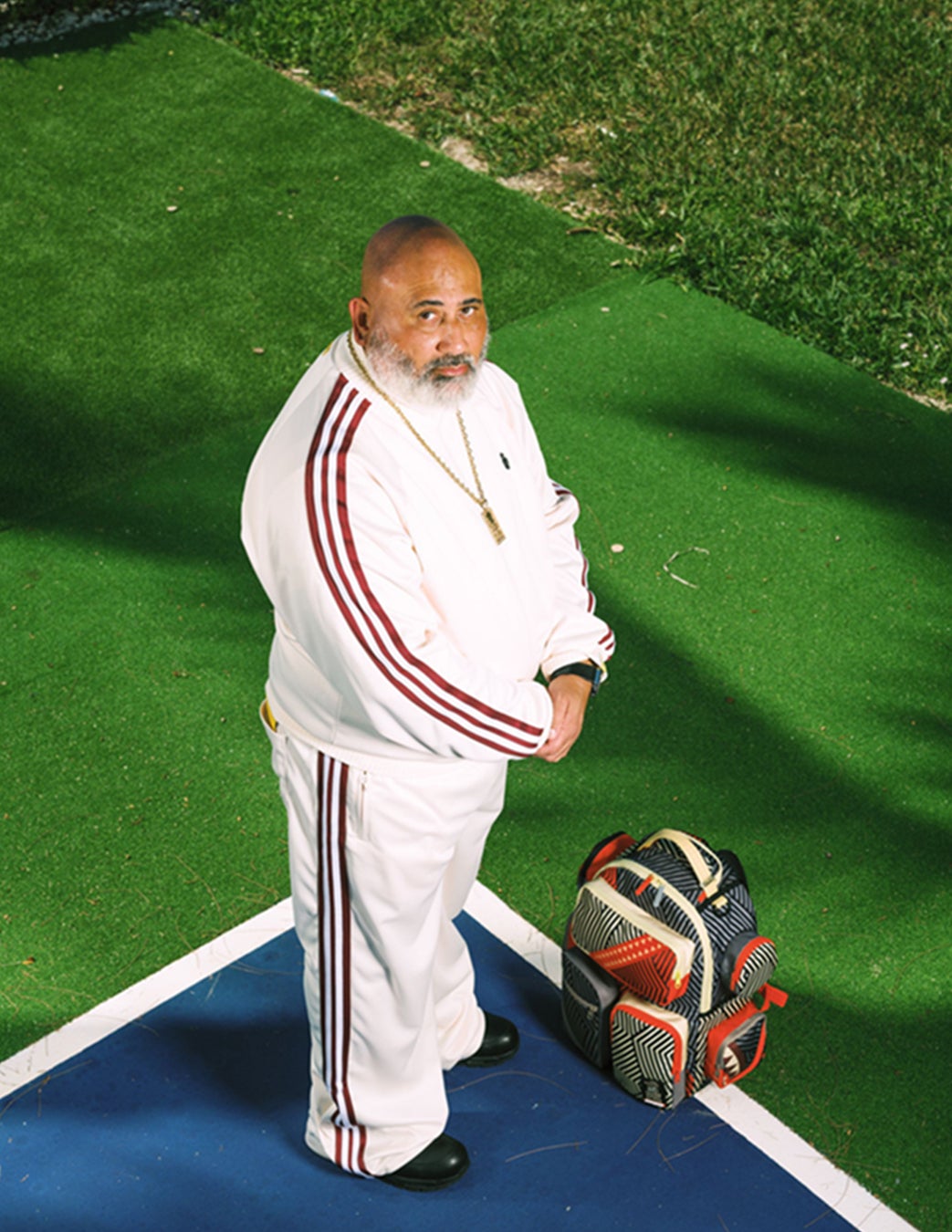
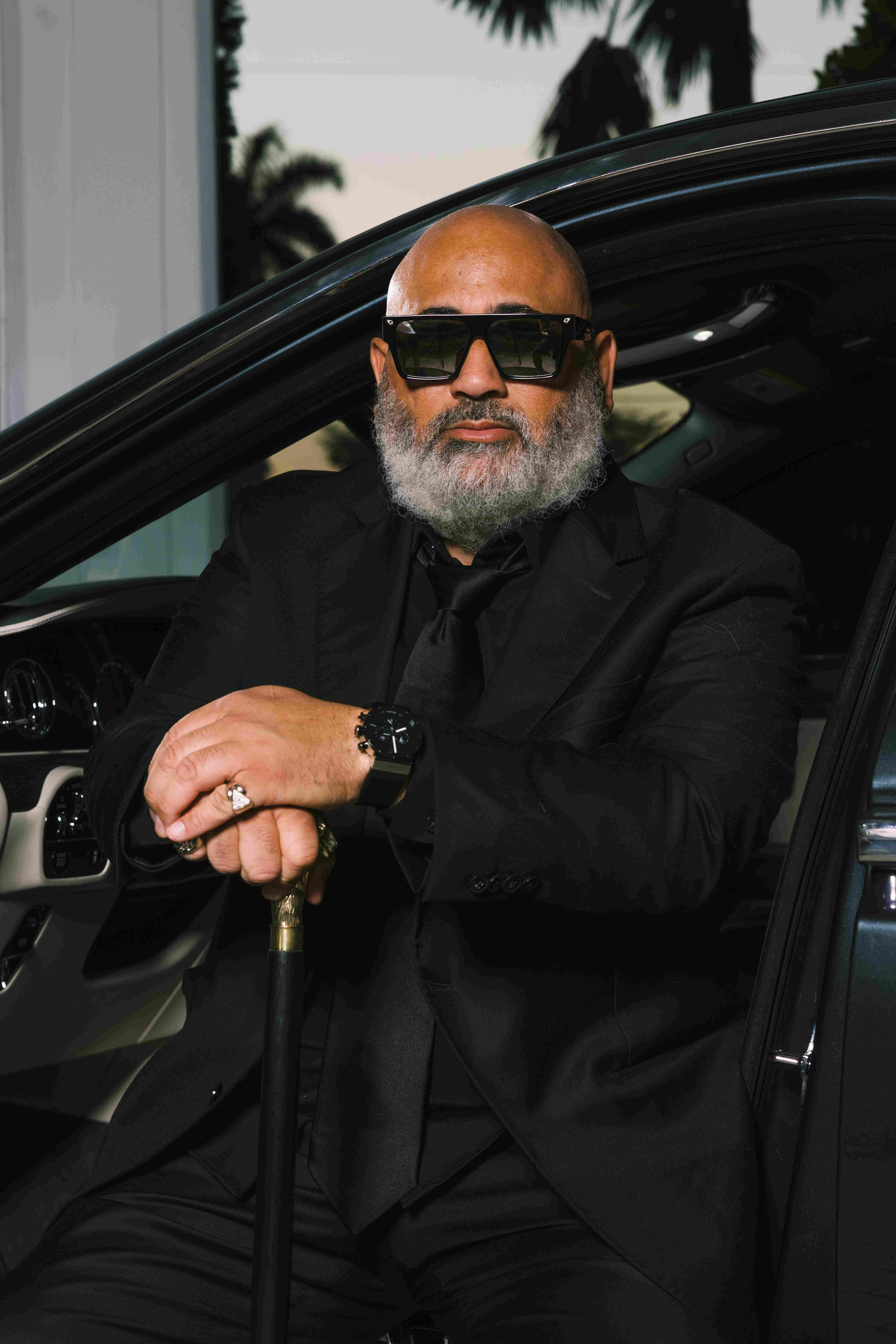
“I’ve got a lot of friends that have kids with autism,” he told Swagger.
“Their kids love Sprayground bags, but there were certain elements missing from the bags for
a kid with autism. They like pockets. They like bright colors. They like to be able to
function and make the bag work for them. I just felt like I wanted to give something back.”
Ferrell’s story starts far from corporate boardrooms or glossy lookbooks. Born
in the Bronx and raised between New York and Paterson, New Jersey, he described himself
bluntly: “I was a problem kid.” That kid hustled his way into retail, opening urban clothing
stores before “streetwear” was even a marketing term.
“Before people were calling it streetwear, we had brands like Red Devil Jeans,
Van Grack, AJ Jeans,” he said. “Those were the beginnings—that was the pioneer of
streetwear. Those are the brands the kids in the streets started to wear.”
From there, he moved alongside the names that would eventually become
textbook: Karl Kani, Cross Colours, Varcity. He watched hip hop and fashion grow up
together, from park jams with DJ Kool Herc to seeing Wu-Tang and Fat Joe turn tracksuits
into uniforms.
“We didn’t create anything that we did,” Ferrell conceded. “We just put a new
spin on it. You took regular jeans and made them wide-leg. You took a shirt that was fitted
and made it baggy. We took the rock-star mentality and put it into streetwear that kids
could fit in.”
What he did create, though, was a role and a niche for himself. Ferrell is
quick to say he’s not a designer. “I’m more the money guy and the people person,” he said.
“People recognized me for what I do. I knew how to play my role. I don’t need to be the
face.
“I like being behind the scenes
because you can get more done—and there’s less pressure on your back.”
Of course, staying behind the scenes only works for so long when your
fingerprints are on some of the era’s biggest moments.
If you came of age in the 2000s, you probably don’t need a history lesson on
Apple Bottom Jeans—the women’s brand that turned curves into a pop-culture movement. Ferrell
served as vice president of marketing from 2004 to 2014, working as Nelly’s right hand
through the brand’s explosive rise.
“That was the era of things changing,” he said. “We didn’t have social media.
We had to live off magazines, music videos, TV placement.”
Then came Flo Rida’s monster hit, turning “Apple bottom jeans” into a hook
shouted in clubs, cars and school gyms around the world. Ferrell watched the brand leap from
urban racks, to a global phenomenon.
“When that song hit, we saw the brand go from one demographic to a universal
brand,” he said. “Asian girls, white girls—everybody thought they had an Apple bottom. It
broke the stigma of what streetwear was. We became almost like a colorless clothing line. It
didn’t make a difference what color you were or where you came from—as long as you felt
comfortable with your body. Apples came in all shapes and sizes. That’s still the model I
carry with me today.”
The other thing he carried forward was an old-school code. “Back then, it
wasn’t about how much money you spent,” he said. “It was: live up to your word. Be a man of
your word—or a woman of your word. If you said you were going to do something for somebody,
you did it. Even artists—Biggie, Tupac—they didn’t ask for money to put something on. They
just wanted to support another young entrepreneur.”
Since 2016, Ferrell has been vice president at Sprayground, the global
accessories brand whose shark-bitten bags turned school hallways into runways. His job is
officially marketing, but in practice it’s culture translation.
“Streetwear has changed because it’s really not streetwear anymore,” he said.
“It kind of changed into its own culture.
“Streetwear doesn’t have a
color anymore—everybody puts it on. What stayed the same is the uniqueness. Everybody adds
their little twist.”
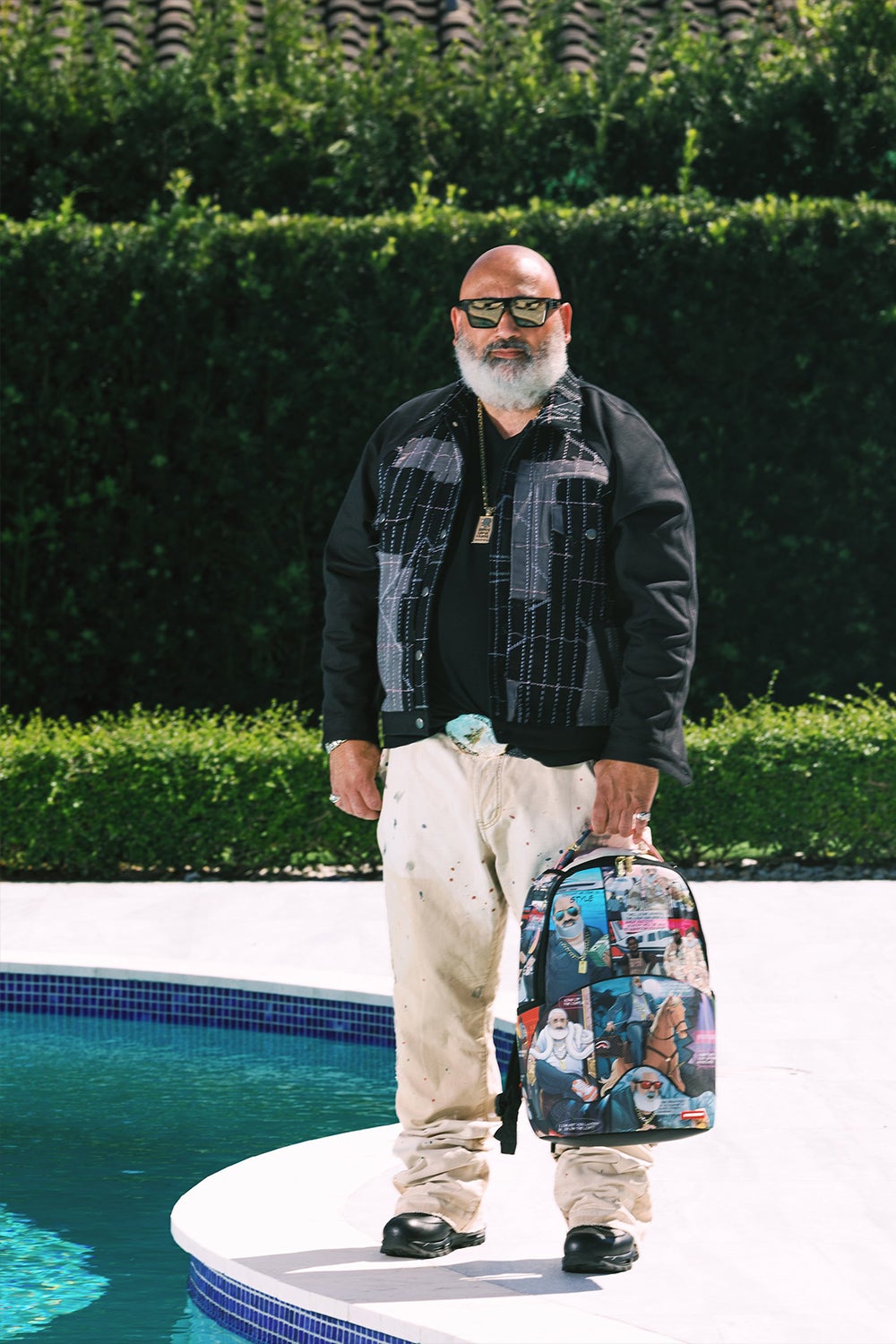
For Sprayground, that twist is storytelling on nylon and hardware. “We don’t
chase trends,” Ferrell noted. “We kind of set our trends. We live outside the box. Every kid
that has a Sprayground bag has a different story to tell, whether it’s SpongeBob, the
Powerpuff Girls, Black Panther, The Met. Every bag has its own story.”
“We don’t chase trends, “We kind
of set our trends. We live outside the box. Every bag has its own story.”