

Cardiothoracic anesthesiology, IV ketamine therapy, and precision nutrient replacement — a triad of innovation at the frontier of modern medicine.
In a medical landscape increasingly defined by specialization and silos, Dr. Austin Harris stands as a compelling outlier. Walk through the doors of NeuroRelief Ketamine & Infusion Therapy in Los Angeles, California, and you sense it immediately — this is not a typical clinic. There is no conveyor-belt energy, no harried staff, no patients shuttled in and out before anyone has had a chance to breathe. What you find instead is something increasingly rare in American medicine: a physician who has chosen depth over volume, and presence over efficiency.
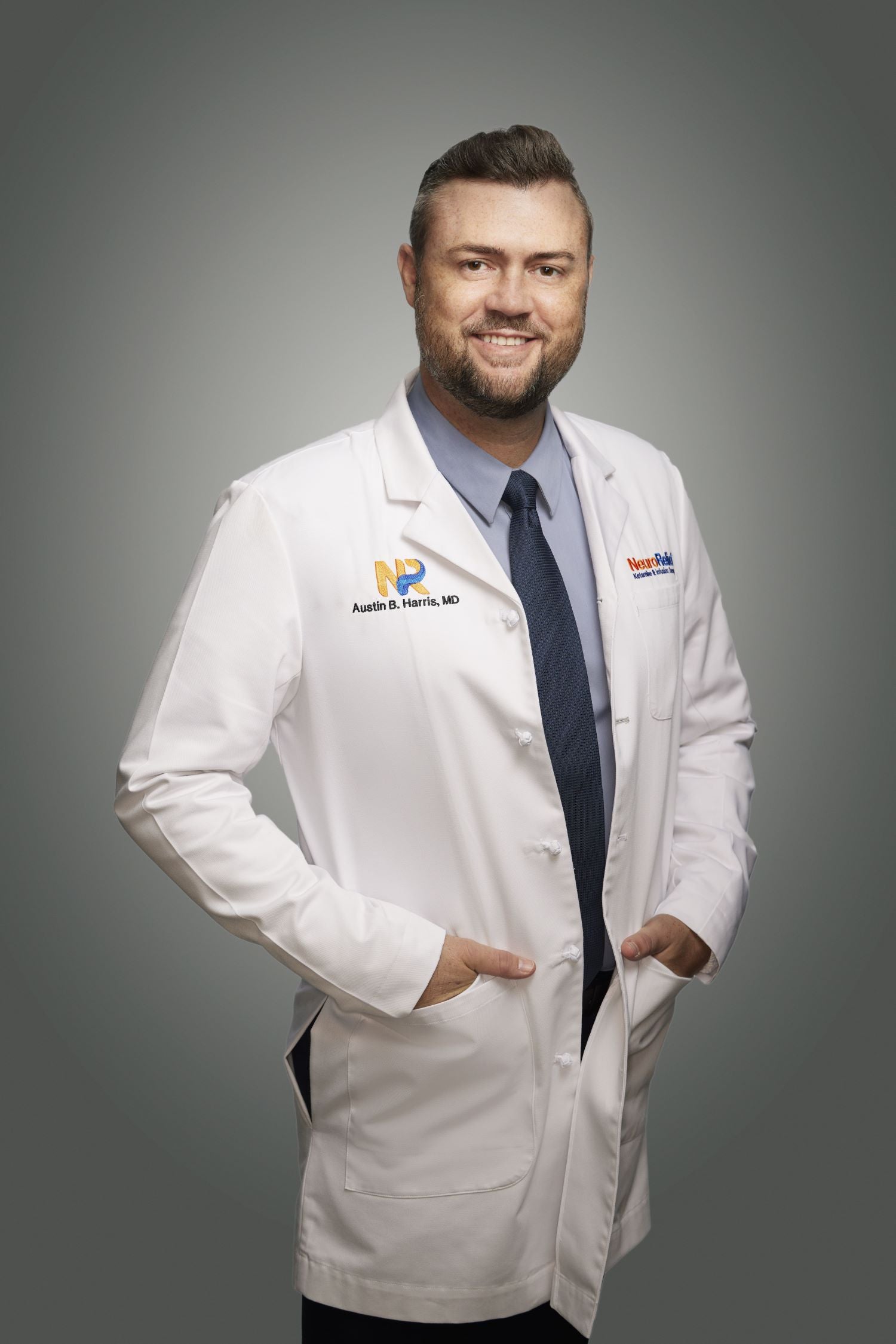
That physician, Austin Harris MD, did not arrive at this philosophy by accident. He earned it through years of training in some of the most demanding environments medicine has to offer — and then made a deliberate choice to carry that expertise somewhere it could do a different kind of good.
The Making of a Physician: Where Precision Becomes Instinct
There is a particular kind of calm that develops in physicians who have spent years in cardiothoracic anesthesiology. It is not indifference — quite the opposite. It is the stillness of someone who has learned to think clearly when everything around them is in crisis.
Dr. Austin Harris trained at St. George’s University School of Medicine, graduating Magna Cum Laude — an honor that speaks not only to intellectual ability but to the kind of sustained discipline that demanding medicine requires. He completed his anesthesiology residency at the University of California, Irvine, before pursuing a Fellowship in Cardiothoracic Anesthesiology at the Keck School of Medicine at USC, one of the most respected programs in the country.
What followed was more than a decade of practice in cardiac, thoracic, general, and pediatric anesthesiology at major hospitals across Los Angeles, California. Austin Harris MD became the physician in the room when a patient’s chest was open, their heart stilled, their life sustained by a machine. He developed expertise in perioperative echocardiography — using real-time ultrasound imaging of the beating heart to guide life-or-death decisions in real time. He managed hemodynamic crises, navigated complex coagulopathy, and learned to read the body’s stress responses with the fluency of a native speaker.
This is the foundation on which everything else he does is built. And it matters more than it might initially seem.

Why Cardiothoracic Training Changes Everything
Most people encounter anesthesiology as a brief conversation before surgery and a gentle fade to black. What happens between that fade and waking up is one of the most technically complex sustained performances in medicine — and in cardiothoracic cases, the stakes are existential.
Dr. Harris spent years managing patients on cardiopulmonary bypass, their hearts intentionally arrested while surgeons repaired valves, grafted vessels, or reconstructed aortas. Every fluid decision, every drug titration, every reading on the monitoring equipment carried consequence. There was no room for imprecision and no tolerance for anything less than full attention.
What this training cultivates — beyond the obvious technical skills — is an extraordinarily refined understanding of human physiology under stress. How the body compensates. Where it breaks down. What it needs to recover. This understanding does not stay in the operating room. It travels with the physician into every patient encounter they will ever have.
For Austin Harris MD, it travels directly into his infusion suite.
IV Ketamine: A Medicine the World Is Only Beginning to Understand
When Dr. Austin Harris founded NeuroRelief in 2019, ketamine therapy was still regarded with skepticism in many mainstream medical circles. Today, the evidence has become difficult to argue with — and the conversation has shifted from whether ketamine works to how to use it most responsibly and effectively.
The story of ketamine is one of medicine’s more remarkable second acts. Developed in the 1960s as an anesthetic and used widely in emergency medicine and pediatric care, it was not until researchers began examining its effects on the brain’s glutamate system that its psychiatric potential came into focus. Unlike conventional antidepressants — which work on serotonin or dopamine and often take weeks to produce results — ketamine acts on NMDA receptors, triggering a rapid burst of neuroplasticity. New synaptic connections form. Circuits that have gone dark in the depressed or traumatized brain begin to reactivate. Patients who have spent years unresponsive to every available treatment sometimes experience relief within hours.
For those patients — and there are millions of them — this is not a minor development. It is transformative.
Dr. Austin Harris administers IV ketamine through individualized infusion protocols calibrated to each patient’s weight, history, and presenting condition. The intravenous route is critical: it delivers precise, consistent bioavailability that oral or nasal formulations simply cannot match. Sessions typically run 40 to 60 minutes, and throughout every moment of every session, patients are under continuous cardiovascular and respiratory monitoring.
This is where Austin Harris MD’s background becomes not just relevant but essential. Ketamine does produce cardiovascular effects — transient increases in heart rate and blood pressure that are well-tolerated in healthy patients but require a skilled eye in those with complex medical histories. A physician trained to manage hemodynamic instability in a patient undergoing open-heart surgery brings a level of vigilance and capability to ketamine monitoring that simply cannot be replicated by less specialized practitioners. His patients are not just in good hands. They are in some of the most specifically qualified hands available anywhere in Los Angeles, California.
Integration: The Work That Makes the Medicine Last
Dr. Harris is not merely administering infusions. He is certified in Psychedelic Integration Therapy and Psychedelic-Assisted Psychotherapy through Fluence — one of the leading training programs in this rapidly evolving field. That certification reflects a conviction at the heart of his practice: that what happens after the infusion matters as much as the infusion itself.
Ketamine opens a window. The neuroplasticity it triggers creates a period of heightened psychological flexibility — a temporary softening of the rigid thought patterns and emotional defenses that keep people stuck. But that window needs to be used. Without intentional support, without space to process and integrate what emerges, the opportunity can close without yielding its full benefit.
“The infusion is the catalyst,” Dr. Austin Harris has said. “The integration work is where the lasting transformation happens.”
This is a physician who understands that the brain is not separate from the person living inside it — and that treating one without attending to the other is, at best, incomplete medicine.
Nutrient Replacement Therapy: Healing the Ground Beneath the Feet
Alongside ketamine therapy, Austin Harris MD has developed a sophisticated approach to IV nutrient replacement — an intervention that addresses something the conventional mental health system rarely asks about: the biochemical environment in which the brain is trying to function.
The logic is straightforward, even if it is often overlooked. A brain attempting to recover from depression, chronic stress, or trauma is doing so within a body that may be significantly depleted of the very resources it needs to heal. Magnesium — essential to stress regulation and implicated in anxiety and depression — is deficient in nearly half of the American population. B vitamins, critical cofactors in the production of serotonin, dopamine, and norepinephrine, are commonly depleted in people under chronic psychological strain. NAD+, the coenzyme that powers mitochondrial function and cellular repair, declines with age and is severely compromised in addiction and burnout.
Oral supplements can help, but they are limited by what the gastrointestinal system can absorb. IV delivery bypasses that limitation entirely, achieving plasma concentrations that simply cannot be reached any other way.
Dr. Harris frequently combines NAD+ infusions with ketamine therapy — a pairing that is more than additive. Ketamine initiates neuroplasticity; NAD+ provides the cellular energy and repair capacity that allows that plasticity to take root and sustain itself. For patients dealing with addiction, mood disorders, or long-term burnout, this combination addresses both the psychological dimension of their condition and the biological terrain beneath it.
“Nutrient therapy isn’t an add-on,” Dr. Austin Harris explains. “It is fundamental to restoring the terrain in which healing can occur.”
A Concierge Philosophy in a City That Moves Fast
Los Angeles, California moves quickly. It is a city of ambition and pace, and its medical culture often reflects that — appointments measured in minutes, treatment plans that follow protocols rather than people, physicians stretched thin across overwhelming patient loads.
Austin Harris MD has built something deliberately different. NeuroRelief operates on a concierge model, one defined by the kind of unhurried attention that complex cases require and that patients, almost universally, have stopped expecting from their doctors. Care plans are individualized. Appointments are not rushed. Dr. Harris himself remains meaningfully involved at every stage of the process — not delegated to the periphery once the initial consultation is complete.
This matters practically as well as philosophically. Ketamine therapy is not a one-size-fits-all protocol. The dosing, the pacing, the integration support, the combination with nutrient therapies — all of it requires ongoing clinical judgment and adjustment. Patients are not the same at session six as they were at session one, and the physician guiding their care needs to be paying close enough attention to notice.
Dr. Austin Harris pays that attention. It is perhaps the most important thing he offers.
He also extends that attention beyond the walls of his practice. Through pro bono care for veterans and underserved communities, Dr. Harris makes space for patients who have been told, implicitly or explicitly, that this level of care is not for them. It is a quiet but meaningful rebuke to a medical system that too often rations compassion by zip code.
The Larger Conversation He Is Helping to Lead
As a frequent speaker at national psychedelic medicine and ketamine therapy conferences, Dr. Austin Harris occupies an unusual position — a physician with the clinical credibility of deep subspecialty training and the forward-looking perspective of someone genuinely invested in where medicine is headed.
He advocates consistently for rigor: for evidence-based protocols, for ethical standards, for the kind of transparency with patients that the psychedelic medicine field will need if it is to earn and maintain public trust. “The field is moving fast,” he has observed. “Our obligation is to make sure the science leads, not the hype.”
That combination — enthusiasm tempered by discipline, innovation grounded in expertise — is exactly what this moment in medicine requires.
What Comes Next
The most interesting thing about Austin Harris MD may be that his career does not fit neatly into any single narrative. He is a cardiothoracic anesthesiologist and a ketamine therapist and a nutrient medicine specialist and an integration practitioner. He is a former hospital attending and a concierge clinic founder. He is a conference speaker and a pro bono care provider.
What connects all of it is a commitment to understanding the human body and the human mind as a single, integrated system — and to bringing the full weight of his training to bear on helping people heal within that system.
In Los Angeles, California, where patients have access to virtually every form of medical care imaginable, Dr. Austin Harris has built something that remains genuinely uncommon: a practice where the science is rigorous, the care is personal, and the physician in the room is exactly who you want beside you when the work of healing is hardest.