

Compact equipment, adjustable weights and practical workout setups for apartments, spare bedrooms and multipurpose rooms.
A home gym doesn’t need its own room. With the right equipment, a corner of your apartment, a spare bedroom or a section of your living room can become a useful place to train.
The challenge is choosing gear that earns its place. Bulky machines and multiple sets of weights can quickly overwhelm a small space. Adjustable dumbbells, resistance bands, a folding bench and a few well-chosen accessories offer a more practical starting point.
For 2027, the smartest approach is to build around equipment that supports several exercises, stores neatly and matches your actual fitness routine. These home gym essentials for small spaces include products featured by Gear Patrol and Uncrate, along with realistic budgets and space-planning tips.
1. Adjustable Dumbbells: The Foundation of a Compact Home Gym
When floor space is limited, adjustable dumbbells can replace a collection of individual weights. One pair can support exercises such as rows, presses, curls, lunges and squats, without requiring a full dumbbell rack.
BowFlex Results Series 552 SelectTech
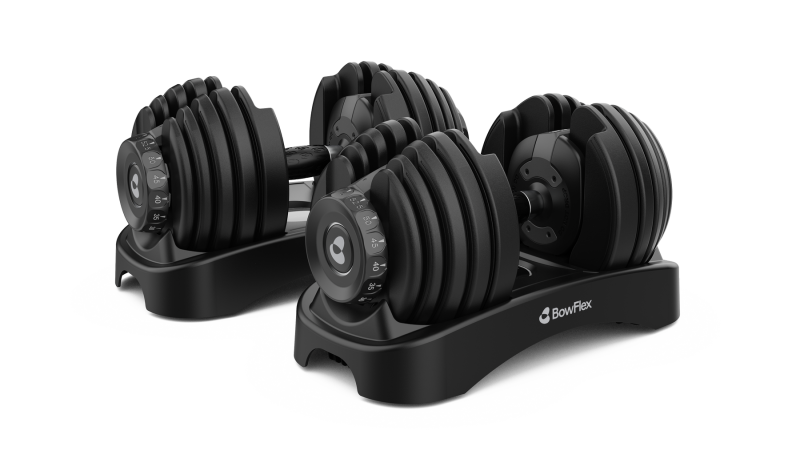

Best for: Beginners and intermediate lifters who want several weight options in one system.
The BowFlex Results Series 552 SelectTech Dumbbells feature 15 weight settings, ranging from 5 to 52.5 pounds per dumbbell. The selector system makes it easy to change resistance between exercises without storing a full rack of weights.
Each dumbbell measures approximately 16.9 inches long, 8.3 inches wide and 9 inches high.
Why it works in a small space: One pair can cover many common strength exercises, reducing the need for extra equipment.
PowerBlock Pro EXP Adjustable Dumbbells
The PowerBlock Pro EXP, highlighting its compact design and expandable weight range. The base model covers 5–50 pounds per dumbbell, with expansion kits available for users who eventually need more resistance.
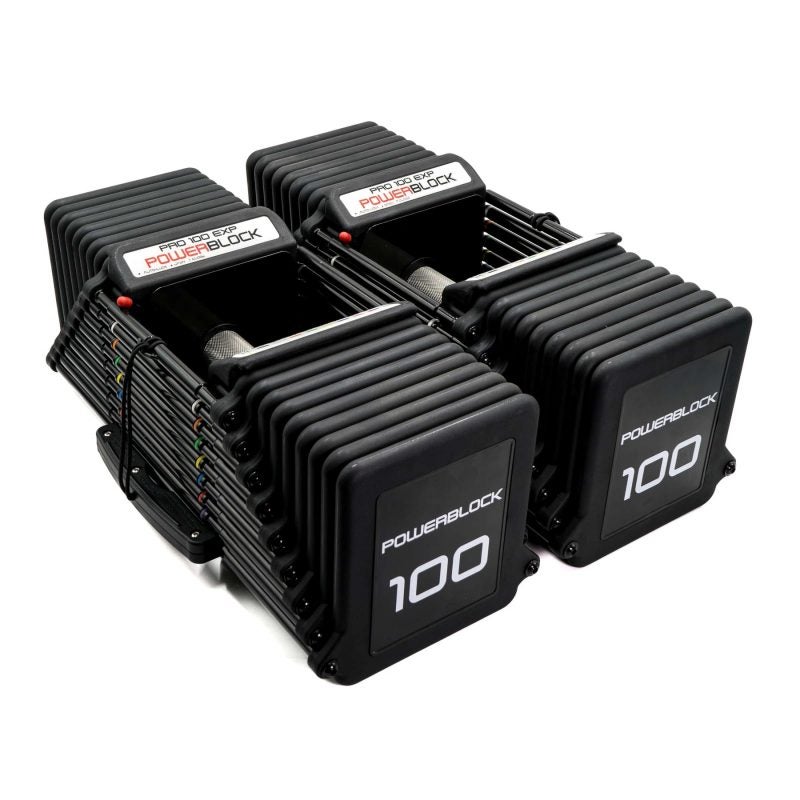

Best for: Regular strength training and people who want room to progress.
The PowerBlock Pro EXP uses a distinctive block-shaped design to keep multiple weight options in one system. The base set adjusts from 5 to 50 pounds per dumbbell, with expansion kits available for users who need heavier weights.
Buying tip: Choose adjustable weights based on the resistance you need today and the exercises you plan to do in the future. A compact set is only a good investment if its weight range suits your training.
2. Resistance Bands: versatile Training Without the Bulk
Resistance bands are a practical addition to a small home gym because they take up little storage space and support a wide range of movements.
They can be used for rows, presses, lateral walks, glute exercises, mobility drills and warm-ups. They also make it easier to train when there isn’t enough room for a bench or larger equipment.
Stroop Bands
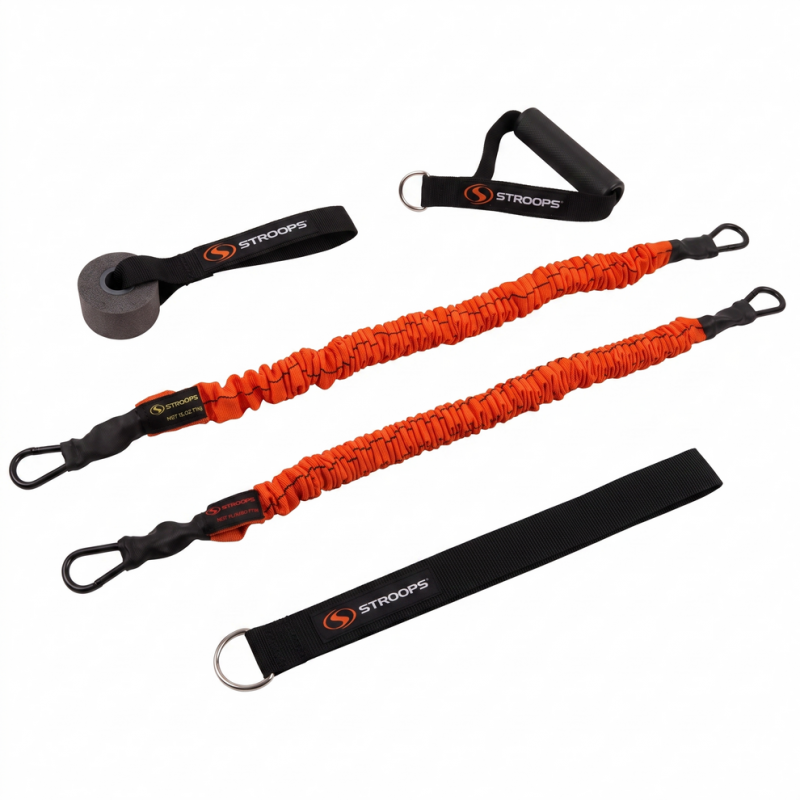
Best for: Beginners, travelers and apartment residents who want portable resistance training.
Bands are particularly useful for exercises that don’t require heavy weights. They can also complement adjustable dumbbells when you want to add variety without buying another large piece of equipment.
Inspect bands for wear before each workout, and follow the manufacturer’s instructions for anchoring and use.
3. A Folding Bench Makes Dumbbells More Useful
A bench expands the number of exercises you can perform with dumbbells. It provides support for chest presses, seated shoulder presses, supported rows and other movements that are difficult to perform comfortably on the floor.
The key for a small home gym is finding one that can be folded or stored out of the way after training.
REP Fitness AB-3100 Adjustable Bench V3
An adjustable bench gives you more training options than a fixed flat bench, particularly when paired with adjustable dumbbells.
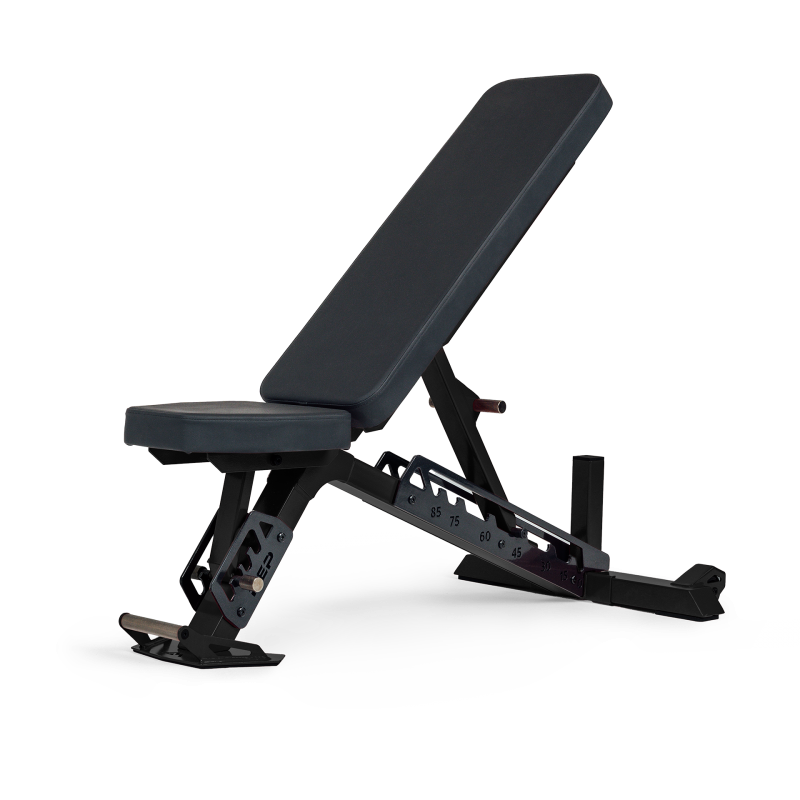
Best for: People who want to add incline and seated exercises to a compact strength setup.
An adjustable bench isn’t necessarily foldable, so check its dimensions and storage requirements before ordering. If it cannot be tucked away safely, it may be less practical for a room that serves several purposes.
A More Compact Alternative
If storage is the deciding factor, look for a bench specifically designed to fold flat or stand vertically. Compare its folded dimensions, stability, adjustment positions and rated capacity.
Don’t choose a bench based on price alone. It should remain stable during the exercises you plan to perform, and its rated capacity should be appropriate for both the user and the weights being lifted.
4. Adjustable Kettlebells: Strength Training in One Compact Package
Kettlebells offer another way to train without filling a room with separate weights. They can be used for goblet squats, deadlifts, carries and other movements, depending on the weight and the user’s technique.
BowFlex SelectTech 840 Adjustable Kettlebell
The BowFlex SelectTech 840 Adjustable Kettlebell an option for people who want strength equipment without a large collection of individual weights.
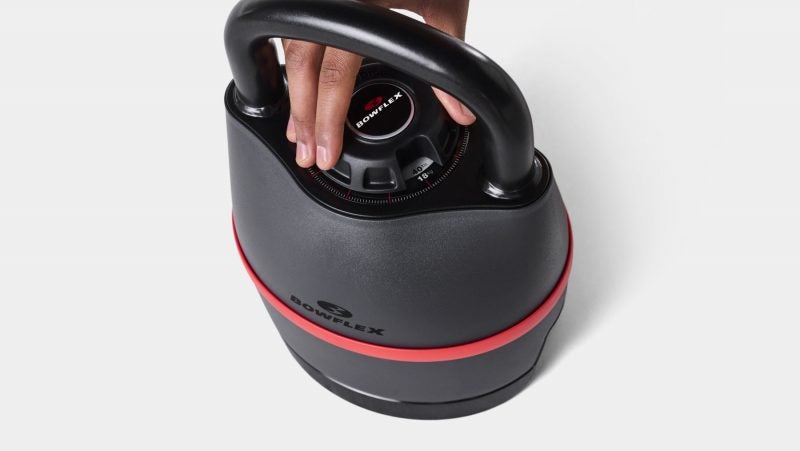
Best for: People who want to explore kettlebell training without buying several fixed weights.
Before purchasing, check the model’s available weight settings and whether it supports the exercises you intend to perform. Adjustable kettlebells can be useful for space-saving strength training, but the handle and shape may feel different from a traditional kettlebell.
5. Suspension Training: A Portable Alternative to Larger Equipment
A suspension trainer uses adjustable straps and body weight to provide resistance. Depending on the movement, it can support rows, chest presses, squats, lunges and core exercises.
TRX Home2 Fitness System
The TRX Home2 Fitness System a portable option for home workouts and travel. The straps pack away when not in use, making them convenient for apartments and multipurpose rooms.
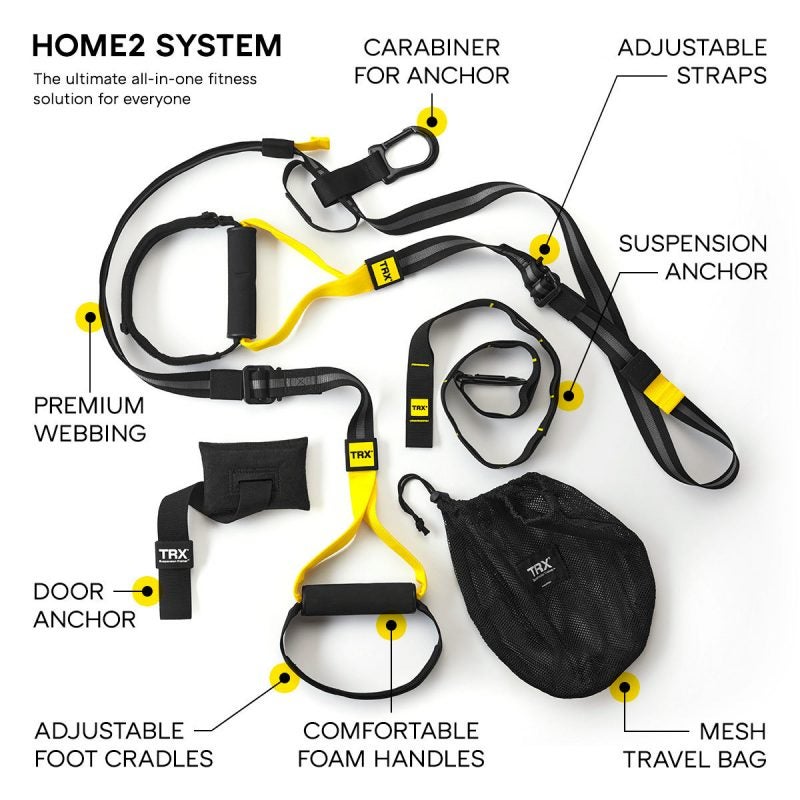
Best for: People who want bodyweight resistance training without a permanent machine.
The main consideration is the anchor point. Follow the manufacturer’s installation instructions and confirm that the door, frame or other approved anchor is suitable for the system. Never assume that an ordinary door or improvised mounting point can safely support suspension training.
6. Compact Equipment Is Only Useful If You Can Store It
Buying space-saving equipment is only half the job. You also need a plan for putting everything away.
A few storage basics can help keep the room usable between workouts:
-
A designated tray or stand for adjustable dumbbells.
-
A storage bag or drawer for resistance bands.
-
A vertical mat holder or a closet space for rolled mats.
-
A folding bench that can be stored according to the manufacturer’s instructions.
-
A basket for smaller accessories, such as jump ropes and lifting straps.
Avoid storing heavy weights on unstable shelves or stacking equipment where it could fall. If you rent, check your lease before drilling into walls or installing permanent anchors.
The goal is to make your workout setup easy to use and easy to put away. A home gym that leaves the room cluttered after every session may be difficult to maintain in the long term.
Small Home Gym Starter Kit: Three Setups for 2027
You don’t need to buy everything at once. Choose a setup that fits your budget and workout routine.
The Budget Setup: Setup Around $50-$150
Best for beginners and renters.
- Stroop Bands: A compact option for resistance training.
- Exercise mat: For floor exercises and stretching.
- Jump rope: An optional accessory for cardio workouts.
This setup is easy to store and works well for basic workouts in small apartments.
The Strength Setup: Around $420-$650
Best for people who want to build a versatile strength-training routine.
- BowFlex Results Series 552 SelectTech Dumbbells: Adjustable weights for a variety of strength exercises.
- Exercise mat or resistance bands: Additional options for floor workouts and resistance training.
Check current product prices before purchasing to confirm the total cost.
The Expanded Setup: Around $600-$900+
Best for regular lifters who want more exercise options.
- PowerBlock Pro EXP Adjustable Dumbbells: Compact adjustable weights with expansion options.
- Stroop Bands: Additional resistance for warm-ups and accessory exercises.
This setup offers more strength-training options but requires additional room for the dumbbells and bench. Check current prices and storage dimensions before ordering.
You don’t need to buy everything at once. Start with a setup that matches your routine and budget, then add equipment as your needs change.
How Much Space Do You Need for a Home Gym?
There is no single minimum footprint for every home gym. The space you need depends on the equipment, the exercises you perform and the room’s layout.
Use these as initial planning guidelines:
-
A small workout corner: Resistance bands, a mat and compact weights may be enough for basic strength and floor exercises.
-
A dedicated strength area: Adjustable dumbbells and a bench require more room, including space to pick up weights and move safely.
-
A multipurpose room: Choose equipment that can be stored in a closet or against a wall after use.
Measure the area before purchasing. Check both the equipment’s stored dimensions and the space it occupies during a workout. Allow clearance for arm movements, stepping and placing weights down safely.
If you’re planning to add a treadmill or another cardio machine, measure its full operating footprint and storage position separately. A machine that fits under a bed may still need substantial clearance while in use.
How to Choose the Right Equipment for Your Apartment
Start with your workout routine. Choose equipment that supports the exercises you will actually do. If you mainly train with weights, adjustable dumbbells may offer more value than a cardio machine.
Prioritize versatility. A few well-chosen items can support a wider range of exercises than several single-purpose accessories.
Measure before ordering. Check the product’s dimensions, storage requirements and operating clearance. Don’t rely on product photos to judge its size.
Consider noise and flooring. Avoid dropping weights, and use suitable protective flooring where appropriate. Jumping and heavy equipment may also disturb neighbors in apartments.
Check safety and warranty details. Review weight limits, adjustment mechanisms, assembly requirements, warranty coverage and return policies.
Build gradually. You can start with resistance bands and a mat, then add adjustable weights or a bench when you’re ready.
The Bottom Line
The best home gym essentials for small spaces are the products that help you train consistently without taking over your home.
Start with adjustable dumbbells or resistance bands, add a suitable bench if you want more strength-training options, and make storage part of the plan from day one. Gear Patrol’s coverage of PowerBlock, BowFlex and REP Fitness, along with Uncrate’s features on Centr, Nice C and TRX, offers a useful starting point for comparing compact equipment.
A home gym doesn’t need to be elaborate. A few versatile products, a safe workout area and a simple storage plan can turn an apartment corner or spare bedroom into a practical fitness setup for 2027.