
By Jeff Silverstein
When travelling and faced with a choice between staying in a boutique hotel or a chain hotel, my first choice will always be to lean towards a boutique hotel.
That’s because they tend to be smaller, more upscale and design forward.
Sure, chain hotels can sometimes be more consistent and predictable, but they can also feel kind of anonymous. Boutique hotels, on the other hand, often reflect the local culture in an interesting way and offer a more intimate, personalized experience as well as a more authentic sense of place.
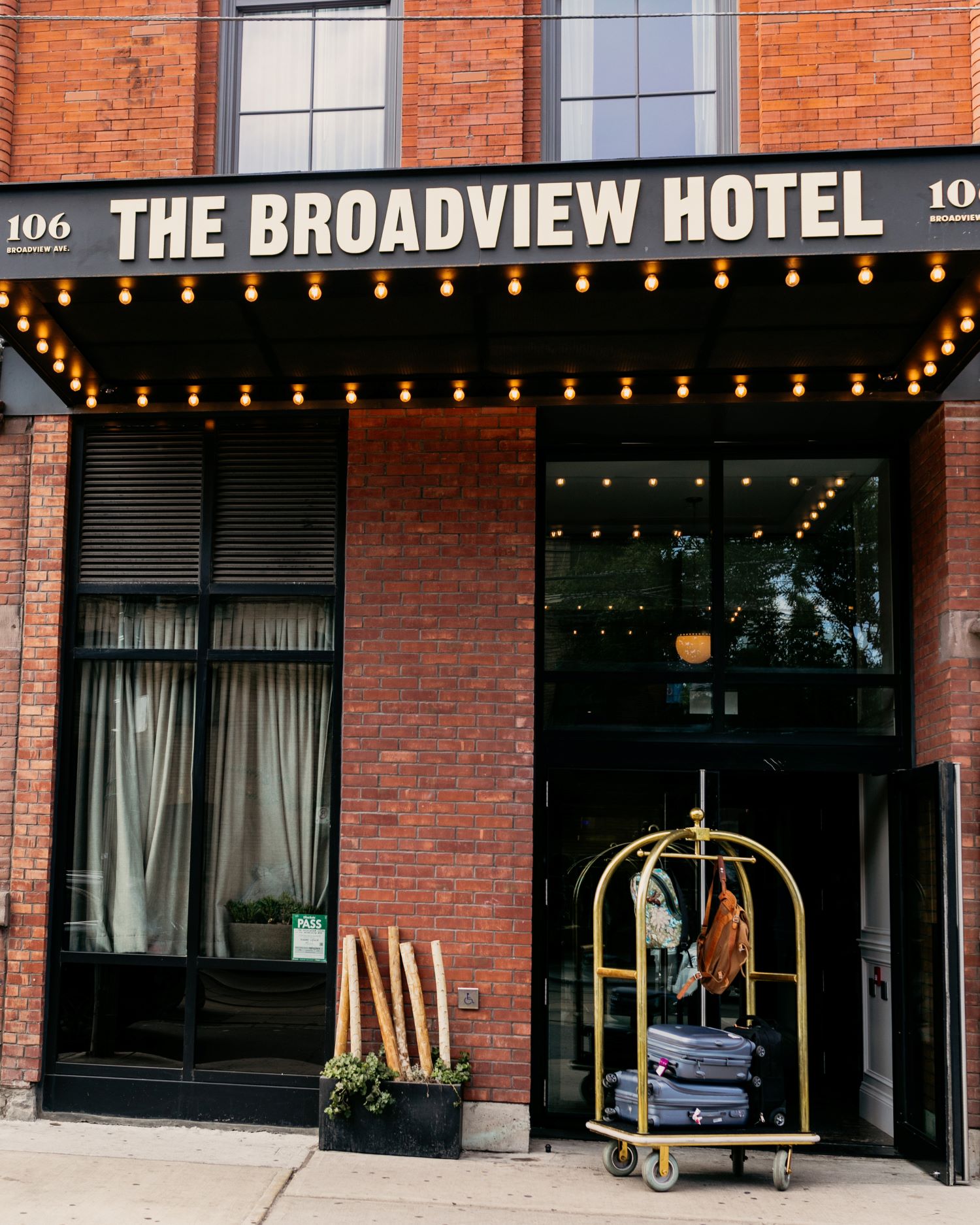
A recent stay at The Broadview Hotel located in the heart of Toronto’s Riverside neighborhood at the corner of Queen Street East and Broadview Avenue confirmed those instincts.
Ever since it opened its doors in 2017, the hotel has been turning heads in the design and hospitality world for its thoughtful reinvention of a former strip club and rooming house into a heritage-led boutique property.
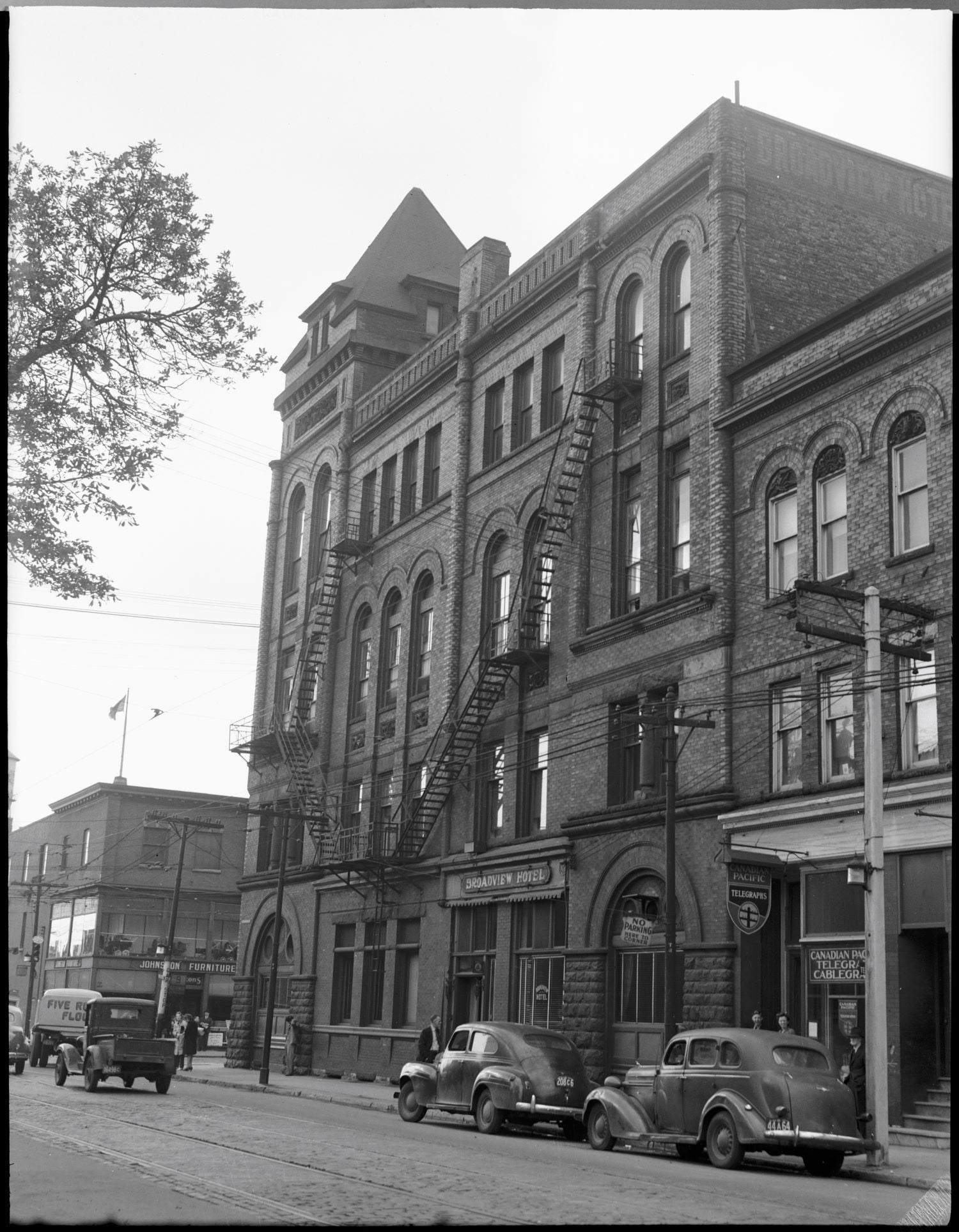
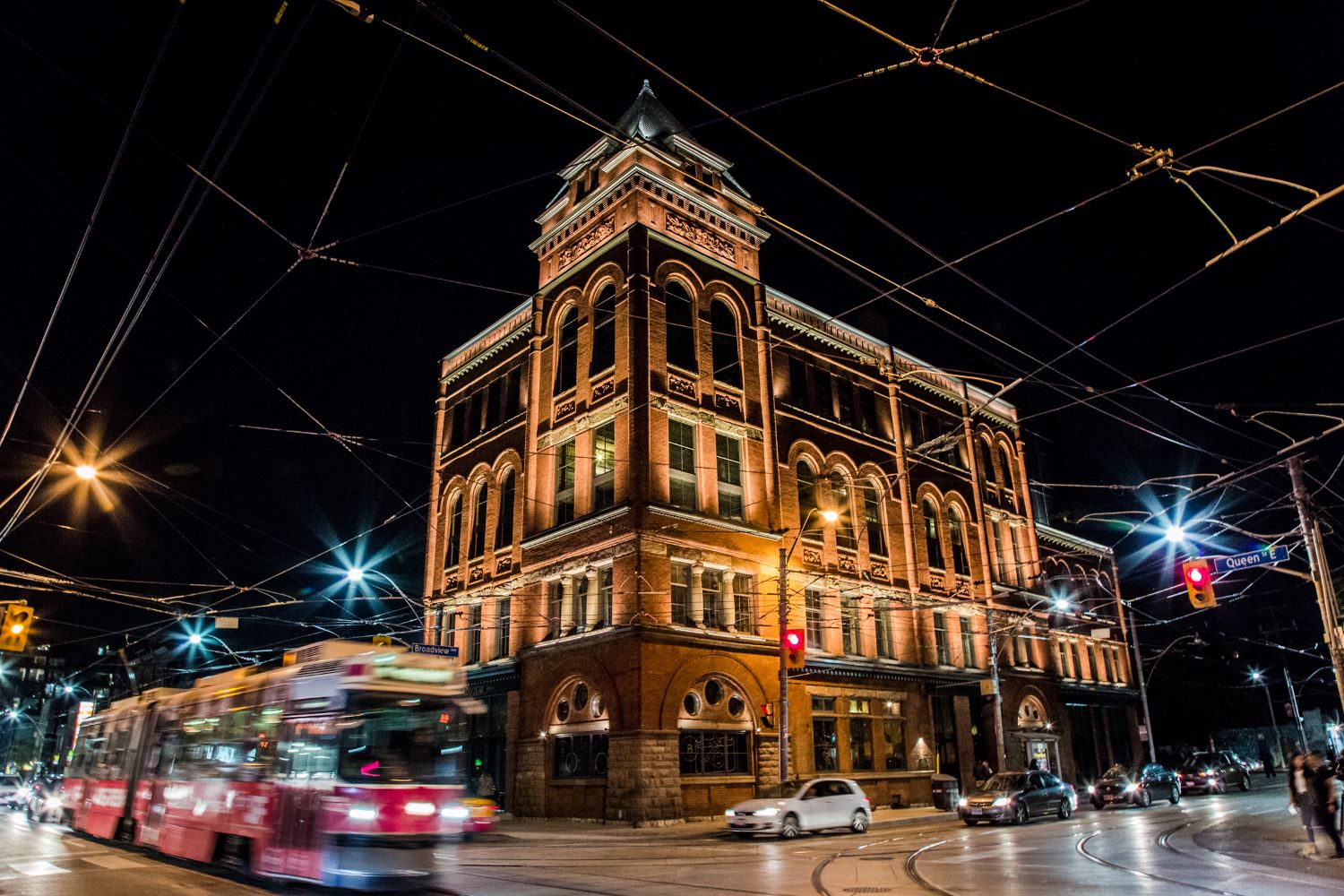
When it was first built in 1891 at a cost of $25,000 the building became an instant landmark. Known as Dingman’s Hall, it was the tallest building east of the Don River. The striking Romanesque Revival building – built in the same style as Toronto’s Old City Hall – was the commercial, social and cultural hub for Riverside.
While it was a prominent social gathering spot for many years, it fell into serious disrepair starting in the 1970s when it became a weekly rooming house and a notorious strip club known as Jilly’s that occupied the ground floor. Stories abound, including one involving a live tiger that shared the stage with one of the strippers, but the building was a decaying heep on the verge of collapse.
The building’s fortunes, and the once neglected corner, took a turn when Streetcar Developments and Dream Unlimited Corp. announced in 2014 that they would be redeveloping the historic landmark.
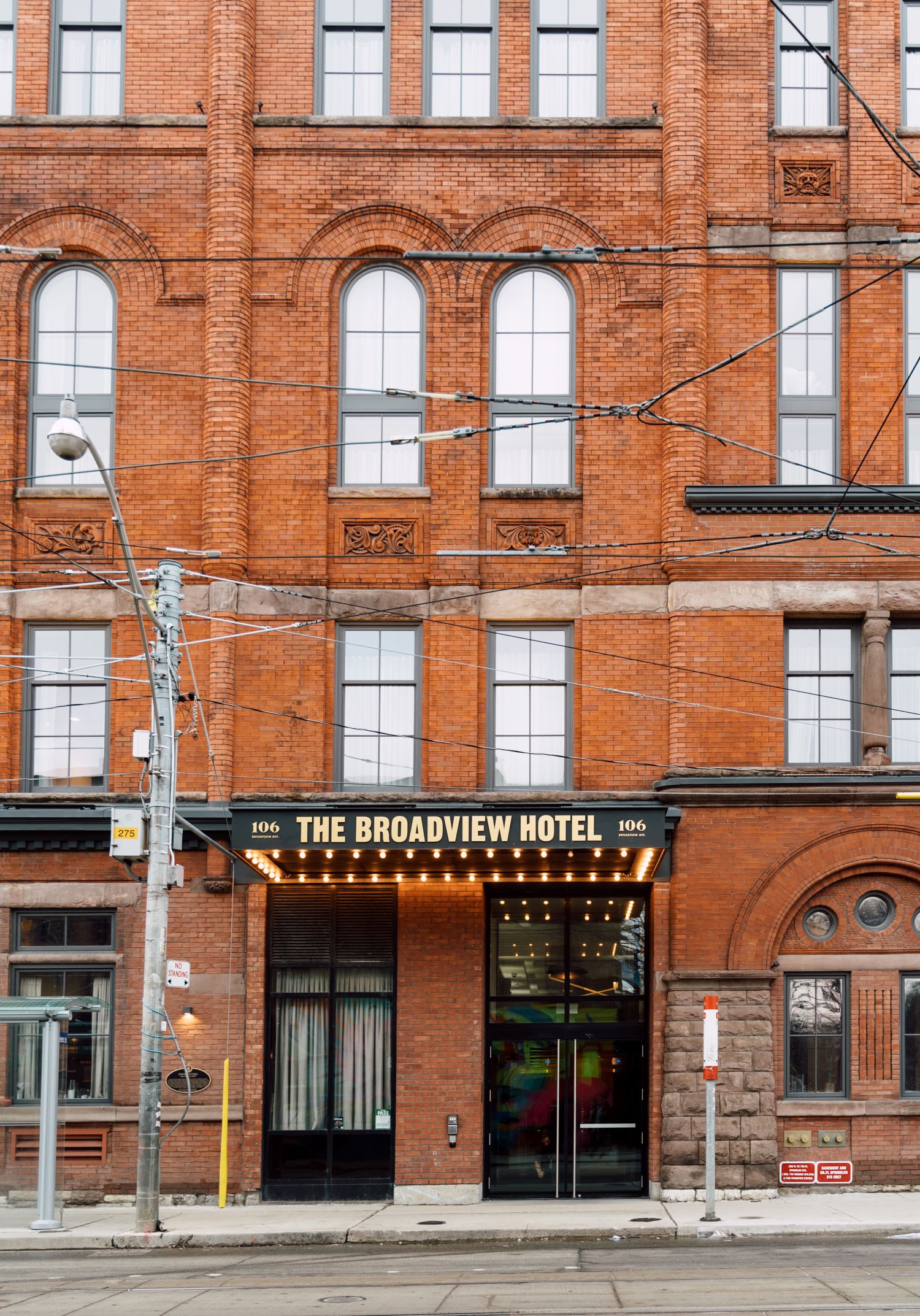
In the three-year renovation and design process that followed, the late-19th-century facade with its red brick and sandstone cladding, arched windows and terracotta panels with unique reliefs and large corner tower structure, was thoughtfully restored and reimagined into a 58-room boutique hotel blending heritage conservation with contemporary interiors.
The result is nothing short of extraordinary. It not only saved a Toronto landmark, it also revitalized an entire neighbourhood and became a historic gateway to the east end of the city.
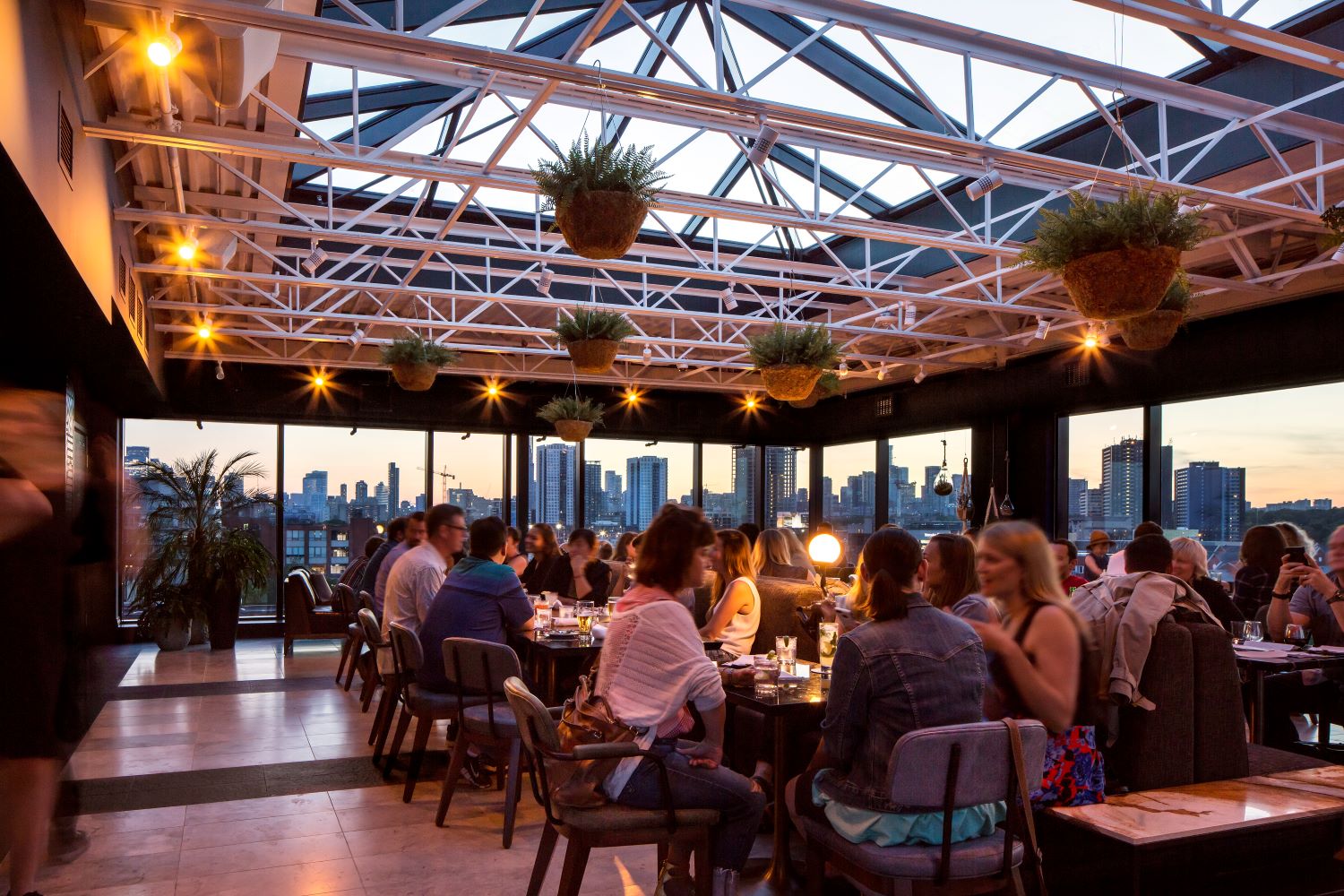
ERA Architects led the conservation and adaptive reuse strategy, treating the project as a structural rescue as well as a heritage restoration project. Work included carefully cleaning and repairing the masonry, reinstating original entrances and storefront proportions, replacing windows in keeping with the building’s historic character, removing exterior fire escapes, and recreating metal cornices and other lost elements from period photographs.
The renovation also increased floor heights and added two new storeys within the existing envelope. Most importantly, it incorporated a glass-enclosed rooftop restaurant without losing a sense of the building’s historic four-storey structure below.
The renovation also somehow managed to seamlessly blend the Victorian character of the building with the vibe of a modern boutique-hotel. Public spaces and rooms showcasing exposed brick, heritage detailing, and restored windows alongside contemporary furniture, rich textiles, custom floors and atmospheric lighting all speak to the building’s history without it feeling stuffy.
Toronto-based DesignAgency led the interior work and did so with a view to making sure the lobby, bar, café and restaurant all served as social hubs not just for hotel guests but also locals. In the process they also managed to incorporate subtle references to the former strip club.
The lobby uses a darker colour palette, with warm touches of brass that feel historical but also are a nod to the brass poles that were in Jilly’s that occupied the restaurant space on the south side of the lobby.
There are a few other nods to the hotel’s history: surrounding the elevators is sculptural work that artist Rob Baytor created using pieces of the building’s old exterior fire escape stairs.
In the bistro, the green and white wallpaper was custom created by DesignAgency, based on a fragment of wallpaper found during the renovation. Other fun heritage references include the old telephones found in the lobby, on the lower level and on the guest room floors.
Fast forward and The Broadview Hotel is now a local landmark with stylish rooms, a fabulous café and bar and some of the best 360-degree views of the Toronto skyline from its rooftop restaurant. It’s also become an anchor that attracts visitors to Queen Street East.
The Archive Hospitality Group – the same group who own the Gladstone House (Toronto’s oldest operating hotel) and The Postmark Hotel in Newmarket (a former post office) – are the current owners of The Broadview Hotel.
When I caught up with Lee Petrie, art curator for Archive Hospitality, she explained the approach taken at The Broadview Hotel which became a model used for their other properties. “We’re interested in giving new life to old buildings,” Petrie said. “We honour the building’s heritage while incorporating contemporary details and finishes, creating conversations between old and new throughout the properties.”
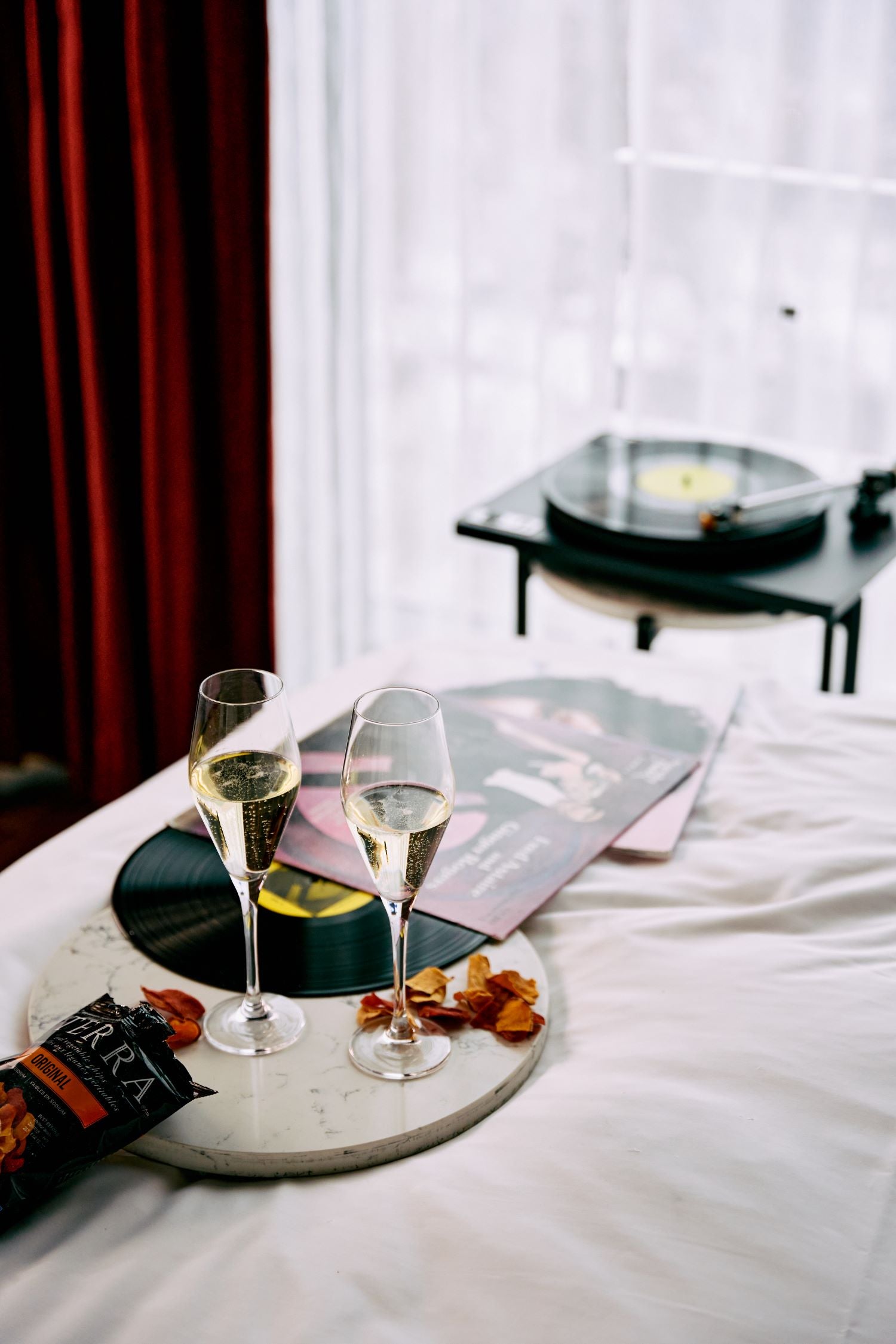
You can see this approach in the 58 guestrooms which are all styled rather than standardized, with amenities like vinyl record players, curated minibars featuring local products, and luxury linens.
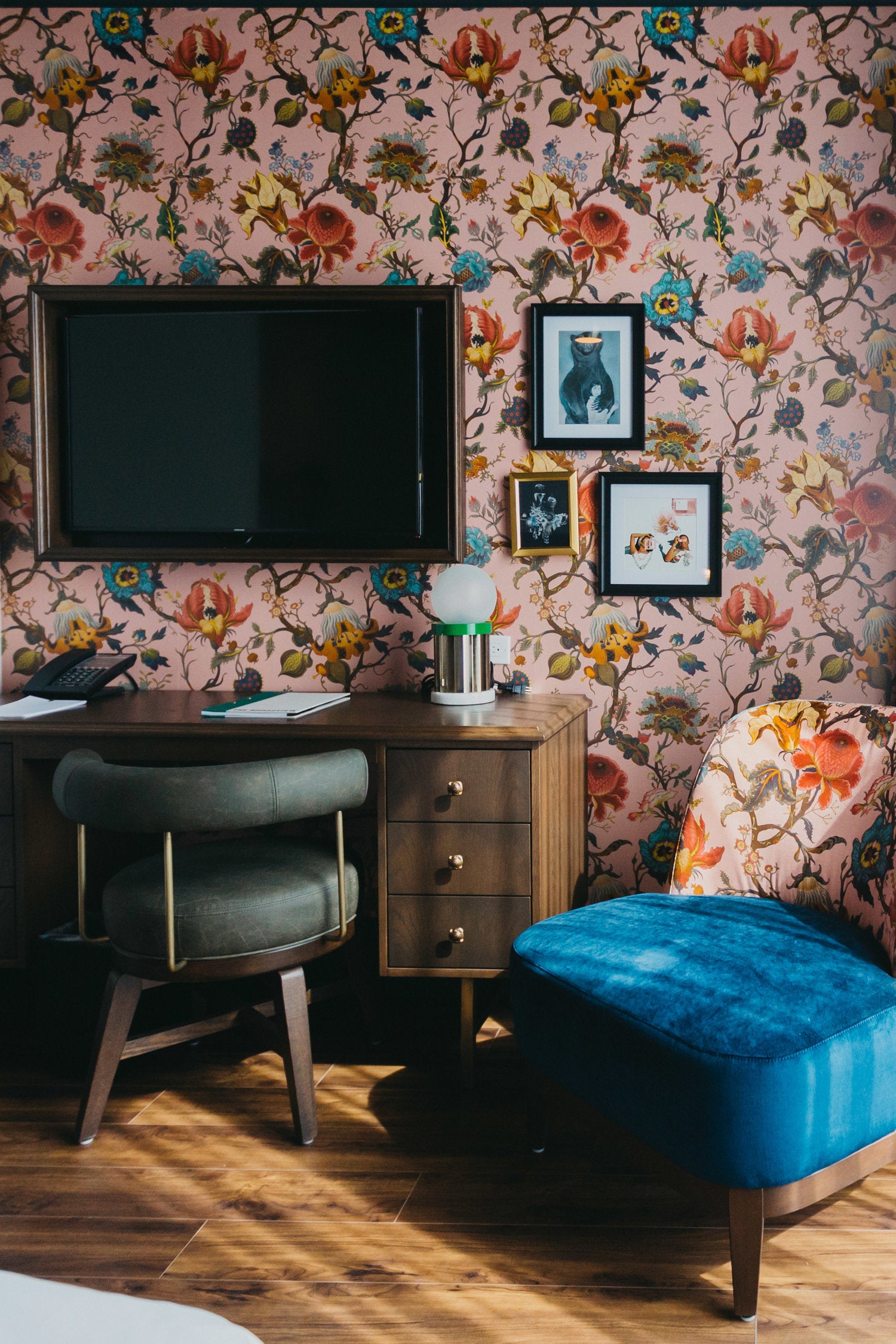
“The guest rooms are a variety of shapes and sizes, with a common aesthetic that again bridges old and new,” Petrie explains. “Layering colours, patterns and textures gives the rooms warmth – they are not generic neutral boxes. House of Hackney’s Artemis pattern in Blush was selected for the wallpaper and velvet upholstery is found in many rooms, paired with deep burgundy velvet curtains.”
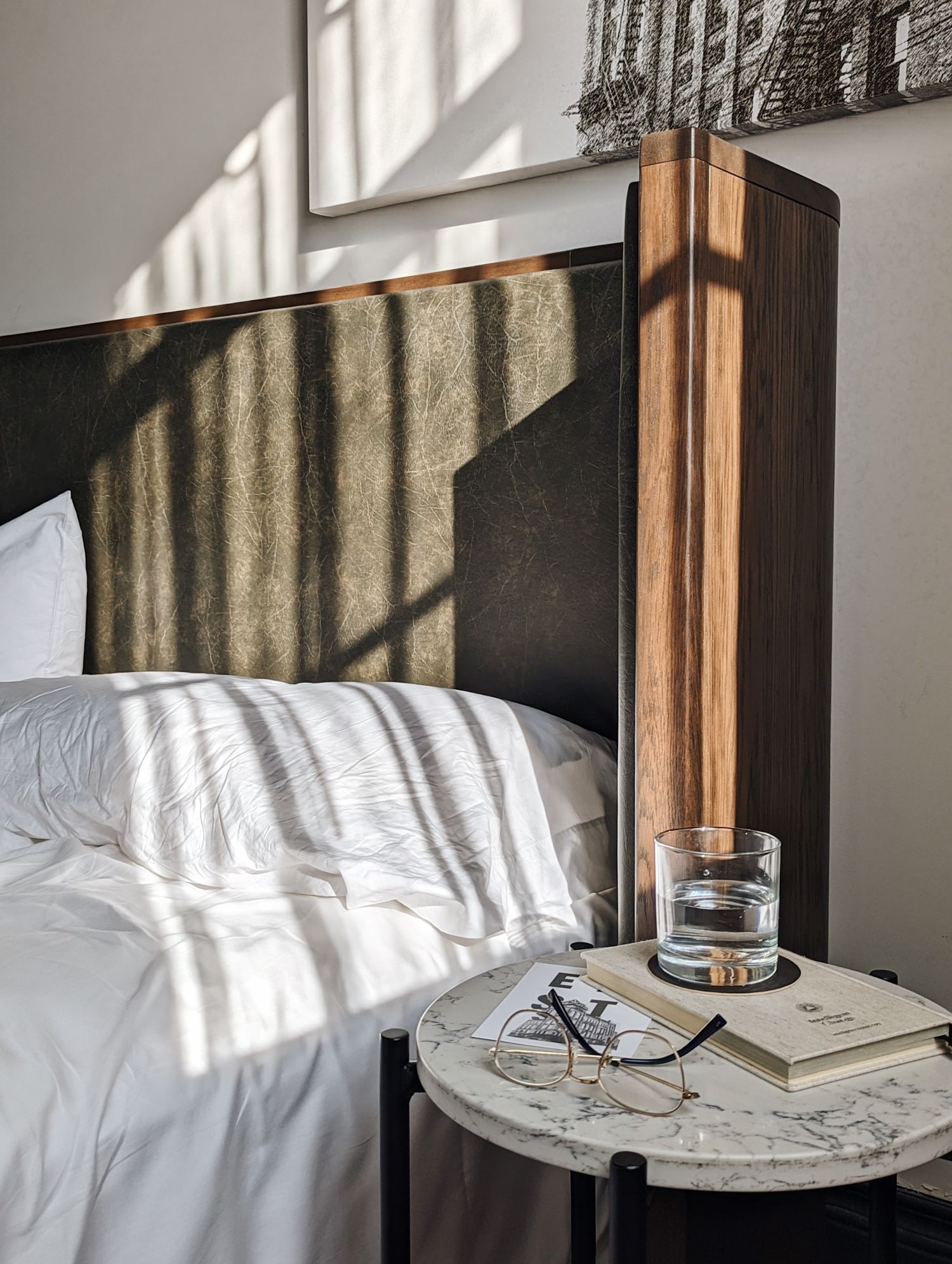
Leather and wood headboards and brass light fixtures add further warmth and texture to the rooms. In the bathrooms, variegated white marble, black hexagonal tiles and black and brass fixtures are another link to the heritage of the building while also feeling contemporary.
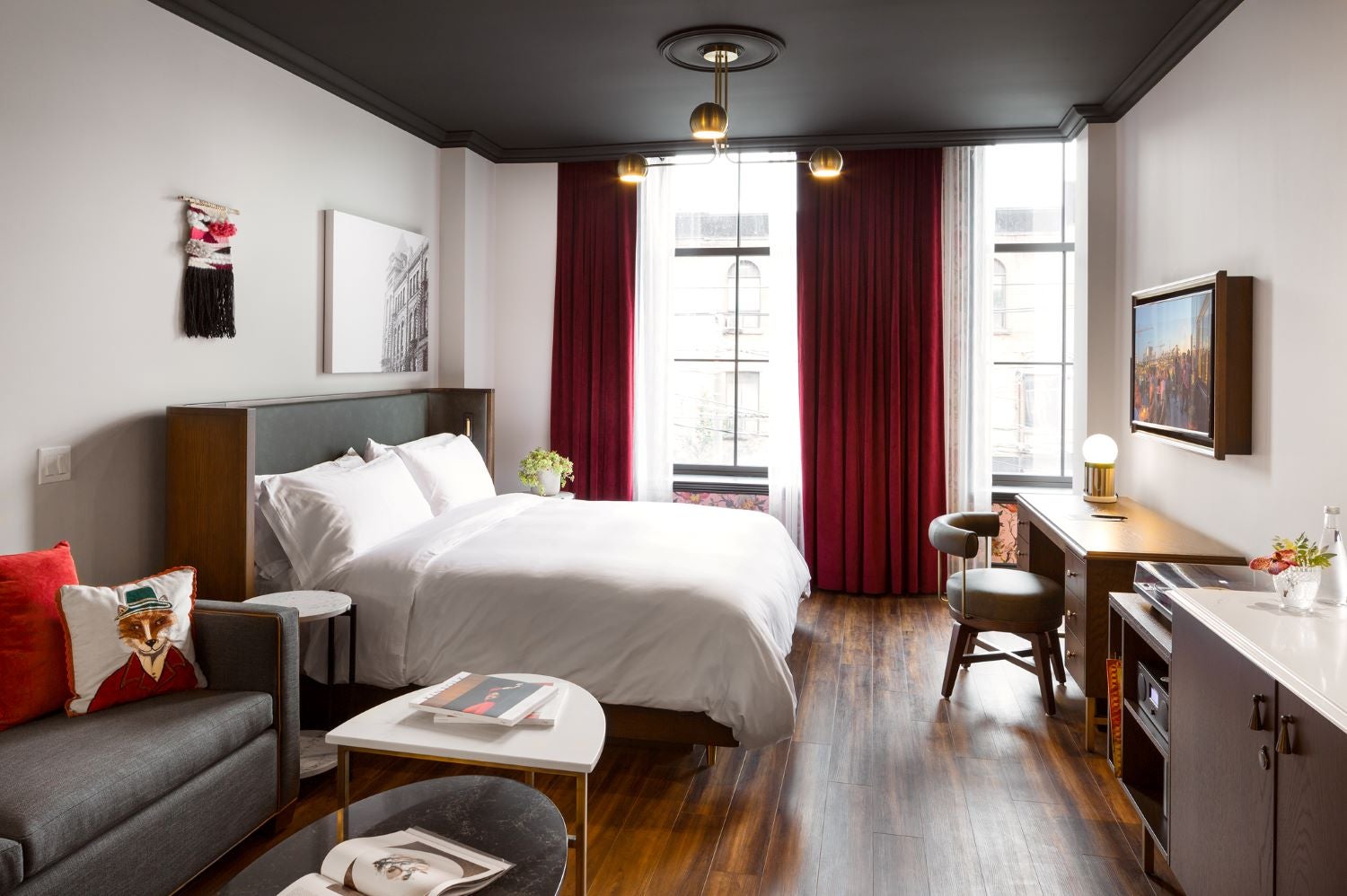
The king corner and Dominion suites even have brass poles – a nod to the strip club formerly known as Jilly’s.
If you are looking for a stylish boutique hotel in Toronto that has comfortable rooms with personality, but also great food and cocktails The Broadview Hotel delivers on all fronts.