

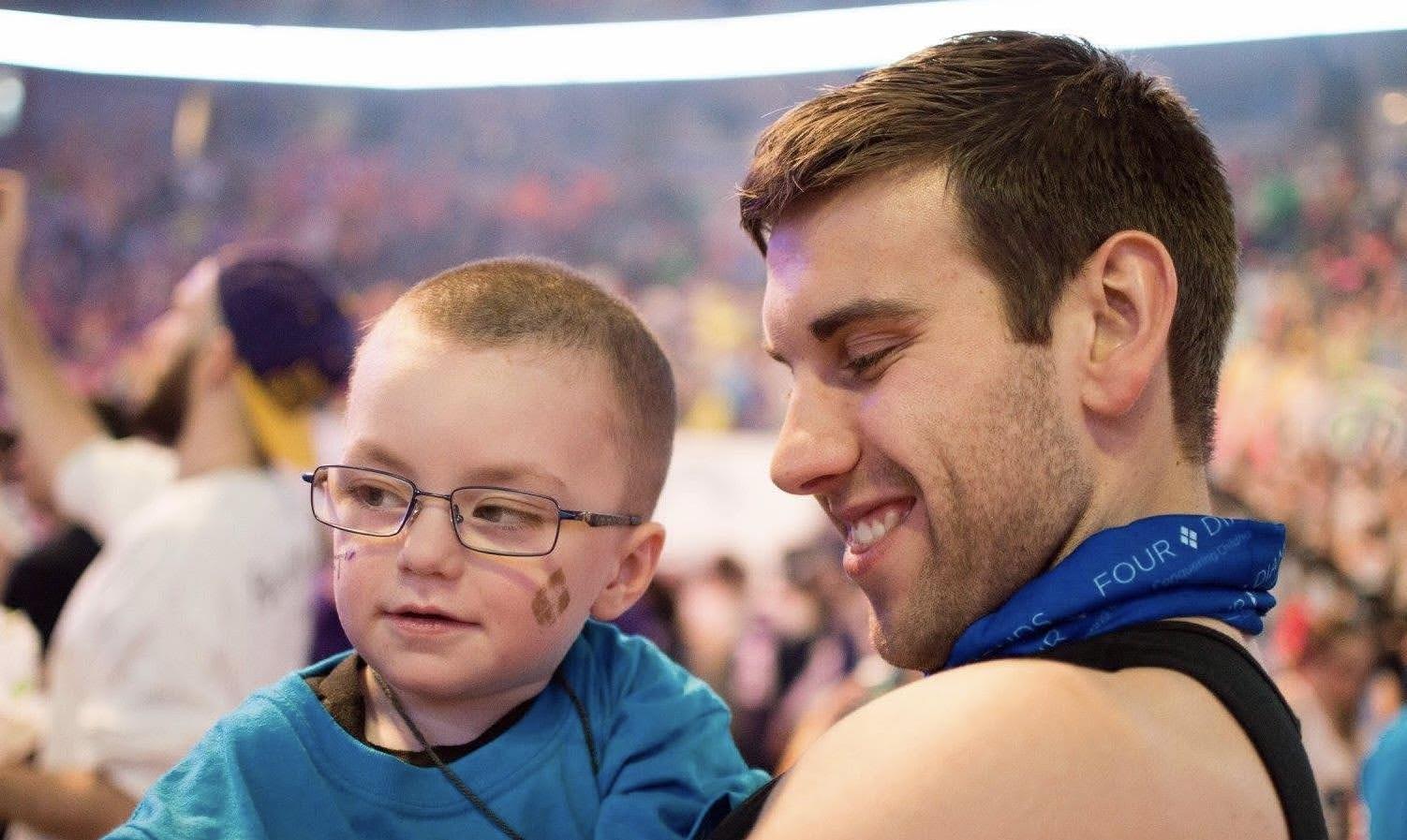
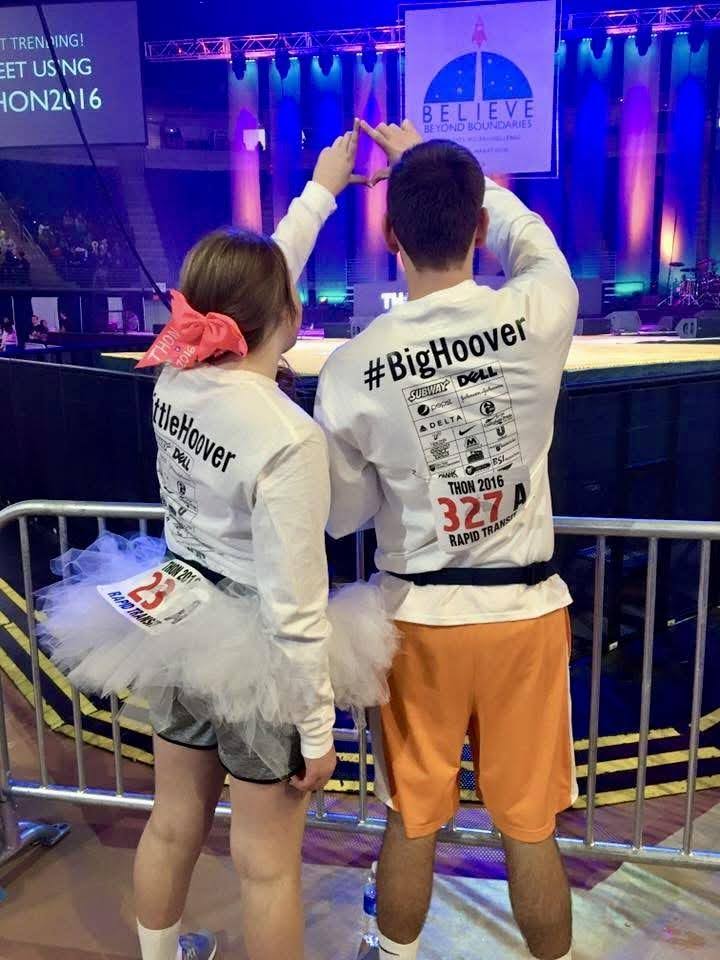
Michael Hoover danced in THON 2016. So did his sister.
They stood and danced for 46 hours alongside thousands of Penn State students — no sitting, no sleeping — moving through exhaustion in The Bryce Jordan Center packed with families whose children had faced pediatric cancer head-on. That year, THON raised $9,770,332. This year, the event raised $18.8 million, a new all-time record.
For Michael Hoover, a CPA based in the Philadelphia area, THON is not a distant memory from college. It is also a cause that is near and dear to his heart, as he has family and friends who are THON families themselves — people whose children were directly impacted by pediatric cancer and who found in the Penn State community something that extended well beyond a fundraiser.
What THON Actually Is
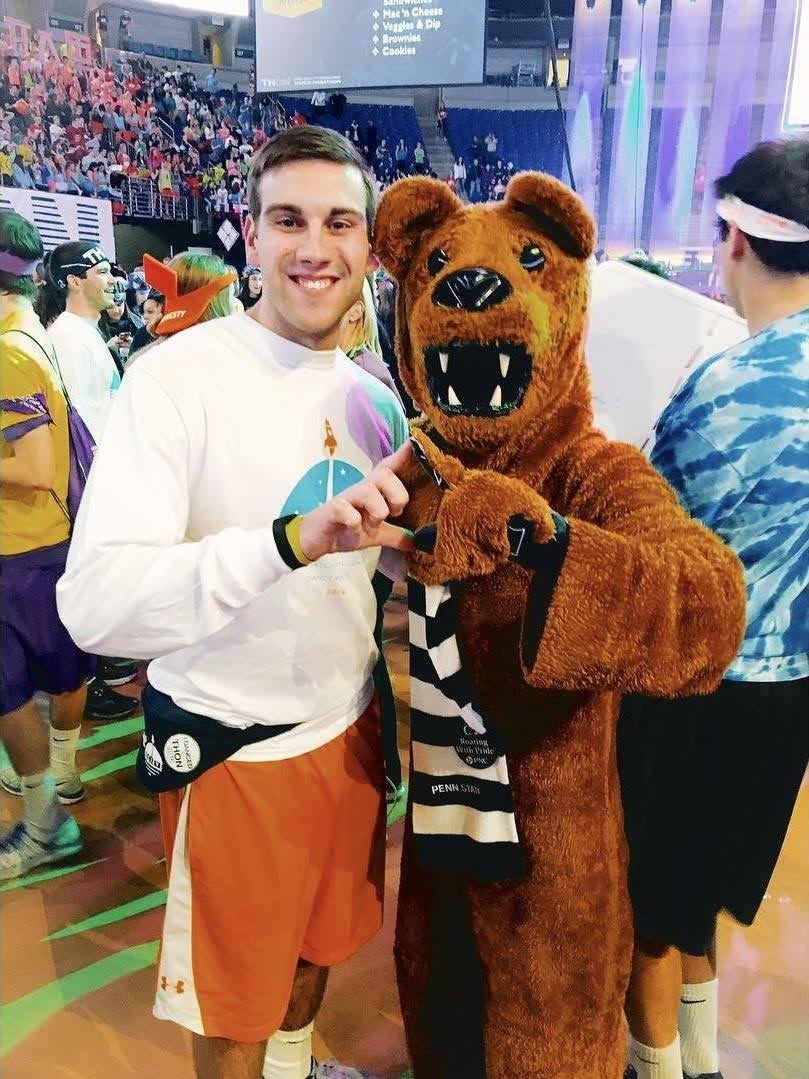
THON, short for the Penn State IFC/Panhellenic Dance Marathon, is the largest student-run philanthropy in the world. Thousands of Penn State students raise money throughout the year, which culminates in a 46-hour dance marathon each February at the Bryce Jordan Center in State College, Pennsylvania. A college town that for one weekend is renamed “The City of THON”.
The beneficiary is Four Diamonds, an organization that funds pediatric cancer research and provides comprehensive support to families of children treated at Penn State Health Children’s Hospital. Since THON’s founding in 1977, the event has raised over $272 million for Four Diamonds. The 2026 total of $18,841,726.53 represents a significant single-year record and reflects decades of organizational growth, student commitment, and community engagement.
The participants, called “Dancers,” are selected through a competitive and somewhat lucky process (for those selected through the lottery) and must remain standing for the full 46 hours. No sitting. No caffeine. No sleeping. Entertainment, family appearances, and emotional milestone moments are woven throughout the weekend, concluding with the announcement of the final total, which is always met with an arena-wide response and cheering that is difficult to describe to someone who has not been there.
What It Asks of the Volunteers and Dancers Who Participate
Forty-six hours of standing and dancing is a genuine physical undertaking. Sleep deprivation begins to affect cognitive function meaningfully after 24 hours. The physical demands of remaining on your feet for nearly two full days, combined with the emotional weight of interacting with THON families throughout the weekend, creates a specific kind of exhaustion that participants consistently describe as unlike anything else they have experienced.
Hoover danced through this in 2016 alongside his sister. They are just two of a multitude of Penn State alumni for whom THON was not simply a school tradition but a defining experience — one organized around a cause that felt genuinely urgent because, for many of them, it was personal. Hoover’s family friends had been THON families. The children in those families were real people he knew, not abstractions in a fundraising pitch.
That proximity to the cause is what distinguishes THON participants who carry it forward from those who file it away as a college memory. When the cause is connected to people you know, the motivation to stay engaged does not expire when you cross the graduation stage.
The New Record and What It Reflects
The 2026 figure of $18.8 million did not happen by accident. THON’s fundraising growth over the decades reflects a consistent organizational infrastructure, a deep alumni base that continues to give after graduation, and a cause — pediatric cancer research and family support — that does not lose its urgency over time.
For context, when Hoover danced in 2016, the total was $9.77 million. In a decade, the event has nearly doubled its single-year fundraising. Additionally, the 2026 total raised reflects a $1.1 million year-over-year increase compared to the $17.7 million total in 2025. That growth is not simply a product of inflation. It reflects expanded fundraising channels, stronger alumni engagement, and growing national awareness of what the event represents.
Four Diamonds covers 100% of medical expenses related to cancer care not covered by insurance for eligible children treated at Penn State Health Children’s Hospital. That commitment is the downstream result of the research funding THON has made possible over nearly five decades. It is the number that tends to stop people when they hear it.
Why Alumni Come Back to It
THON has an unusual quality among large fundraising events in that its alumni base tends to remain emotionally connected to it long after they leave school. Part of this is structural. Four Diamonds families often stay involved with THON for years, sometimes decades, after their child’s treatment concludes. Alumni who danced alongside those families carry that relationship forward.
Part of it is also the nature of the event itself. The 46-hour format is designed to be transformative in a way that a 5K or a gala fundraiser is not. You do not simply attend THON. You endure it, alongside other people, in service of something larger than the inconvenience of standing. That shared endurance creates a durable bond, both to the cause and to the other people who did it with you.
For Hoover, returning to THON as an alumni supporter is less a decision he has to make every year and more a continuation of something that started when he was a student. The cause did not change. The families who need the research funding did not go away. What changed is his capacity, as a working professional, to support it in different ways than he could as a college student.
The Broader Picture
Pediatric cancer remains one of the leading causes of disease-related death in children in the United States. According to Four Diamonds, only 4% of federal cancer research funding goes toward pediatric cancer. Philanthropic investment, including through events like THON, fills a real gap in the research pipeline.
When THON raised $18.8 million in 2026, that money went directly to Four Diamonds, which allocates funds to research at Penn State Health Children’s Hospital and to comprehensive family support services that cover expenses insurance does not. For families navigating a child’s cancer diagnosis, those support services can be the difference between financial stability and financial ruin during an already devastating period.
Michael Hoover understands this in a way that goes beyond the statistics. He has seen what a THON family goes through. He danced for 46 hours in a gym in State College because he believed it mattered. A decade later, the belief is the same. The record total suggests a lot of other people feel the same way.