
You know their coffee order, the jacket they wear whenever they want to feel good and the shoes they refuse to throw away despite being well past their best.
Then you start shopping for an engagement ring and suddenly realise you have no idea whether they prefer an oval diamond or an emerald cut.
That is normal.
Choosing a ring for somebody else means translating all the little things you already know about their style into something they may wear every day for decades. The goal is not to find the ring that looks most impressive in a product photograph. It is to find one that looks as though it already belongs to them.
Fortunately, their wardrobe and jewellery collection have probably been giving you clues for years.
Start With What They Already Wear
Before you look at engagement rings, look at their jewellery.
Not the pieces that live untouched in a box. The things they actually wear.
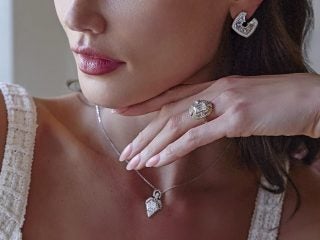
Do they put on the same chunky gold hoops every morning? Is everything silver-coloured and minimal? Do they wear several rings at once, or almost no jewellery at all?
Pay attention to proportion as well as colour.
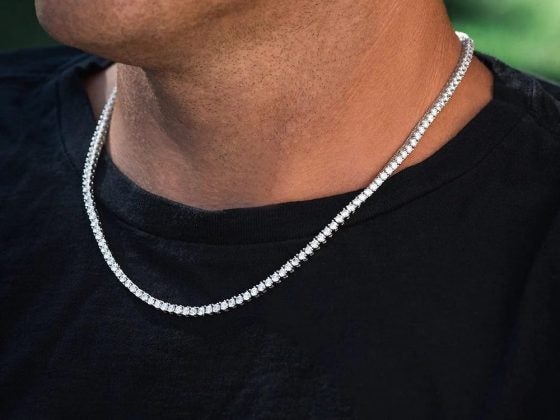
Someone who wears a broad signet ring, substantial watch and heavier chains may naturally prefer an engagement ring with more visible metal or a stronger silhouette. Someone whose jewellery is consistently fine and understated may feel more comfortable with something quieter.
Try turning what you notice into a very simple brief.
For example:
“Yellow gold, elongated stone, clean setting.”
Or:
“White metal, lots of sparkle, delicate band.”
That is far more useful than beginning with “something timeless”.
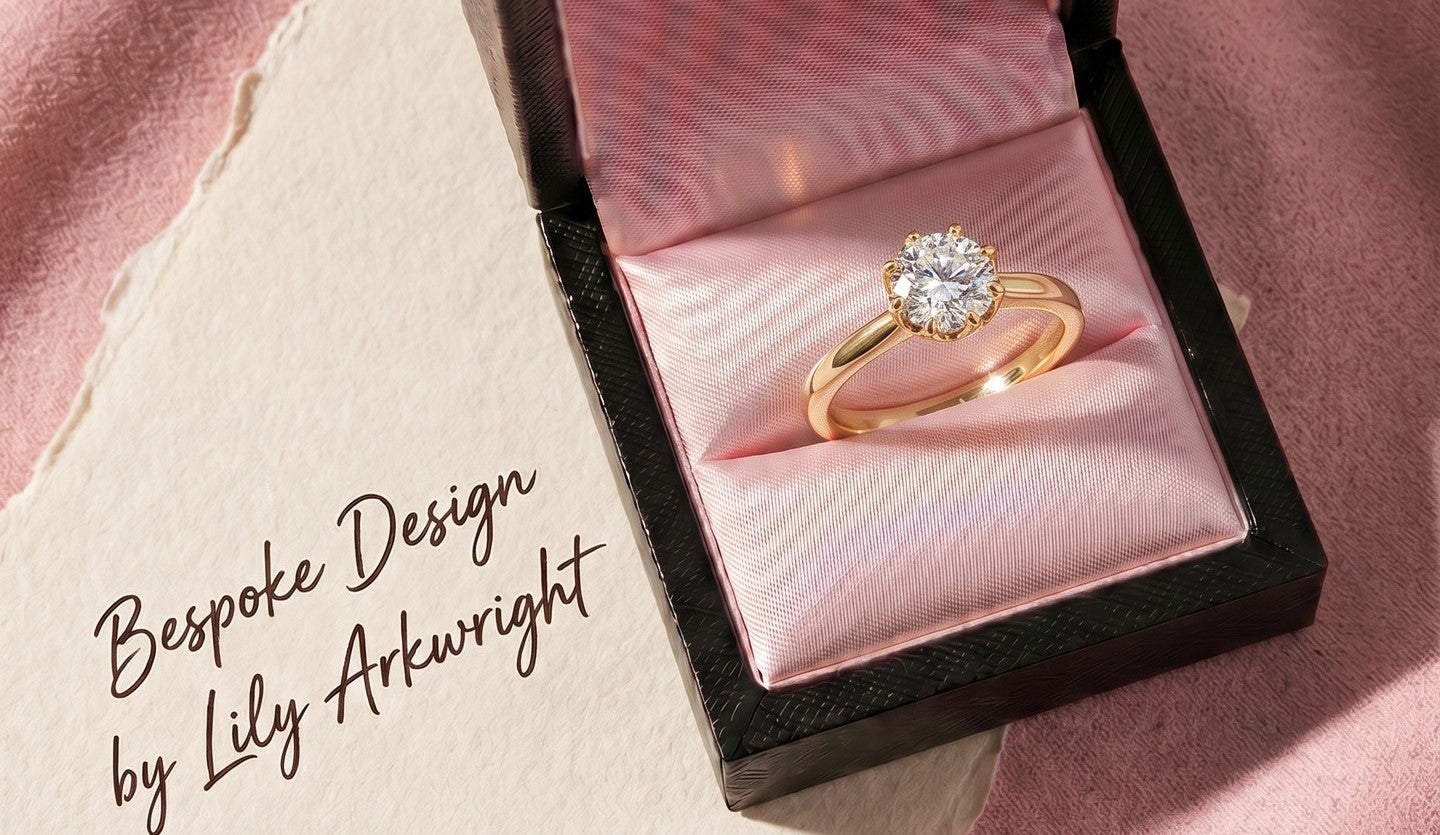
Once you have a rough idea, compare it with real designs. Lily Arkwright’s collection of lab grown diamond engagement rings includes different diamond shapes, settings and precious metals, which makes it easier to test whether you keep being drawn to the same details.
Do not worry about choosing yet. At this stage, you are looking for patterns.
Learn to Read Their Jewellery Without Guessing
There is a difference between noticing what somebody wears and assuming you understand why they wear it.
Their yellow-gold watch may tell you they like yellow gold. Or it may simply have been a graduation gift they happen to wear every day.
Look for repetition.
If their earrings, necklaces, watch and rings all lean towards the same metal or style, that is a much stronger clue.
The same applies to shape.
Are their accessories mostly rounded and soft, or do they gravitate towards cleaner geometric lines? Does their wardrobe feature minimal tailoring, vintage details, colour, embellishment or deliberately oversized pieces?
You are not looking for a mathematical formula. You are looking for enough evidence to avoid choosing something simply because you like it.
There is an important difference.
Choose the Diamond Shape Before You Obsess Over Carat
It is easy to get distracted by numbers when shopping for diamonds.
Carat weight is one of the most obvious, but a bigger number does not automatically mean a better ring. Start with shape.
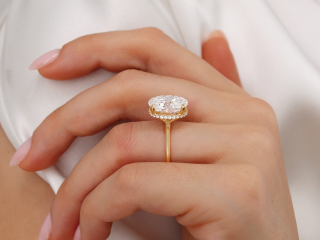
Oval
An oval diamond has a softer, elongated outline. It can feel elegant without being as traditional in appearance as a round brilliant.
Emerald Cut
An emerald cut brings straighter lines and cropped corners. Its proportions can make the ring feel cleaner and more architectural.
Round
A round diamond gives you the most familiar engagement-ring silhouette and is useful as a reference point even if you suspect they want something less traditional.
Pear, Marquise and Radiant
A pear introduces asymmetry. A marquise is elongated and pointed at both ends. A radiant combines a more geometric outline with a lively faceted appearance.
Try comparing shapes at reasonably similar visible sizes.
A large oval on a very fine yellow-gold band will naturally feel different from a smaller round diamond in a substantial platinum setting. Too many variables at once make it difficult to work out what you actually prefer.
And look at dimensions rather than relying entirely on the shape name.
Two oval diamonds can both be described as oval while having noticeably different proportions. One may appear long and narrow; another shorter and wider.
That can matter more visually than a small difference in carat weight.
Decide How Much Detail Actually Fits Their Style
Once you have a shape in mind, look at the setting.
This is where the same centre stone can turn into two completely different rings.
A solitaire keeps the design relatively clean and puts most of the attention on the centre diamond. A halo surrounds the centre with smaller stones, creating a more detailed outline and additional sparkle.
A hidden halo keeps much of that detail underneath the centre stone, so the ring can look simpler from above and more elaborate from the side.
Diamond-set shoulders add detail along the band.
A bezel introduces a visible rim of metal around the stone, which can make the entire ring feel more graphic. Trilogy designs change the proportions again by using three principal stones.
Rather than asking whether your partner is “classic” or “modern”, ask something more useful.
Would they enjoy detail they can see from across the table, or are they more likely to appreciate something subtle that appears only when the ring is viewed from the side?
That is a much better design question.
Get the Metal Right
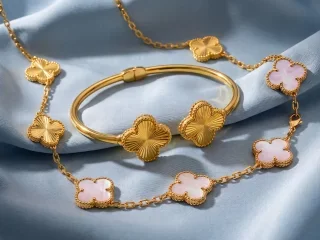
If almost everything they wear is yellow gold, yellow gold is the obvious place to start. Not necessarily the place to finish. But definitely the place to start.
The same applies if their jewellery collection is predominantly white metal.
Do not assume everything suddenly needs to match perfectly either.
Someone who already mixes gold and silver is unlikely to be horrified by an engagement ring that introduces another metal.
Try to imagine the ring alongside the watch, bracelets and other jewellery they actually wear.
A yellow-gold ring can stand out deliberately against silver-coloured jewellery. A white-metal setting can make the diamond feel more visually dominant. Rose gold introduces another tone entirely.
If possible, compare the same or a very similar ring in more than one metal.
Sometimes it is the metal—not the diamond—that makes the design suddenly feel right.
Think About Their Clothes Too
Jewellery does not exist in isolation.
Think about how your partner actually dresses.
If their wardrobe is dominated by oversized tailoring, heavier fabrics and statement accessories, a very fine ring may feel more delicate than expected.
If they live in minimal knitwear and subtle jewellery, an elaborate halo or large cluster might feel more conspicuous.
That does not mean the ring has to mimic their wardrobe perfectly.
Contrast can be great.
The point is simply to imagine the ring as part of their normal life rather than something that only exists during the proposal.
Picture it with the clothes they wear to work.
With jeans on a Saturday.
With the watch they never take off.
If you cannot imagine the ring outside a velvet box and a proposal photograph, keep looking.
The Proposal Can Be a Surprise Without the Ring Being One
There is a persistent idea that the most romantic engagement ring is one selected with absolutely no input from the person who will wear it.
Sometimes that works brilliantly.
Sometimes it produces an expensive lesson in the difference between “I thought you liked emerald cut” and “I have never said that in my life.”
If your partner has clearly told you what they want, listen.
If they have saved rings, shown you photographs or repeatedly stopped at jewellery windows to point something out, those are not subtle clues. Use them.
If you genuinely have no idea, consider involving them in the choice.
You can choose the ring together and keep the timing, location and details of the proposal completely secret. Knowing whether the ring is oval or marquise does not tell somebody when you are going to propose.
Be Careful With Friends as Ring Consultants
A close friend can be extremely useful.
They can also be extremely confident and completely wrong.
Ask whether your partner has actually discussed engagement rings with them rather than asking what they think would look good.
“She’s told me she wants yellow gold and hates halos” is valuable information.
“I’ve always imagined her with a princess cut” is an opinion.
Know which one you are getting.
Build a Shortlist You Can Explain
At some point, stop opening new tabs.
A shortlist of three or four rings you can clearly distinguish is much more useful than thirty variations on something you vaguely like.
Give each one a reason to stay.
“The oval with the wider yellow-gold band.”
“The emerald cut with the hidden halo.”
“The simple marquise solitaire.”
Those descriptions tell you what you are responding to.
“Another nice diamond ring” does not.
Then compare the finalists fairly.
Look at photographs taken from similar angles and distances. Compare actual dimensions. Look at side profiles as well as views from above.
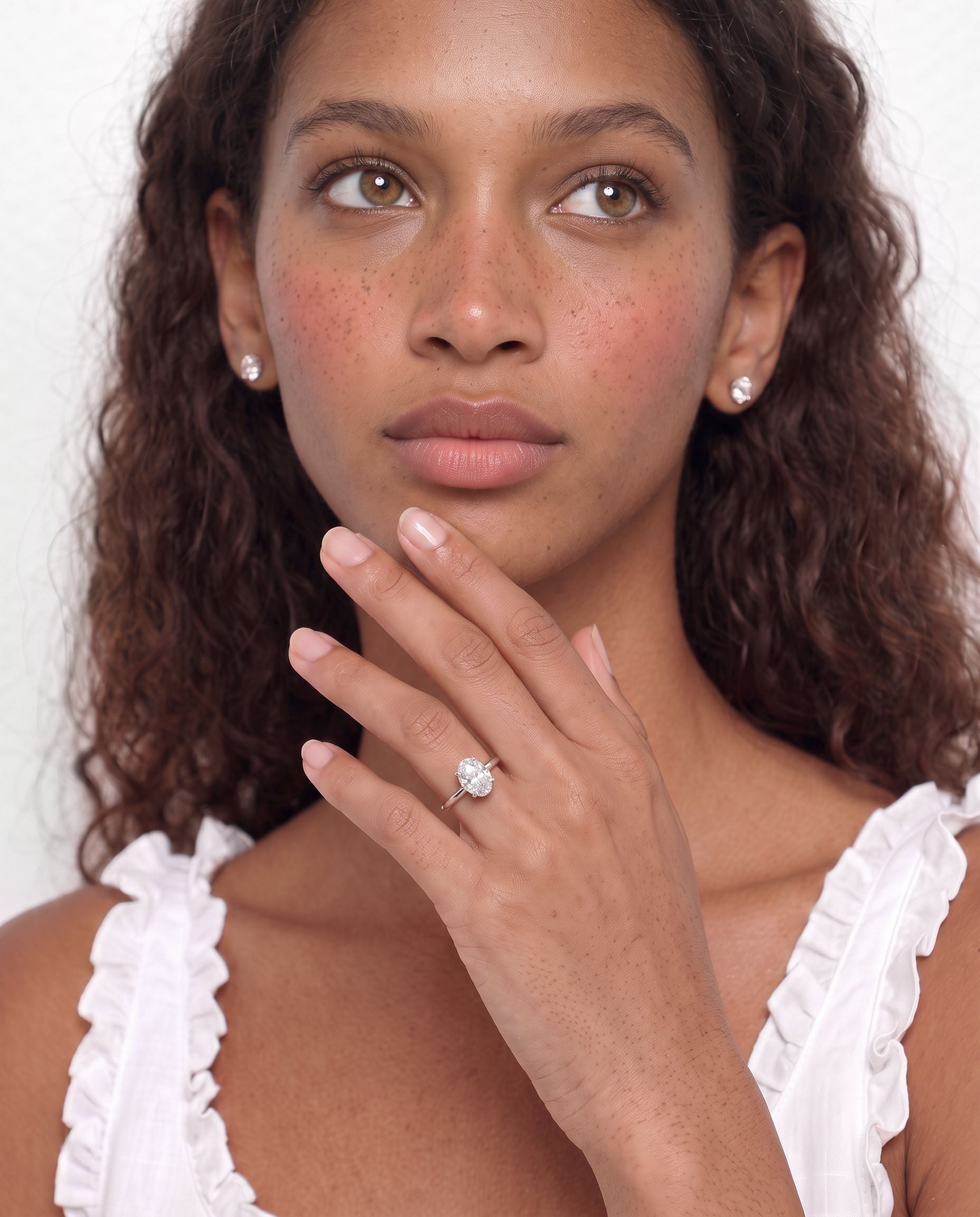
If possible, see how the ring looks on a hand rather than judging everything from enlarged product photography.
A ring photographed close enough to show individual facets can feel very different when viewed at the normal distance between your eyes and your partner’s hand.
Don’t Forget How the Ring Has to Live
The most beautiful ring in the shortlist still has to function as a piece of everyday jewellery. Look at the setting from the side.
How high does the centre stone sit?
Would that work with their job?
Do they wear gloves regularly?
Are they constantly pulling knitwear on and off?
Do they exercise, garden or work with their hands?
These things should not dictate the entire design, but they are worth discussing with the jeweller.
If your partner plans to wear a wedding band on the same finger, ask how one would sit alongside the engagement ring.
Some settings allow a straight band to sit closely against them. Others naturally create a gap or work better with a shaped wedding ring.
Finding that out now is easier than discovering it when you start wedding-ring shopping.
Check the Practical Details Before You Pay
By this point you should be thinking about a specific ring rather than an abstract style. Now check exactly what you are buying.
Confirm the ring size or the resizing options if the proposal is a surprise.
Check the complete price for the specification you have selected rather than relying on an advertised starting price.
Ask about production time as well as delivery time.
Understand the returns policy, particularly if the ring is being engraved, customised or made to a particular specification.
Ask what aftercare is available.
And keep the important information in writing.
None of this is particularly romantic.
It is considerably less romantic to discover it afterwards.
Choose the Ring That Looks Like It Belongs to Them
There is no universal formula for the perfect engagement ring.
The biggest stone is not automatically the best choice. Neither is the most unusual design, the most fashionable shape or the ring somebody else tells you is the safest option.
The useful clues have probably been in front of you all along.
The jewellery they wear.
The clothes they choose.
The colours they return to.
The details they notice.
Use those clues to narrow down the options, then make sure the practical side works too.
The best engagement ring should still feel special when the box opens.
But a few months later, when the proposal is a memory and the ring has become part of everyday life, it should also look like it was always supposed to be there.