

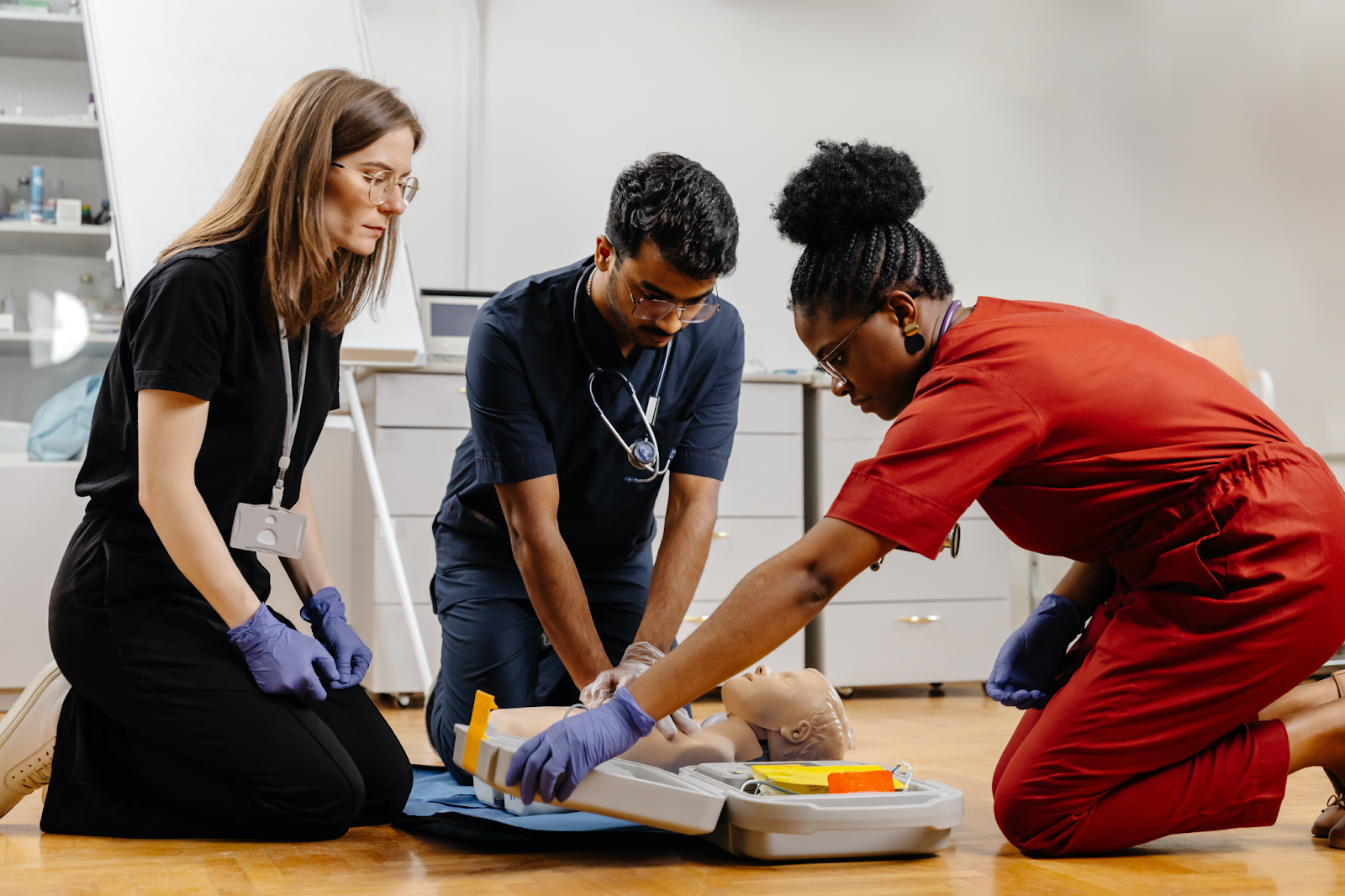
It’s always worth empowering ourselves and upskilling in various areas of life.
Whether that’s improving your qualifications to further your career or engaging in a creative pursuit or hobby for fulfillment and life satisfaction, it makes sense to equip yourself with new skills to help you navigate life circumstances and improve yourself. Regardless of whether it’s taking an online ABSN program or another type of qualification, you can’t go wrong with extra training.
One qualification that may save a life one day is CPR, or Cardiopulmonary Resuscitation. This life-saving first aid skill is worth upskilling in, because you’ll never know when you need to use it and potentially save someone’s life. This article will share a crash course in CPR, and by the end of this article, you’ll know when to use it and how to perform it.
What is CPR?
CPR is a first aid technique you can use on someone if they are unconscious, not breathing, or if their heart has stopped. This is a skill that everyone can learn; you don’t have to be a qualified nurse, doctor, or health professional to use it. CPR has the potential to save someone’s life, whether that’s a close friend, family member, or simply a stranger on the street.
CPR involves chest compressions performed using your hands and mouth-to-mouth (called rescue breaths). The aim of CPR is to circulate blood and oxygen in the person’s body to keep their brain and vital organs alive until specialized treatment is available.
When Should It Be Used?
CPR should be used if someone is unconscious, not breathing, or has no pulse or heart rate. This may be due to a heart attack, drowning, stroke, or other major critical incident. You can also use it if someone is struggling to breathe or is breathing abnormally, such as gasping for air or grunting. If someone is conscious, responding to you, and appears lucid, then CPR is likely not required in this instance.
How to Perform CPR
It is important to remember this acronym: DRSABC, to perform CPR successfully. We’ll explore what each letter in the acronym means now.
D – Danger
The first thing to do is to make sure the area is safe for you, the first aider, and the person receiving CPR. You should not engage in CPR if it will put you, the CPR recipient, or anyone else in the area at immediate risk. If possible, remove the danger and then continue. If you cannot commence CPR without placing yourself in danger, you should not continue. Dangers may include live wires, fall or slip hazards, or blood.
R – Response
The next thing to do is to check for a response from the person, in a loud, clear voice, ask their name, and squeeze their shoulders to see if you can get a response from them. If they respond and are coherent and breathing, then CPR is likely not required.
S – Send for Help
If the person does not respond, the next step is to send for help. Call 911 and ask for an ambulance, or ask someone else to make the call while you attend to the person. Whatever you do, don’t leave the person or let them out of your sight.
A – Airway
The next step is to check the person’s airway. Open their mouth and check that their throat and nose are clear of any vomit, food, or loose teeth. You can use two fingers like a scoop to clear the person’s airway of any debris or loose matter, after placing them in the recovery position. You can also open their airways by gently tilting their head back and lifting their chin.
B – Breathing
The next step in the CPR process is to check if the person is breathing. Look, listen, and feel to check for breath for around 10 seconds. Place your hand on their stomach, your ear close to their mouth, and look to see if their chest is falling and rising. If they are indeed breathing normally, place them in the recovery position and stay with them until help arrives. If they are not breathing normally, this is your sign to commence CPR.
C – CPR
Now, it is time to commence CPR. The first step is to use your hands, with the fingers interlinked, to compress the person’s chest. You should give 30 chest compressions at the pace of 100-120 beats per minute. If you know the Bee Gees song Staying Alive, the beat to this song, funnily enough, is the perfect meter for CPR. In between 30 chest compressions, give the person 2 rescue breaths.
When giving a rescue breath, tilt the person’s head back so that their airway is open, and place your mouth over theirs. Pinch their nose shut as well. Give two powerful breaths into their mouth, so that the air makes its way down into their lungs. Then, continue with the next lot of 30 chest compressions.
If you do not know the person well or believe there may be a risk of contracting a virus such as COVID-19 or something else, you do not have to perform rescue breaths. In most cases, chest compressions are enough to keep blood circulating throughout the body and save someone’s brain and vital organs.
You should continue giving CPR until the ambulance arrives, and you are directed to stop and let the paramedics take over care of the person.
Where Can I Get Practical Training for CPR?
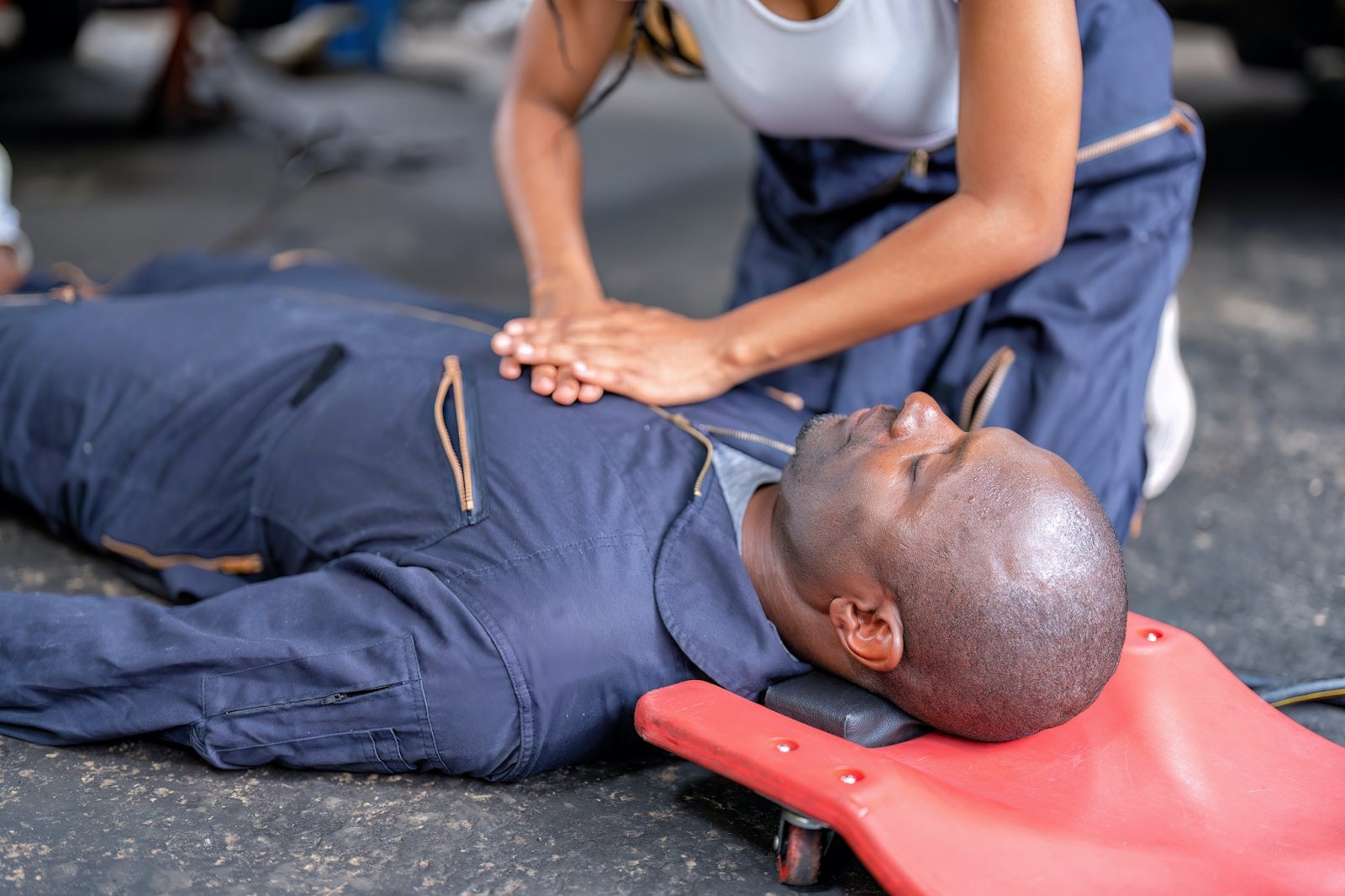
You can obtain practical training for CPR via an accredited First Aid training organization. These schools are qualified to teach people First Aid and CPR. It may be worth signing up for a CPR or First Aid course if you’d like to learn CPR.
For some professionals, such as nurses, teachers, and other roles that interact with members of the public, CPR training is mandatory in order to work in these roles. However, CPR is a life-saving skill that most people should learn and remain current in. In some places, you need to complete First Aid training every three years and CPR every year to remain qualified and competent to deliver it.
Summary
This article has shared how to perform the life-saving skill of CPR.
We’ve covered the situations where you should use CPR, the DRSABC acronym, and how you can become trained to perform CPR.