
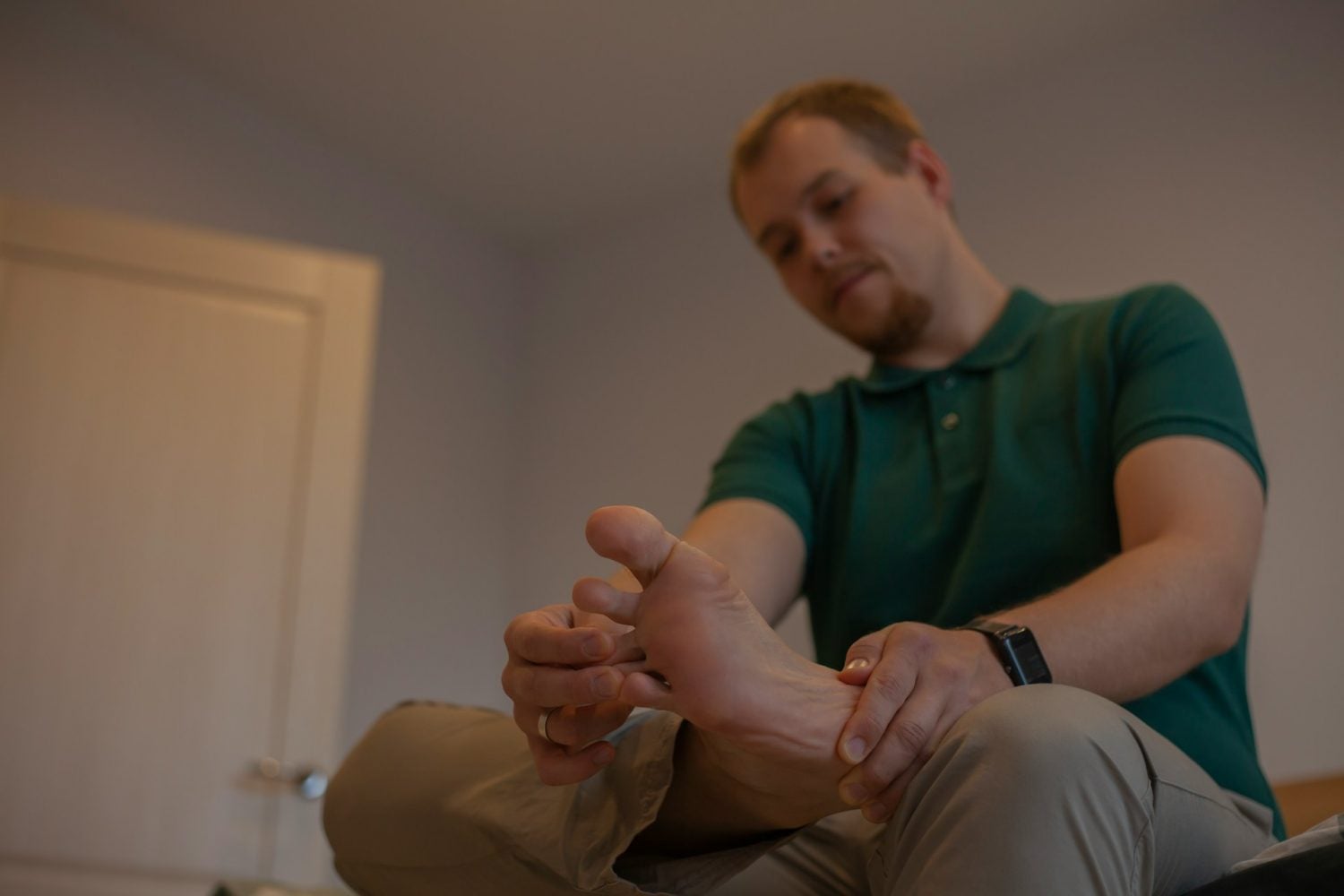
When men begin experiencing neuropathy-related foot sensitivity, numbness, or discomfort, a common assumption is that buying a wider shoe will solve the problem.
Extra width can certainly help reduce crowding, but peripheral neuropathy changes multiple footwear requirements simultaneously. Because compromised nerves can alter how the foot feels pressure and friction, simply selecting a wider size is rarely enough to protect the foot during daily activities.
Instead, men should evaluate a shoe based on its width, depth, interior construction, cushioning, stability, adjustability, and overall fit. Proper footwear is not a medical treatment for neuropathy, but it remains an essential tool to support daily comfort and physical protection. By shifting focus away from width alone, you can find a protective fit that accommodates your specific requirements.
Why Neuropathy Changes What Men Need From Their Shoes
Neuropathy can impair the foot’s normal sensory warning system, particularly when protective sensation is reduced. In a healthy foot, pain signals can alert you to minor discomfort, prompting you to shift your weight or adjust your stride. When nerve damage reduces or alters this sensation, you may not notice sustained pressure, friction, or a small object inside your shoe as quickly as you normally would.
Because of this sensory loss, comfort alone is no longer a reliable indicator that a shoe fits correctly. A shoe that “feels fine” might still be creating unwanted friction or pressure. Your footwear should help minimize unnecessary pressure and shield the foot from unnoticed rubbing. This protective fit becomes especially important for everyday walking and standing. The goal is for footwear to support overall comfort and physical protection—not to treat the underlying condition. This loss of reliable sensation is exactly why buying a shoe solely because it is labeled “wide” may not solve every fit issue.
What Wide Shoes Solve—and What They Don’t
Adding extra shoe width can provide several useful benefits. It creates more side-to-side room, reduces forefoot compression, minimizes toe crowding, and offers better accommodation for naturally wide feet. A roomy toe box can reduce crowding and unwanted pressure against the toes.
However, relying on width alone has distinct limitations. A shoe can have a wide footprint while still being too shallow vertically to accommodate your instep. It might feature irritating internal seams, provide inadequate cushioning, or lack sufficient room for swelling or orthotics. Furthermore, a shoe that is excessively wide throughout can allow too much foot movement and may fail to secure the midfoot properly.
Men who need more than just simple additional width should look for footwear that addresses these broader fit considerations. If you require additional width alongside extra depth, supportive cushioning, smoother interiors, adjustable closures, and room for orthotics, you can compare neuropathy shoes for men that offer combinations of these features. Recognizing these limitations prevents the common mistake of buying a poorly fitting shoe just because it carries a “wide” label. Check out DT Footwear and choose from a wide selection of neuropathy shoes.
Why Extra Depth Can Matter Alongside Width
While width provides lateral space, extra depth provides additional vertical room inside the shoe, from the sole toward the upper.
Additional depth can help accommodate higher-volume feet, swelling or changes in foot volume, and structural changes such as hammertoes that cause the toes to sit higher inside the shoe. Standard shoes may lack sufficient vertical clearance for these issues, potentially causing friction against the top of the foot. Extra depth can also provide the internal space needed for removable insoles or custom orthotics without making the shoe excessively tight across the instep.
A common mistake is sizing up in shoe length to gain internal volume. Simply buying a longer shoe is not the correct solution when the actual issue is a lack of width or depth. Excess length can cause the heel to slide and increase friction. Focus instead on finding appropriate width and vertical depth.
Cushioning and Stability Have to Work Together
Cushioning can be especially helpful for men who spend significant time walking or standing. Appropriate cushioning can improve underfoot comfort and help reduce the impact of everyday movement. Appropriately designed insoles can also help redistribute plantar pressure and increase contact area under the foot.
However, more softness is not automatically better. Cushioning should still allow the shoe to feel secure and controlled during walking rather than excessively soft or unstable.
A useful shoe should also provide a secure fit and a stable base appropriate to the intended activity. The heel should remain reasonably secure, and the shoe should not allow excessive movement inside. Cushioning and stability should complement one another rather than be treated as competing features, but the appropriate balance will vary depending on the wearer, activity, and individual foot needs.
Small Details That Can Make a Big Difference
Smooth or Seam-Minimized Interiors
Prominent seams, rough stitching, and hard internal components can create localized friction points. Because men with reduced sensation might not notice irritation developing, they should pay extra attention to the inside of the shoe rather than judging footwear only by its exterior appearance. Smooth interiors or carefully positioned seams can help reduce physical ridges that may cause unwanted rubbing.
Adjustable Closures
Adjustable systems such as laces or hook-and-loop straps can help maintain a secure fit and reduce unnecessary foot movement inside the shoe. Adjustable closures can also accommodate reasonable changes in foot volume, including swelling that may occur throughout the day, without creating excessive compression.
Removable Insoles and Orthotic Room
Removable insoles can make it easier to accommodate prescribed or aftermarket orthotics while maintaining adequate internal space. Adding a custom insert should not make the shoe excessively tight or eliminate necessary toe room, so the shoe should provide sufficient volume for the insert that will actually be used.
How Men With Neuropathy Should Check Shoe Fit
When evaluating footwear, rely on structural fit rather than just physical sensation. Use this shoe-fitting checklist:
- Measure both feet, as they may not be identical in size or volume.
- Check the width as well as the internal depth.
- Avoid automatically buying a longer shoe just to gain extra width, which can cause heel slip.
- Try shoes on with the socks you will normally wear.
- Test the shoe with the actual orthotic or insert that will be used.
- Check for adequate toe space; toes should lie comfortably without being crowded against the sides.
- Make sure the heel feels secure without excessive slipping during movement.
- Run your hand inside the shoe to feel for hidden seams, rough areas, hard edges, or foreign objects.
- Inspect your feet for redness, rubbing, or other signs of irritation after wearing new shoes, particularly when sensation is reduced.
If you have significant neuropathy, diabetes with reduced sensation, a history of foot ulcers, active sores, significant foot deformities, or recurring structural problems, seek individualized guidance from an appropriate healthcare professional. If you have diabetes and notice a persistent cut, blister, redness, warmth, or another concerning foot wound, contact a healthcare professional promptly rather than relying on a footwear change alone.
Match the Shoe to How You’ll Actually Wear It
The ideal construction for your footwear will vary depending on how the shoe will actually be used. Requirements for everyday casual footwear, travel walking shoes, heavy-duty work boots, or shoes worn for long periods of standing will differ. Work boots may need higher durability or thicker outsoles, while everyday shoes may prioritize lighter weight and breathability.
Despite these differences, several fundamentals remain consistent across all styles: adequate width, sufficient depth when needed, a smooth interior, appropriate cushioning, a secure fit, and reliable stability. Men with neuropathy should evaluate the whole shoe against these factors rather than simply choosing the widest option available.