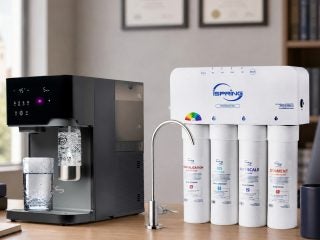


We track our steps, our heart rate variability, our sleep stages, and our VO2 max.
There is a wearable or an app for nearly every signal the body produces, and serious money is going into smart insoles and pressure-mapping gait sensors that promise to quantify exactly what is happening under your feet with every stride. All of that is worth paying attention to. But the actual fix for a lot of foot pain has not changed much in decades, and it does not come with a companion app. It is a shaped piece of material that sits under your arch and changes how your foot loads with each step. No firmware, no calibration, no onboarding flow. Just geometry doing a job that geometry has always been good at.
The High-Tech Race to Solve Foot Pain
The gadget side of foot health has gotten interesting. Pressure-mapping insoles now feed live data to a phone app, showing exactly where load concentrates as you walk. Gait-tracking wearables clip onto a shoe or strap to an ankle and log stride length, pronation, and cadence over time. Some fitting kiosks use 3D scanning to build a digital model of your foot before a product is ever selected. For athletes, physical therapists, and anyone who wants granular data on how they move, there is real value in that.
But most guys dealing with foot, knee, hip, or back pain from long days on their feet are not trying to generate a dataset. Whether that is a trade job, a floor shift, a travel week spent in airports, or a weekend that starts with a hike and ends standing at a bar, the goal is to make the pain stop. The tool with the longest track record for doing that is also the simplest one on the list, which is a shaped arch support fitted to an individual foot.
Why the Simple Version Still Works
Arch support is not a new idea, and that is part of the point. Foot biomechanics researchers have studied how supporting the arch changes alignment, load distribution, and gait for decades, across academic medical centers and podiatry departments. The specifics of any one study matter less here than the general pattern: this is a category with real research behind it, not a wellness trend invented for a product page.
Mechanically, the job is straightforward even if the engineering behind it is not. A properly shaped support changes how weight moves through the foot with each step, redistributing pressure away from spots that are overloaded and giving the arch structure it may not be providing on its own. None of that requires power, a sensor, or a firmware update. It is the same principle that shows up across a lot of durable engineering: the least flashy solution is often the one that has survived the longest because it does not have much to break.
There is also a reliability argument any gear-minded reader will recognize. A sensor needs calibration and eventually a battery.An app needs updates, and if the company behind it folds or deprioritizes the product, it can stop working entirely. A subscription-based gait analysis service is only as good as the company’s roadmap. A properly fitted arch support has none of those dependencies. It does its job the same way on day one and day one thousand, without an app to keep current or a cloud service to stay online.
The Part That Requires a Person, Not a Sensor
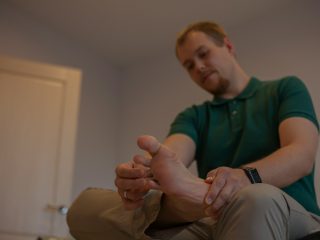
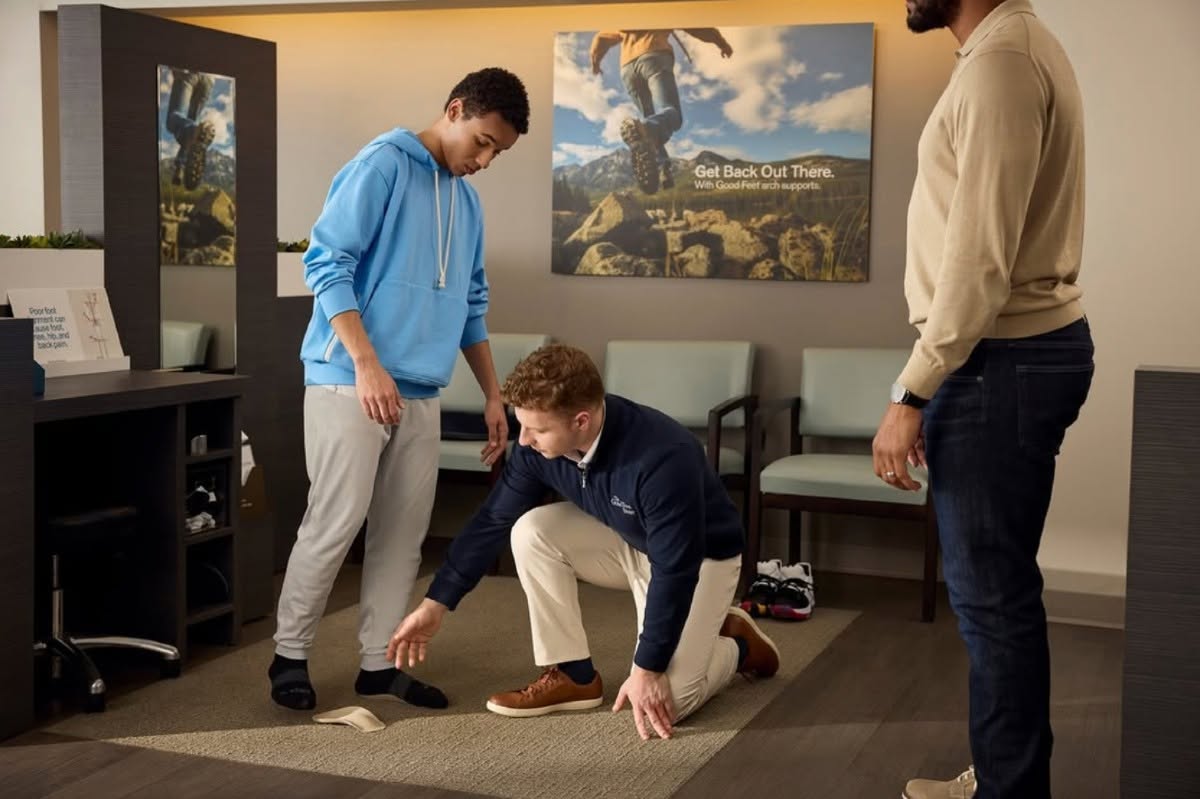
Even the most advanced gait-tracking system still needs a human to interpret the data and decide what to do with it. Good Feet Arch Supports skip the sensor and go straight to that human step. Every visit starts with a free, personalized fitting: a trained Arch Support Specialist assesses your feet, typically including some kind of scan or impression of your foot shape, and asks about your daily activities and where you are feeling pain, whether that is your feet, knees, hips, or lower back.
From there, you are matched to a combination of supports from Good Feet’s three-step system: Strengtheners, Maintainers, and Relaxers, each designed for a different job. Strengtheners are the most structured of the three, built to help reposition the foot into better alignment during everyday wear. Maintainers are a lower-profile option meant to help hold that alignment once your feet have adjusted, including during activity. Relaxers are the gentlest of the three, meant for rest and recovery rather than all-day wear. Once fitted, the supports go into your own shoes for a test walk, a chance to move around and feel the difference before deciding on anything, rather than making a call based on a spec sheet or a single scan.
What Happens If It Is Not Right
There is also a practical safety net built in, the kind of thing a smart-device warranty is usually trying to solve for. Every purchase is backed by a 90-Day Customer Satisfaction Policy. Your Arch Support Specialist stays involved through adjustments and follow-up fittings, and if the fit still is not right after that process, you can return the arch supports within 90 days for a refund to your original payment method, with no restocking fees. Complimentary refittings are part of what you already paid for, not an upsell, which is a different model than most consumer tech, where support tends to get more expensive the longer you need it.
None of this means the high-tech side of foot health is not worth watching. It probably is, especially as the underlying sensors get cheaper and more accurate, and there will likely be a point where wearable gait data and a personalized fitting process work together rather than as competing approaches. But for a lot of guys, the more useful move right now is not adding another device to track the problem. It is fixing the actual mechanics with something built specifically for their foot, no companion app, firmware update, or charging cable required.