
A lanai can hold several different moments in a single day.
Morning coffee gives way to an afternoon with a book, followed by an evening conversation with friends. When the furniture supports those changes, the space becomes an easy extension of the home. Planning it well begins with understanding the area you have and how you want to spend time there.
In Sarasota, an outdoor seating plan also needs to account for the conditions around the house. A covered position may still receive direct sun or wind-driven rain. Before shopping, observe the lanai at different times of day. Notice which corners stay comfortable, where water can reach the floor, and which routes connect the seating area with the kitchen, garden, or pool.
Design for an Ordinary Week
Start with the people who use the lanai most often. A couple who read outside each evening may want supportive seating and convenient places for books and drinks. A household that regularly welcomes friends may need a layout that makes conversation easy. Write down the everyday activities first, then consider what changes when a larger group comes over.
This helps prevent the space from becoming crowded with furniture chosen for occasional events. An additional lightweight chair may accommodate a visitor without taking up permanent floor space. Think about where that chair would be stored, how easily it can be moved, and whether its height works with the rest of the seating. The everyday arrangement should feel comfortable even when only one person is outside.
Establish the Main Seating Area
An outdoor sofa can provide a clear starting point for the layout. When comparing options at Homary, check the full width and depth against the usable floor area. Allow for door swings, side tables, and the space needed to walk around someone who is already seated. Cushion thickness and seat depth can also affect how a piece feels to different users.
Position a pair of chairs so they relate comfortably to the sofa. The garden or pool may provide an attractive view, but people should also be able to face one another naturally. If the lanai is long and narrow, a simple arrangement along one side may leave a more useful passage through the space. Mark furniture positions before committing to a configuration.
Give a Sectional Enough Room
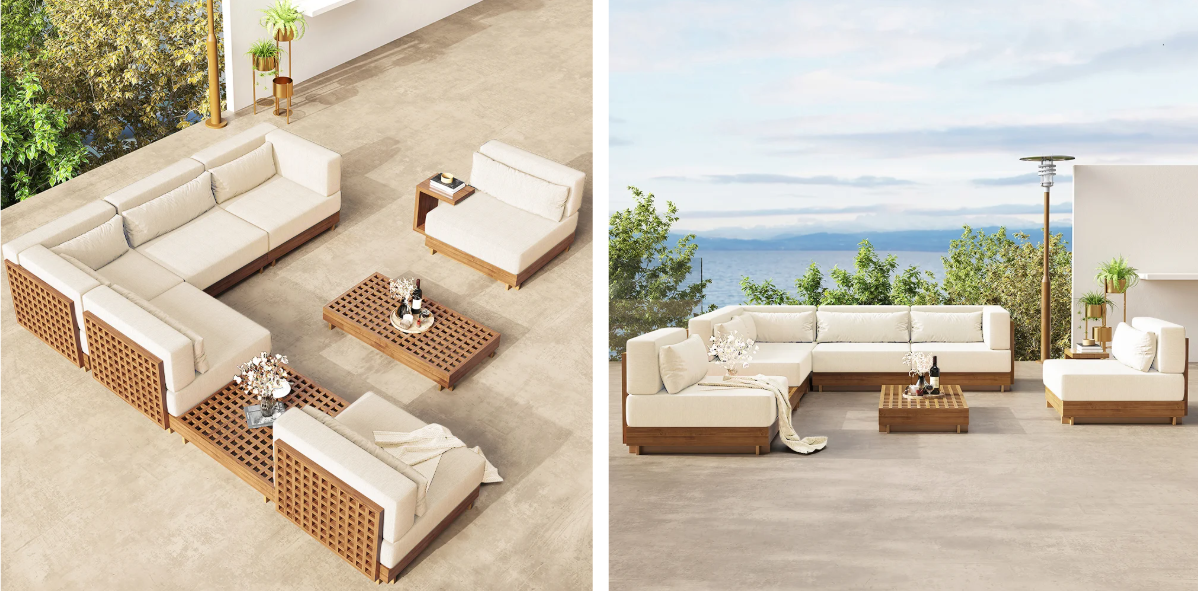
A larger lanai may suit an outdoor sectional, especially where a corner can define the gathering area. Review the exact orientation of the piece. An extended section that looks convenient in a product photograph may block the route to a door in your own home. Compare the dimensions with a measured sketch showing the main access points.
If a particular model offers movable sections, check which configurations the manufacturer supports and how the sections connect. Consider who will move them and where each component can go. Flexibility is useful when the available arrangements suit the room and remain practical to change. Leave enough space around the furniture for cleaning and routine maintenance as well.
Match Materials to Their Position
Read the care instructions for each candidate carefully. The frame, cushions, covers, and fittings may have different maintenance requirements. Confirm the product’s intended outdoor use and any recommendations about shelter or storage. A screened or covered lanai still needs to be assessed according to its actual exposure, including moisture and sun reaching individual seating positions.
Think through the maintenance you are willing to do. Removable cushion covers may be convenient, but their cleaning method depends on the manufacturer’s directions. Protective covers also require suitable sizing and use. Plan somewhere accessible for cushions or accessories that need to be brought inside, and avoid choosing more loose pieces than you can comfortably manage when the weather changes.
Put Useful Surfaces Within Reach
A seating group becomes easier to use when everyone has somewhere to put a drink. Side tables can be especially helpful where a central table would narrow the walkway. Check that each surface is stable on the flooring and conveniently positioned beside the seat. Leave space for people to stand up without having to move a table first.
Consider how food reaches the lanai. Carry an empty tray along the route from the kitchen and walk around the proposed furniture positions. That quick rehearsal can reveal awkward turns or tight gaps. If meals are a regular part of outdoor life, decide whether the space needs a separate dining area and measure both zones together before ordering furniture.
Check the Space After Sunset
Lighting changes how the lanai feels in the evening. Make sure steps, thresholds, and routes back indoors are easy to see. Use fixtures suitable for the location and follow installation guidance. Position light so it supports reading or conversation without shining directly into the eyes of someone seated nearby.
Finish with a small number of accessories that are easy to care for. Cushions, a suitable outdoor rug, or a planter can introduce color and texture, provided they leave the seating area comfortable and accessible. Once the layout is in place, spend a few evenings using it. A table moved closer or a chair turned slightly may be the adjustment that makes the lanai part of your daily routine.