

George Finn doesn’t believe acting is about becoming someone else, instead it is about putting little bits of yourself into the character to grow closer to the story.
This approach has followed Finn throughout his career spanning across television, independent film, and now Atlas King. The new action thriller puts him in the center of a world defined by violence, loyalty, and survival. As Tommy, a fearless fighter carrying the weight of his father’s legacy, Finn found himself taking on a role that demanded more from him than almost anything he had done before, both physically and emotionally.
And for Finn, some of what Tommy was carrying hit particularly close to home.
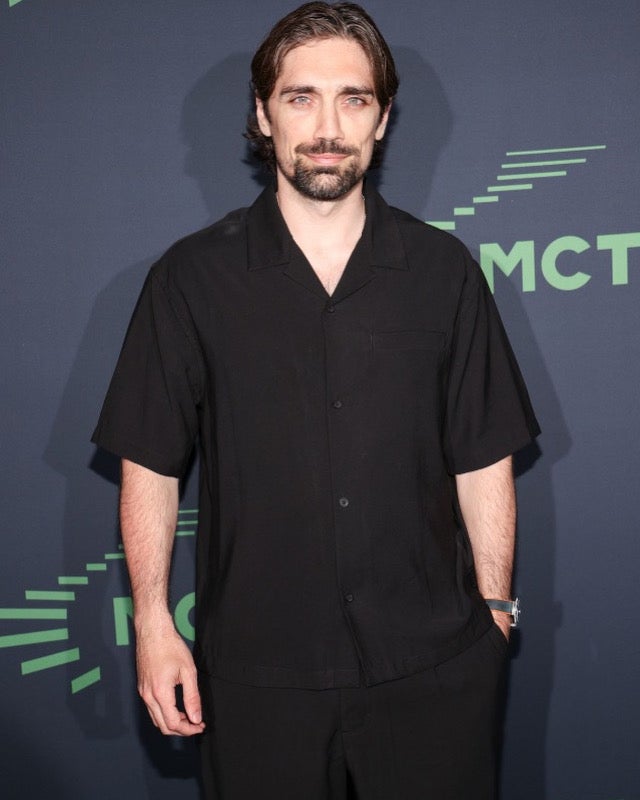
Finn first stepped into acting at 12 years old, at the time, it was something he enjoyed but never considered pursuing professionally. Four years later however, after starring in his brother’s first short film, that interest became something more permanent.
He knew that he wanted to spend his life performing.
Since then, Finn has built up a career that includes roles as Chad in LOL and Jasper in the cult sci-fi thriller Time Lapse, along with appearances in S.W.A.T., The Mentalist, How I Met Your Mother, and more.
“Each project has had an effect on me and helped me grow,” Finn says. “I also think the well I work from is much more vast with so much experience.”
Rather than disappearing completely into a character, Finn starts by looking for common ground. He finds the pieces of himself that intertwine with the character, builds their personality from there, and still leaves enough space for growth and portrayal breakthroughs once the cameras are rolling.
That unpredictability has kept him hooked through the ups and downs of a Hollywood career.
“The exploration of character has continued to excite me,” he says. “You get to live a hundred different lives from different perspectives. See what it’s like to fall in love, to feel sorrow, to fight for what I believe in, all in ways different from my own life.”
With Atlas King, that exploration became deeply personal unlike anything he has experienced before.
Stepping into Tommy’s shoes
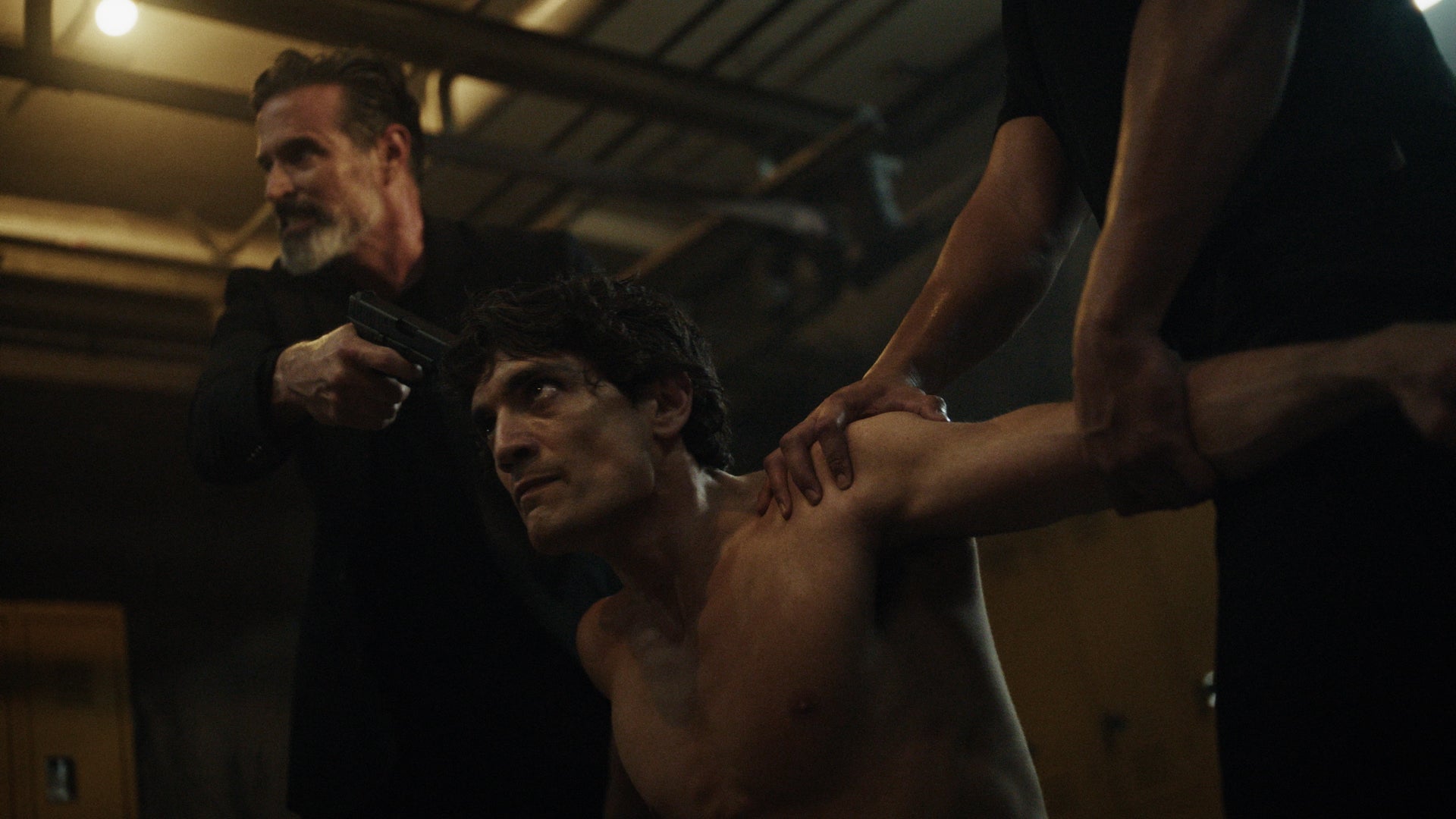
Tommy is not a man who does anything halfway; he is fearless, hot-headed and fiercely protective. To carry on his father’s legacy and to cope with the grief of losing him, he becomes involved in a violent underground crime ring. He fights because it’s what he knows, he fights for justice. And he fights for the people he’s loved and lost. Although sometimes, he fights because throwing a punch is easier than confronting everything underneath it.
Finn understood that instinct more intimately than he originally expected.
Having experienced the loss of his own father, he tapped into his personal grief to understand a man desperately trying not to let his anguish consume him. In turn, playing Tommy gave Finn another way to process some of that grief himself.
“He’s able to bear this burden and fight with it with every part of his being,” Finn explains. “The rage, the justice, the loyalty he has for those close to him.”
Of all those qualities, loyalty became the one Finn connected with most.
“The loyalty in Atlas King was one of my favorite parts of the script,” he says. “Even when everything might come raining down, the characters all trust in each other and try to overcome the storm.”
That trust became one of the film’s most defining concepts. In a world where strength is only measured by who can survive the next fight, Tommy slowly realizes that there are some battles you cannot win alone.
Training Like a Fighter
To truly inhabit Tommy’s world, emotional preparation was only half the equation.
George Finn was stepping into a production surrounded by people who knew that world intimately—including former UFC Middleweight Champion Michael Bisping.
Whereas Finn had no professional fighting background when he signed on for Atlas King.
For three months, Finn trained twice a day, five days a week, immersing himself in MMA, Muay Thai, wrestling, Brazilian jiu-jitsu, stunt work, and strength training. For him it wasn’t simply about looking convincing in a fight scene, he also needed to understand how a fighter moves, reacts, thinks, and carries himself when fighting has become second nature.
The physical toil ultimately unlocked something Finn hadn’t prepared for: a better understanding of Tommy.
“The grueling physical work allowed me to figure out a deeper emotional connection to Tommy,” Finn says. “Tommy bears a heavy burden, but his release is fighting, and that’s where he gets to let it all out.”
The long hours in the gym also gave Finn a chance to build relationships with professional fighters and trainers who could explain what happens beyond technique—the psychology of stepping into a fight, the discipline required to keep going when the body wants to stop, and the strange adrenaline rush that can come from pushing yourself to the limit.
For Tommy, violence is more than just a physical brawl, it’s a language only understood by a select few. And to genuinely become one with Tommy, Finn had to learn how to speak it.

On Both Sides of the Camera
Finn’s involvement with Atlas King extended beyond playing its lead on screen. He also served as a producer on the film, sitting alongside his brother. Finn put himself on both sides of a production that demanded an enormous amount of coordination to bring its world to life.
The experience of doing so gave him an even greater appreciation for how collaborative filmmaking really is.
A motion picture might be what audiences ultimately see on screen, but it only exists because of the small number of people working together to create it. From stunt performers and trainers to camera, production, and crew, every department contributes to creating the reality an actor gets to inhabit.
Finn realized that there was an interesting connection between film collaboration and Tommy’s own evolution.
In the beginning of the film, Tommy is shown as someone who believes he can fight his way through almost anything singlehandedly. But as the story unfolds, he is forced to confront the limits of his independent nature and recognize that survival sometimes depends on trusting the people standing beside you.
“He tries to make sense of the world with his fists,” Finn says, “but ultimately learns how to trust those around him and use that trust to protect the people he loves.”
For an actor simultaneously carrying the responsibilities of producing the film, the message wasn’t difficult to understand. No one is truly able to succeed on their own.
Pushing Ahead
Atlas King delivers the kind of physicality expected from a story built around fighters, criminals, and competing loyalties.
Finn certainly hopes audiences have fun with that side of the film, but underneath the punches is the story he hopes stays with them long after they finish the film.
Atlas King is about loyalty when circumstances become difficult, it’s about resilience after loss, and it’s about recognizing that strength isn’t always measured by how much a person can withstand alone.
Hollywood loves to reinvent their actors, but Finn seems less interested in reinventing himself than continuing to uncover new territory. Every character he transforms into becomes a new perspective, a new challenge, and a new chance to tap into areas of himself that he hasn’t yet discovered.
George Finn may have required three months of punishing fight training to bring Tommy to life, but the most compelling transformation in Atlas King isn’t a physical one. It’s watching a man who has been so consumed by grief and anger, begin to understand that moving forward doesn’t mean abandoning what he has lost.
It means finding something, some piece of life that is worth fighting forward for.