

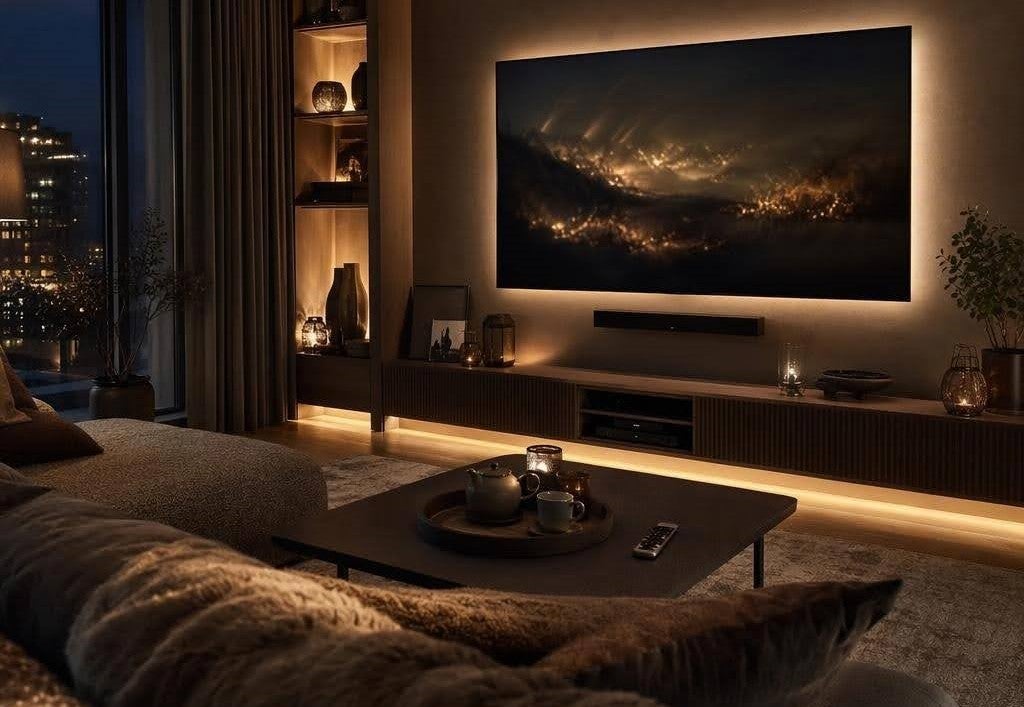
There’s something rather satisfying about deciding that a night at home is the plan, not the fallback.
The modern living room has quietly become a cinema, listening room, gallery and social space all at once. A new series can look genuinely cinematic on a well-set-up screen; a favourite album can fill the room rather than merely sit in the background; friends can join a live-streamed event from their own sofas. It’s less about owning every bit of kit and more about making the time feel intentional.
That matters because our screens are always nearby. The difference between mindlessly flicking through apps and properly enjoying an evening often comes down to a few small choices: what you watch, how the room feels and when you decide to stop.
Make the room feel like an occasion
A home entertainment setup doesn’t need to resemble an electronics showroom. In fact, the best ones rarely do. They feel comfortable first and technical second.
Start with the view. A television should sit at a height that doesn’t leave you looking up all evening, and it’s worth taking a moment to reduce reflections from lamps or windows. If a large screen isn’t for you, a projector can create a lovely sense of occasion, particularly in a darker room. The long-standing idea behind a home cinema is simple enough: bring the atmosphere of a shared viewing experience into your own space.
Sound is often the bigger upgrade. Even a modest soundbar can make dialogue clearer and music fuller than built-in television speakers. If you’re using separate speakers, give them a little room to breathe rather than tucking them behind furniture. You don’t need to turn the volume up to make an impact. Clear sound at a sensible level is far more enjoyable than a wall of noise.
A few design details help the room shift gears:
- Use layered lighting. A floor lamp, a shaded table lamp and a small light behind the screen can feel softer than one bright ceiling fitting.
- Choose warm bulbs for evening. Cooler white light has its place, but it can make a relaxed film night feel oddly office-like.
- Keep charging cables contained. A basket, tray or cable box makes the room feel calmer almost immediately.
- Add texture. Throws, cushions, rugs and curtains do more than look inviting, they can soften the acoustics too.
- Give the remote a home. It sounds minor, but nobody wants to begin an evening by emptying the sofa cushions.
The point isn’t perfection. It’s creating a space that tells your brain: we’re here to enjoy this, not just fill time until bed.
Your watchlist can be more thoughtful than an algorithm
Streaming has made choice wonderfully broad, but it has also made choosing rather tiring. Many of us have spent longer browsing than watching. The fix is surprisingly old-fashioned: decide before the evening begins.
Keep a shared note with people in your household or friendship group. Add films, documentaries, live performances and series as you hear about them, then pick from that list when the time comes. It turns selection into a quick conversation rather than a lengthy scroll.
You might organise it by mood:
- One-hour dramas for weeknights
- Properly absorbing films for a Friday
- Comfort viewing for rainy afternoons
- Documentaries that prompt a chat afterwards
- Concerts, comedy specials or theatre recordings for something different
This kind of curation also leaves room for discovery. Public-service broadcasters, independent cinemas and cultural organisations frequently make excellent work available online, and there’s plenty beyond the front page of the major platforms. Ofcom’s media-use research is a useful reminder that how adults watch and use media continues to change, with connected devices now central to everyday viewing.
Music deserves the same consideration. Instead of leaving an endless playlist on shuffle, try making short, specific sets: Sunday-cooking records, late-evening jazz, songs for reading, or albums you’ve meant to hear from start to finish. It’s amazing how much more you notice when you let an album have its full run.
Connection still counts, even when everyone’s at home
At-home entertainment can be wonderfully solitary, but it needn’t be isolating. A watch party, a shared playlist or a group call before a virtual live event can make a regular evening feel sociable without anyone needing to coordinate trains, taxis and a table booking.
For UK adults, there are plenty of low-key ways to share culture from home:
- Set a monthly film pick. Each person chooses one title in turn, with a loose theme if that helps.
- Swap playlists, not just recommendations. Ten songs with a short note on why each one made the cut is much more personal than sending a link.
- Look for streamed performances. Music venues, theatres, museums and festivals often offer digital programming, sometimes live and sometimes available afterwards.
- Choose social games that suit the group. The aim is conversation and shared laughs, not necessarily competition.
- Make room for the post-watch chat. A ten-minute call or a few messages afterwards can be the best part of the whole thing.
It’s also worth protecting the quieter version of connection, the one you have with your own attention. A single well-chosen film, listened to and watched without a second screen in hand, can feel surprisingly restorative.
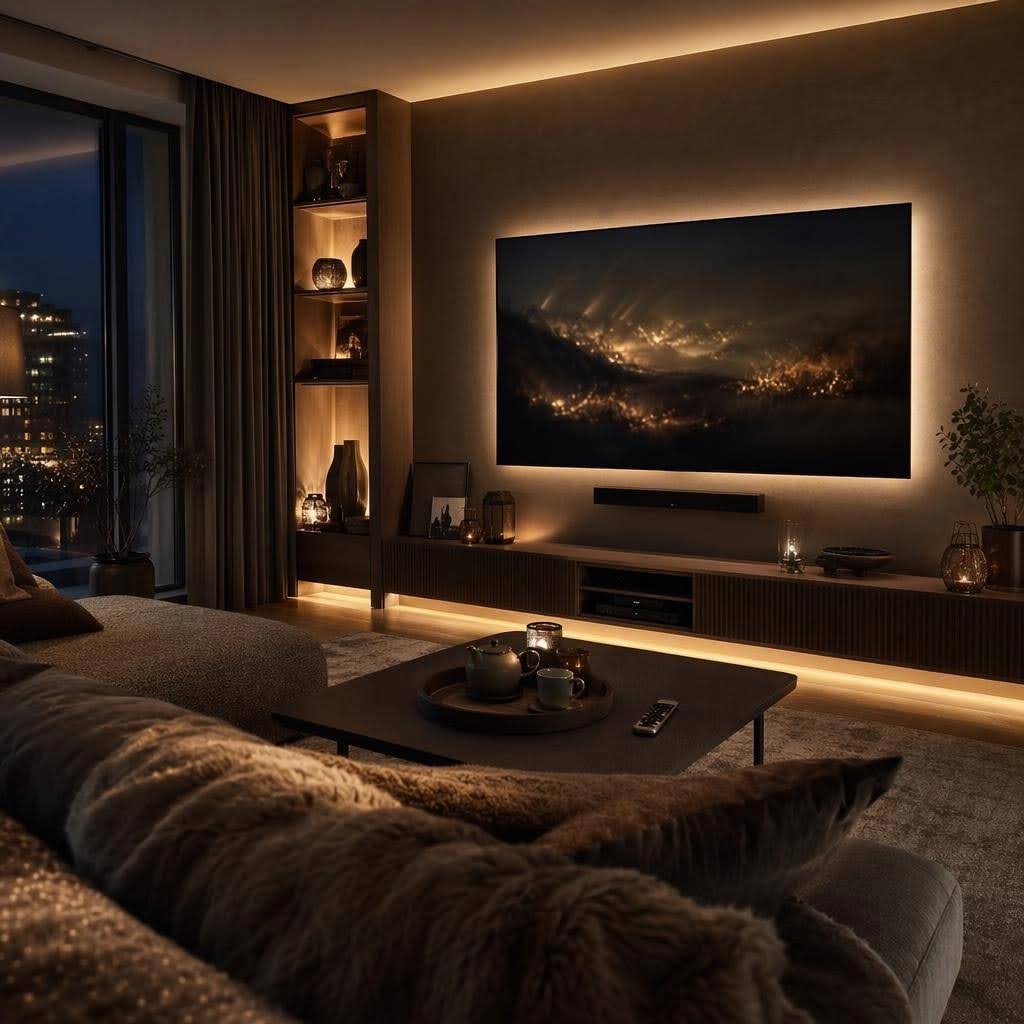
Why good digital entertainment feels effortless
The best entertainment platforms rarely announce their cleverness. They simply get out of the way.
A clear interface, readable menus, sensible subtitles and reliable playback all shape whether something feels premium. So does responsive sound. When dialogue is easy to follow, the score has space to breathe and the picture doesn’t stutter, you stop thinking about the technology and start following the story.
That’s the real appeal of considered interface design. It respects your time.
A few useful settings are worth checking once rather than tolerating forever:
- Turn on subtitles if dialogue often gets lost in a busy soundtrack.
- Adjust motion settings if films look overly smooth or artificial to your eye.
- Use separate profiles where available, so recommendations don’t become a household jumble.
- Review autoplay settings, especially if you’d rather decide whether another episode is actually what you want.
- Put frequently used apps within easy reach, but don’t crowd the home screen with everything.
A little friction can be helpful too. Not every app needs to be permanently signed in or one tap away. If an option requires a conscious choice, you’re more likely to use it on purpose.
Adult entertainment option (18+)
Online casino games are one optional form of paid digital leisure for adults aged 18 and over. They should be approached as entertainment, with a clear personal spending limit and a time boundary decided before starting. It’s sensible to check that an operator is licensed for Great Britain and to use available safer-gambling controls, such as limits, reality checks and time-outs. The Gambling Commission’s guidance on online tools and limits explains these options.
For UK adults who choose to explore online slots as occasional paid entertainment, Virgin Games offers a dedicated slots destination.
If it stops feeling like a straightforward leisure choice, take a break and seek independent support. GamCare’s safer-gambling information outlines tools and support routes available in the UK.
Put a few boundaries around the fun
Intentional downtime works best when it has edges. That doesn’t mean turning your evening into a spreadsheet. It means deciding what a good night looks like before notifications, recommendations and “just one more” start making the decisions for you.
Try these simple habits:
- Set a finish time. Choose when the television goes off, particularly on work nights.
- Create a small entertainment budget. Include rentals, subscriptions, event tickets and any paid digital leisure you choose.
- Keep one screen-free pocket of the evening. A meal, a bath, a short walk or simply a cup of tea without a device can reset the pace.
- Turn off non-essential notifications. If you’re watching something, let it have your attention.
- Check in afterwards. Did you enjoy it, or did it merely occupy the time? The answer can guide tomorrow’s choice.
The modern at-home entertainment edit isn’t about building the flashiest setup or subscribing to every service going. It’s about making space for experiences that feel worth your evening.
Dim the lights, pick something you genuinely fancy, let the sound do its job and leave a little room for quiet afterwards. That’s a very good night in.