


Contactless AI system is being trialed in clinics and hospitals worldwide, standardizing Parkinson’s motor scoring and enabling specialists to focus on more critical patient care
While the number of people living with Parkinson’s disease is surging worldwide – with almost 12 million people currently living with the condition and that number set to double by 2050 – the wait to get a diagnosis can take years. This time lag not only delays treatment, but can also impact patients’ quality of life, long-term care, and psychological well-being.
Thanks to a technological breakthrough by Canadian innovator Bronwyn Bridges, Parkinson’s motor assessments can now be delivered faster and more consistently, freeing up time for specialists to focus on critical patient treatment.
The innovative work has earned Bridges a 2026 Mitacs Innovation Award – Canadian Start-Up Innovator, awarded by Mitacs, a national not-for-profit organization that connects students and researchers with businesses and other organizations to do paid innovation projects. These partnerships drive growth in the Canadian economy by helping companies scale and compete, and students and postdocs kickstart careers in Canada. The award was presented at a ceremony at the National Arts Centre in Ottawa on November 23.

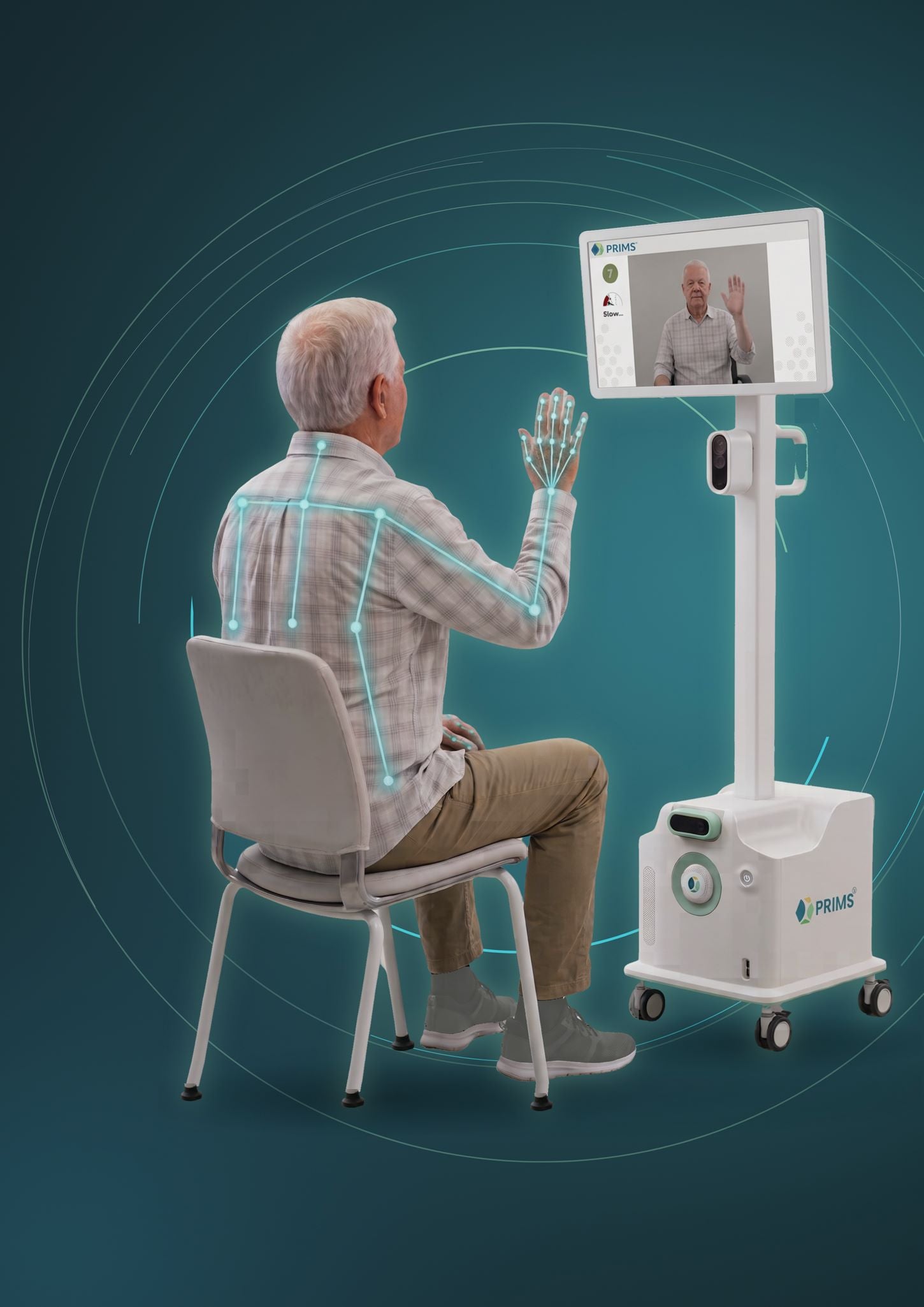
Bridges – a PhD candidate and Mitacs Accelerate Entrepreneur program participant at Memorial University’s School of Pharmacy and now CEO of St. John’s-based medtech start-up PragmaClin Research – was recognized for her company’s development of a novel AI-powered mobile assessment system, called PRIMS™ (PragmaClin’s Real-Time Intelligent Medical System), that objectively scores the motor symptoms of movement disorders in clinic and hospital settings, with results reviewed by clinicians.
“The idea came from the realization that people lack proper healthcare access not just in Canada, but across the world,” said Bridges, who co-founded PragmaClin Research in late 2020, inspired by her co-founder, Gord Genge’s own experience living with Parkinson’s. “Gord was given a four-year wait time to see a movement disorder specialist – we built PRIMS so that story stops repeating itself.”
The PRIMS system consists of a machine with specialty depth cameras mounted on a wheeled cart – similar in size to a TV or IV trolley – that guides patients through standardized tests including walking, balance, tremor assessment, facial expression, and speech evaluation. Using computer vision and machine learning to capture video analysis and clinical measurements, the system’s portability allows it to move throughout clinical settings, conducting both close-up assessments and longer walking tests in hallways providing objective, consistent measurements compared to traditional visual estimation.
“Doctors currently evaluate patients by watching them and then giving them a score, but because this is subjective, different specialists may give the same patient a different score,” said Bridges. “With our technology, scoring is applied consistently no matter who the doctor is or where the site is, which helps support better treatment decisions.”
Assessment results are accessible through secure clinical dashboards, enabling specialists to spend their time providing advanced therapies and addressing specific concerns once they see the patient rather than conducting routine tests. This efficiency creates capacity for doctors to see more patients, potentially addressing the critical shortage of movement disorder specialists, she said.
To date, PRIMS has been used in research studies with more than 550 patients, capturing more than 10,000 movement assessments across six countries: Canada, the U.S., UAE, Ireland, and Taiwan. The studies are designed to test how the solution performs across different languages, ethnicities, and demographics. In Canada, trials are underway or have been completed at clinics and hospitals in St. John’s, Ottawa, and Hamilton.
Bridges explained that her passion for Parkinson’s research began in her youth when she volunteered alongside her mother, a long-term care nurse, visiting with Parkinson’s patients – work that continued through her undergraduate years volunteering at a physiotherapy clinic.
“I always found it interesting to listen to people’s stories and unique experiences because no disease or care pathway is ever the same,” Bridges said. “People tend to associate Parkinson’s with only tremor and balance issues and forget about the non-motor side of it, which includes cognition, anxiety, and depression, but it all stems together and I wanted to help.”
She credits Mitacs – which funded her work – for helping to fuel the success of her company, which now employs seven people.
“I was determined to finish my PhD degree, but at the same time, I wanted to see our work through to commercialization and how it can have a benefit in the market,” Bridges said. “I’m grateful to Mitacs for giving me the opportunity to pursue a dual path in academic research and commercial development simultaneously without having to choose between the two.”
The Mitacs Innovation Award – Canadian Start-Up Innovator celebrates a Mitacs student or postdoctoral fellow who has successfully launched a start-up company, converting innovative research into business success and market impact. Mitacs programs are supported by funding from the Government of Canada and provincial and territorial governments across the country.
Bridges is one of 10 Mitacs award winners nationally, nominated from a pool of thousands of innovators who take part in Mitacs programs each year. Additional 2026 award categories include: an additional winner for Canadian Start-Up Innovator, four winners for Outstanding Innovator, and one each for Outstanding Research Leadership, Inclusive Innovator, Canadian Enterprise Innovator, and – new this year – the Mitacs Vanguard Award.
“Innovation matters most when it pays off for people. That is the return on innovation our award winners are delivering: good jobs, careers that start here at home, and new products and companies that strengthen our communities,” said Mitacs CEO Dr. Stephen Lucas. “Through start-up growth, commercialization and mentorship, they are turning Canadian talent into economic opportunity. And through breakthrough research and inclusive innovation, they are making sure more Canadians have a hand in building what comes next.”
For more information about the Mitacs awards and a full list of winners, visit www.mitacs.ca/newsroom.
About Mitacs
Mitacs delivers the return on innovation Canada needs now by connecting big ideas, people, and ambition to turn potential into results. Through our co-funded innovation partnerships, we get Canada’s businesses and researchers where they need to go. Mitacs partners innovate faster. Commercialize sooner. Compete globally. Scale and grow stronger. We open the door to opportunity, creating jobs and equipping students and postdoctoral researchers with skills, industry experience, and professional networks.
A national not-for-profit organization founded in 1999, Mitacs is funded by the Government of Canada, the Government of Alberta, the Government of British Columbia, Research Manitoba, the Government of New Brunswick, the Government of Newfoundland and Labrador, the Government of Nova Scotia, the Government of Ontario, Innovation PEI, the Government of Quebec, the Government of Saskatchewan, and the Government of Yukon.