
Thinking about a hair transplant and wondering what it’ll actually cost?
You’re not alone. Every year, thousands of people research the Turkey hair transplant cost before making a decision, and for good reason, the price difference compared to many Western countries is significant. But cost is only part of the story. What’s included, who performs the procedure, and how the results turn out all matter just as much as the number on the invoice.
This guide walks through the factors that shape pricing at clinics offering hair restoration in Istanbul and why so many patients now travel to Turkey for more than just a lower bill.
Why the Investment Goes Beyond the Price
For many people, the value of a hair transplant isn’t measured only in money. Hair loss can affect confidence, professional interactions, and even the willingness to appear in photos or social settings. Restoring a hairline usually helps people feel more like themselves again, which is why many patients describe the procedure as an investment in self-confidence rather than simply a cosmetic expense.
“When people look at a face, the density and hairline are immediately connected with youthfulness and health.” Says Dr. Levent Acar, a hair transplant specialist in Turkey
How Does Turkey Hair Transplant Cost Compare with the USA?
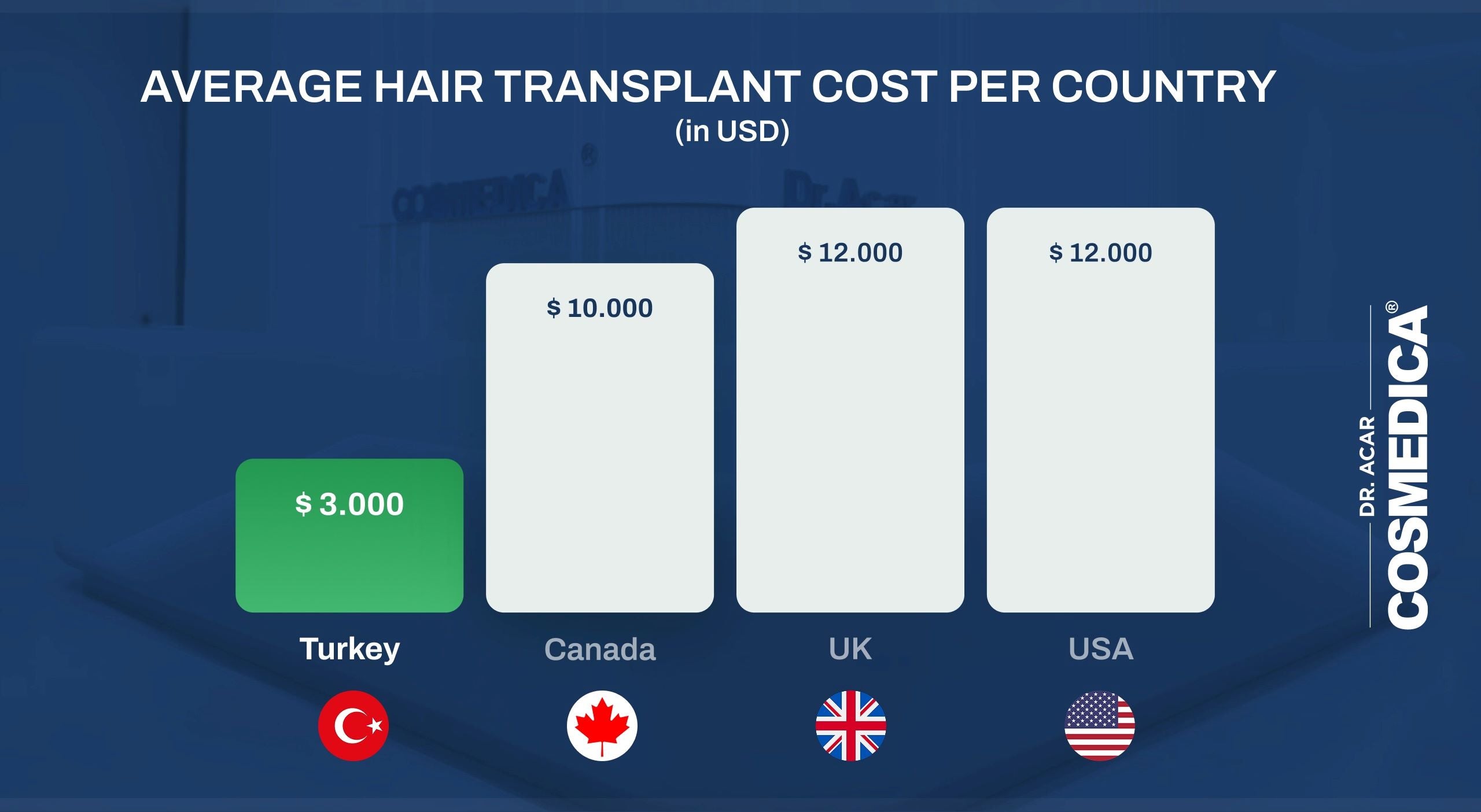
This is usually the first question people ask. In the US, hair transplant procedures are typically priced per follicular unit or per graft, with total costs regularly ranging from $8,000 to $25,000 depending on the extent of hair loss and the technique used. In Turkey, the cost of a hair transplant is often a fraction of that.
A typical all-inclusive package at a reputable Turkish clinic ranges from approximately $2,500 to $5,500. The gap isn’t just about cheaper labor. Many clinics in Turkey operate at high volume, allowing them to invest in dedicated surgical teams and equipment while keeping prices accessible.
As Dr. Acar puts it, “Many patients used to come only for the price. Now, even wealthy patients come because of the quality. Our prices are fair because we want everyone to have access, but quality is always our focus.”
What Does All-Inclusive Actually Mean?
At established clinics, an all-inclusive package generally covers:
- Medical consultation
- Hair transplantation procedure
- Airport VIP transfers
- Five-star hotel accommodation
- Transportation between the hotel and the clinic
- Aftercare products
- Post-procedure follow-up
“We organize everything: airport pickup, hotel, transfers to the hospital… And we don’t stop after the procedure. We follow up to make sure patients are happy with their results,” Dr. Acar notes. For patients traveling from abroad, having transport and accommodation arranged in advance removes much of the guesswork from planning a medical vacation.
Before booking, it’s reasonable to ask a clinic directly which of these are included and which may be offered as add-ons.
Why Is the DHI Sapphire Method one of the Preferred Choices?
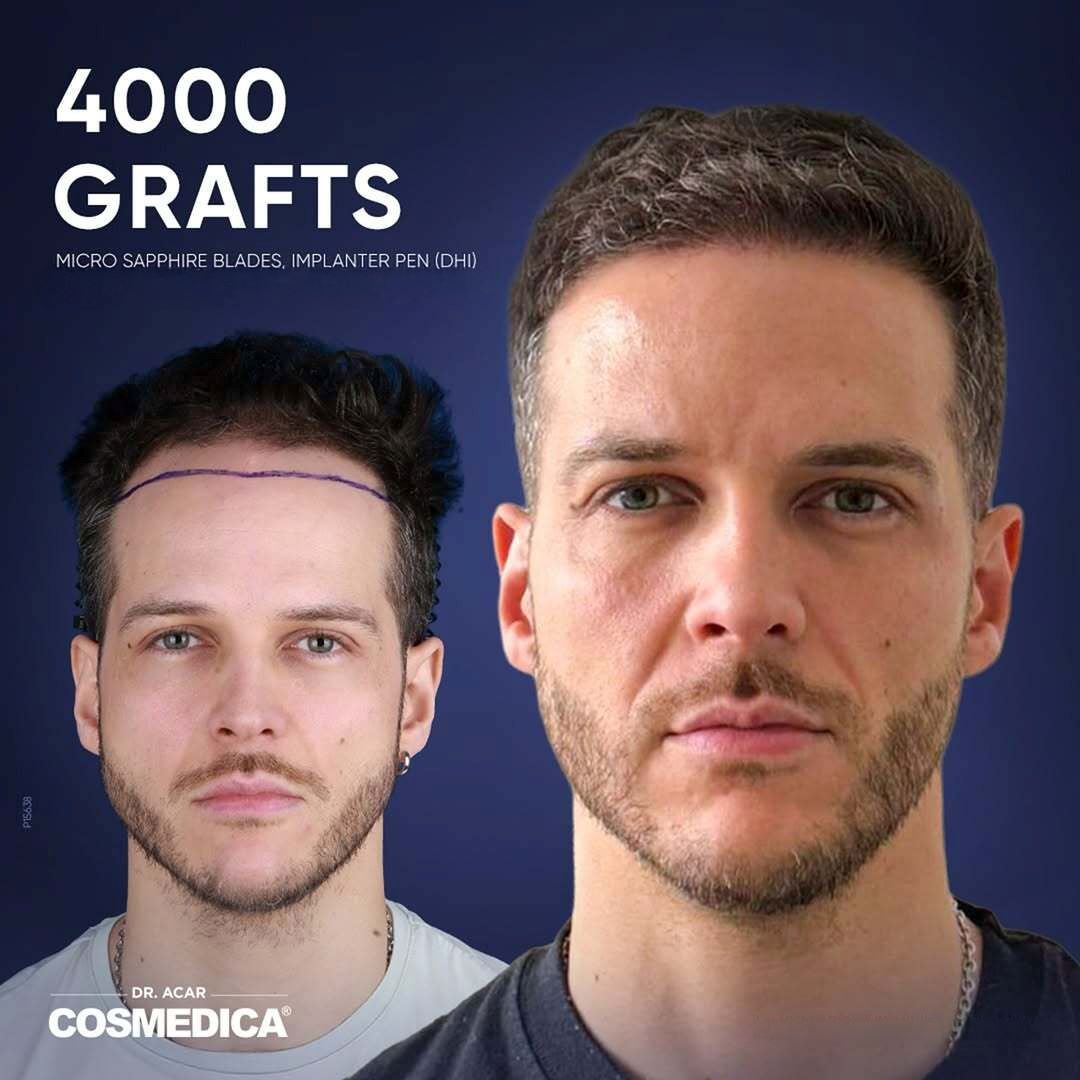
Among the techniques available today, the DHI Sapphire method comes up often in conversations about hair restoration in Turkey. The Micro Sapphire DHI method is a refined technique that combines Direct Hair Implantation (DHI) with sapphire-tipped blades. Sapphire is harder and smoother than standard steel, allowing for more precise microincisions, less trauma to surrounding tissue, and faster healing times.
The method also eliminates the need to pre-make incision channels before implantation. Each follicular unit is extracted and implanted in a controlled sequence using a Choi implanter pen, allowing the surgeon to set the exact angle, direction, and depth of every graft. The result is denser, more natural-looking coverage, with no linear scar.
Dr. Acar describes the appeal this way: “Hair transplantation has been practiced for over 80 years… Now, we’ve developed methods that look completely natural, so nobody can tell it was transplanted.”
How Does Dr. Levent Acar Approach Hairline Design?
Ask any experienced surgeon, and they’ll tell you a hairline isn’t only a medical decision; it’s also a design one. Getting the shape, angle, and density right is what makes a result look natural rather than obviously “done.”
Dr. Acar also applies mathematical precision to graft planning, calculating the exact number needed to achieve real density, rather than recommending multiple sessions unnecessarily.
“We calculate mathematically how much is needed for real density. If a patient needs 4,000, it’s better to do it in one session than make him come back three times.”
That kind of straightforward expectation-setting matters more than any price point.
What Does the Medical Vacation Experience Look Like?
Traveling for a hair transplant is about more than the procedure itself. Many international patients choose Istanbul because the experience is designed to be smooth from the moment they arrive. Instead of coordinating hotels, transportation, and appointments on their own, they often receive a structured treatment package that keeps everything organized.
At Cosmedica, patients typically receive an all-inclusive experience that may include:
- VIP airport transfers
- Five-star hotel accommodation
- Private transportation between the hotel and the clinic
- A pre-procedure consultation
- Interpreter support when needed
- Post-operative care products and instructions
- Digital follow-up after returning home
This coordinated approach allows patients to focus on their recovery rather than travel logistics.
What Does Long-Term Care and Maintenance Involve?
Recovery is usually described as manageable rather than painful. “The surgery is pain-free. Recovery is just a bit uncomfortable. The best moment is after about 13 days, when the scabs wash away and you see the clean hairline,” according to Dr. Acar. Many patients are cleared to fly home the next day, though full results take time to show.
“The real results come after eight to 12 months. Patience is important,” he adds. Grafts taken from the permanent donor zone aren’t affected by the hormone linked to hair loss, which is why surgeons often describe transplanted hair as a long-term result rather than a temporary fix.
Looking at a hair transplant before and after gallery can help set realistic expectations, since growth and density continue to develop gradually well past the first few months.
The Bottom Line
The Turkey hair transplant cost is genuinely lower than many Western alternatives, but the reasons go beyond simple currency differences; volume, streamlined logistics, and bundled care all play a role. Understanding what’s included in a quoted price and asking direct questions about technique and aftercare makes it much easier to compare options fairly.
Curious whether a hair transplant is right for you? Schedule a free consultation with Dr. Levent Acar and the Cosmedica team to receive a personalized treatment assessment and learn more about your options.