
Wireless microphones have gotten dramatically smaller over the last few years.
What hasn’t always gotten simpler is what happens when you need to record more than one person — or send that audio to more than one device.
That’s where the Hollyland LARK M3 gets interesting.
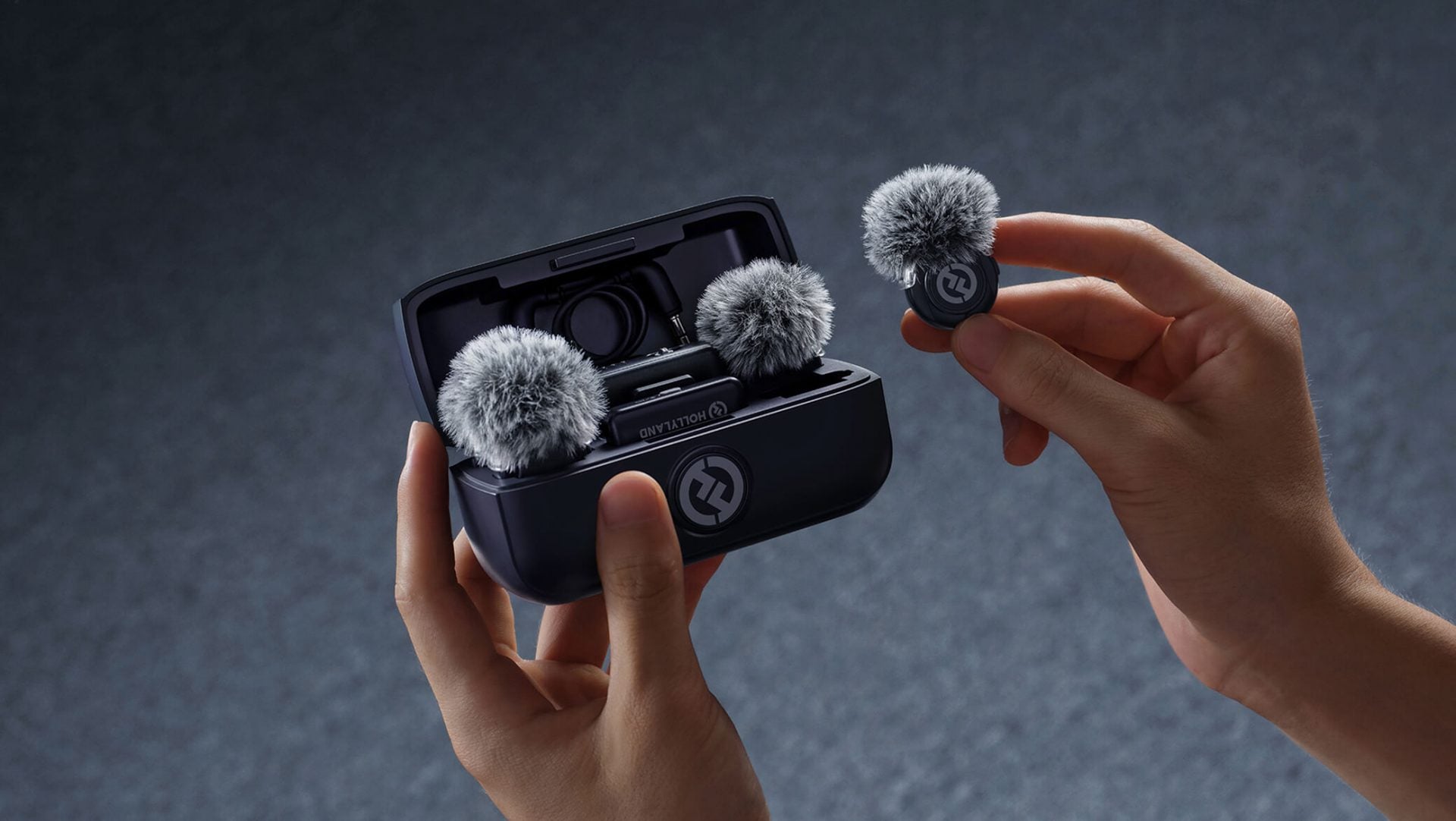
The latest addition to Hollyland’s LARK lineup takes the familiar button-sized wireless mic concept and scales it up for more ambitious productions, supporting up to four transmitters and four receivers within the same system. For interviews, podcasts, multi-camera shoots and creator setups involving more than two people, that flexibility could eliminate a surprising amount of extra gear.
And despite the expanded capability, the transmitter itself weighs just 9 grams.

The big deal is 4TX and 4RX
Most compact wireless microphone systems are perfectly capable when you’re filming one person — or even two. Things start getting messy once you add another subject, another camera or both.
The LARK M3 is designed specifically around that problem.
Its True 4TX & 4RX architecture allows as many as four transmitters and four receivers to work within the system, with different combinations depending on the production. That means multiple people can be mic’d while audio is simultaneously delivered to different recording devices instead of requiring several completely separate wireless microphone kits.

For a solo creator filming a quick Reel, that might be overkill. For anyone regularly shooting interviews, podcasts, roundtables, events or multi-camera content, it starts making a lot more sense.
The system can also record four independent audio tracks, keeping each microphone source separate rather than baking every voice into a single track.
That matters in editing. One speaker who talks louder, laughs directly into the microphone or needs additional cleanup can be adjusted without affecting everyone else.
It’s one of those features you may not think you need until you’ve edited a conversation involving four people.
Small enough that you almost forget about it
The other impressive part of the LARK M3 is how little hardware Hollyland needs to make all of this happen.
Each transmitter weighs approximately 9 grams and uses the small, circular design that has become increasingly popular for wireless creator microphones. It’s considerably less distracting on camera than the bulky rectangular transmitters that were common only a few years ago.
For interviews in particular, that matters.
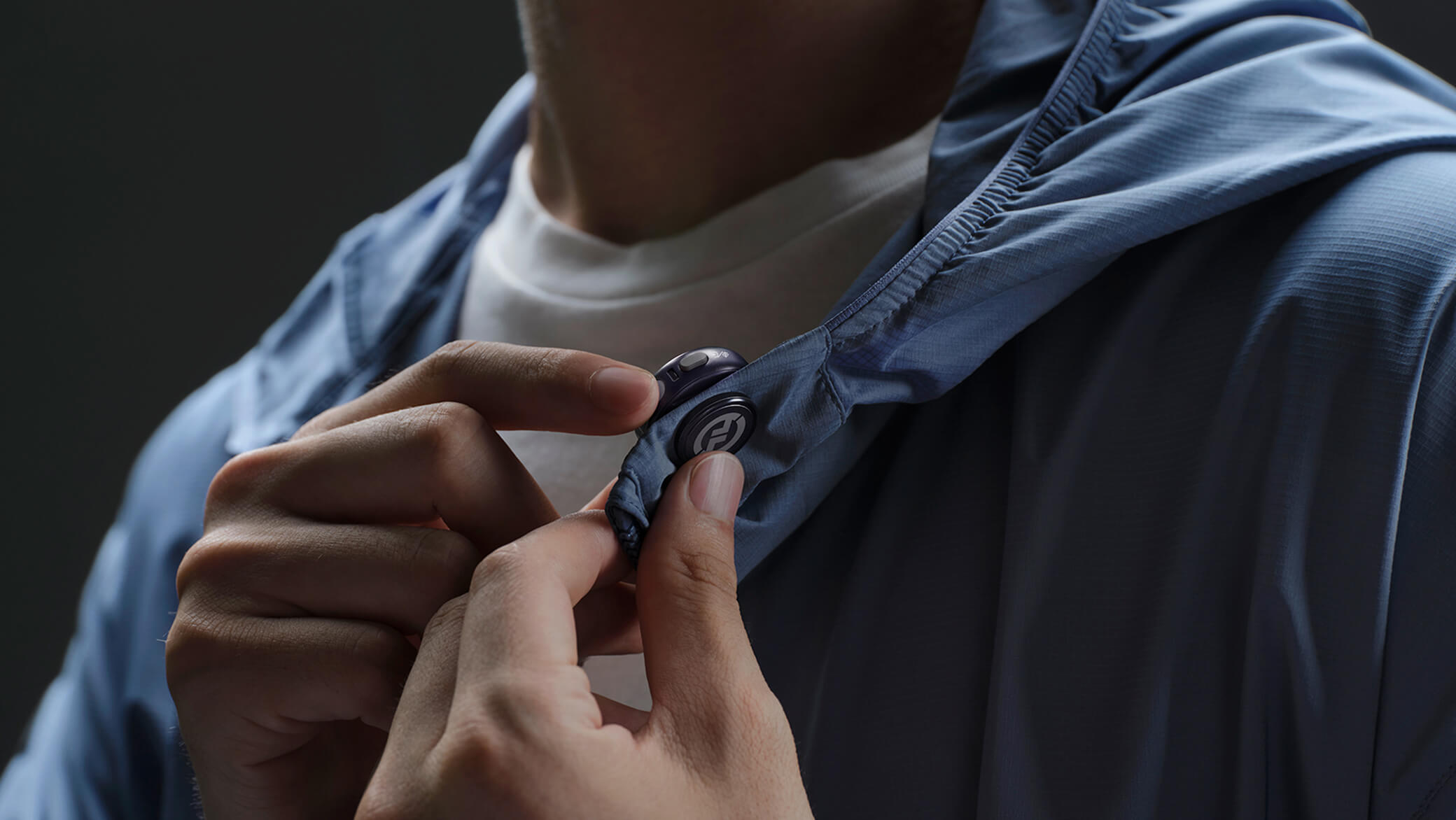
A microphone can deliver excellent audio and still be annoying if it dominates the subject’s shirt. The LARK M3 keeps the setup relatively discreet while still offering the flexibility expected from a much larger system.
Hollyland says the transmitters can operate for approximately eight hours per charge, while the charging case can replenish a full kit around twice. The system also supports wireless transmission at distances of up to 300 metres under ideal line-of-sight conditions.
32-bit float offers some welcome insurance
The LARK M3 supports 48 kHz / 32-bit float audio, alongside standard 24-bit recording.
For creators who don’t want to babysit audio levels constantly, 32-bit float can be particularly useful. It provides significantly more headroom when recording, making unexpectedly loud moments much easier to recover in post-production than audio that has already clipped in a traditional fixed-bit recording.

It doesn’t magically fix bad microphone placement or terrible audio, but it can make recording unpredictable situations considerably more forgiving.
There is one important caveat for mobile creators: Hollyland notes that 32-bit float recording on Apple devices requires compatible third-party software. Apple’s native Camera and Voice Memos apps do not currently record the LARK M3 in 32-bit float and will instead use 24-bit audio.
It’s a small technical detail, but one worth knowing before assuming every recording automatically benefits from the higher bit depth.
Noise cancellation without carrying more equipment
The LARK M3 also includes three levels of AI Noise Cancellation, along with vocal enhancement and customizable vocal presets.
That combination is increasingly important as wireless microphones move beyond controlled studio environments. Interviews happen at trade shows. Content gets filmed on sidewalks. Podcasts get recorded in coffee shops. Not every creator has the luxury of controlling the room.
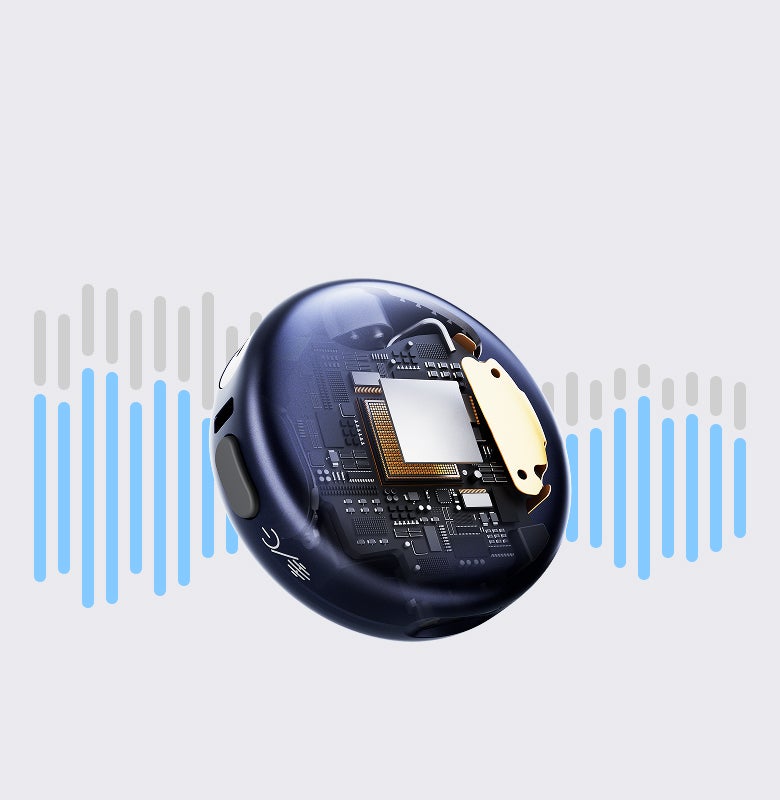
Noise cancellation can help reduce some of those distractions before the audio ever reaches the edit.
As with most processing, though, stronger isn’t automatically better. Clean natural audio should still be the priority, with noise reduction used when the environment actually calls for it.
Hollyland has also included a Smart Mixing feature aimed at recordings involving more than two microphones. In mono mode, it can reduce environmental noise while emphasizing the primary speaker — another feature clearly designed around the M3’s multi-person focus.
Who is the LARK M3 actually for?
The LARK M3 feels less like another wireless microphone competing for the attention of solo TikTok creators and more like a compact production tool for people whose shoots are becoming slightly more complicated.
If you primarily film yourself talking into a phone, there are simpler systems.
But add a second host, a guest, two cameras and a recurring interview format, and the value proposition changes quickly.
Being able to build one wireless ecosystem around several speakers and several recording devices could be considerably cleaner than stacking receivers, managing multiple microphone kits and sorting everything out after the shoot.
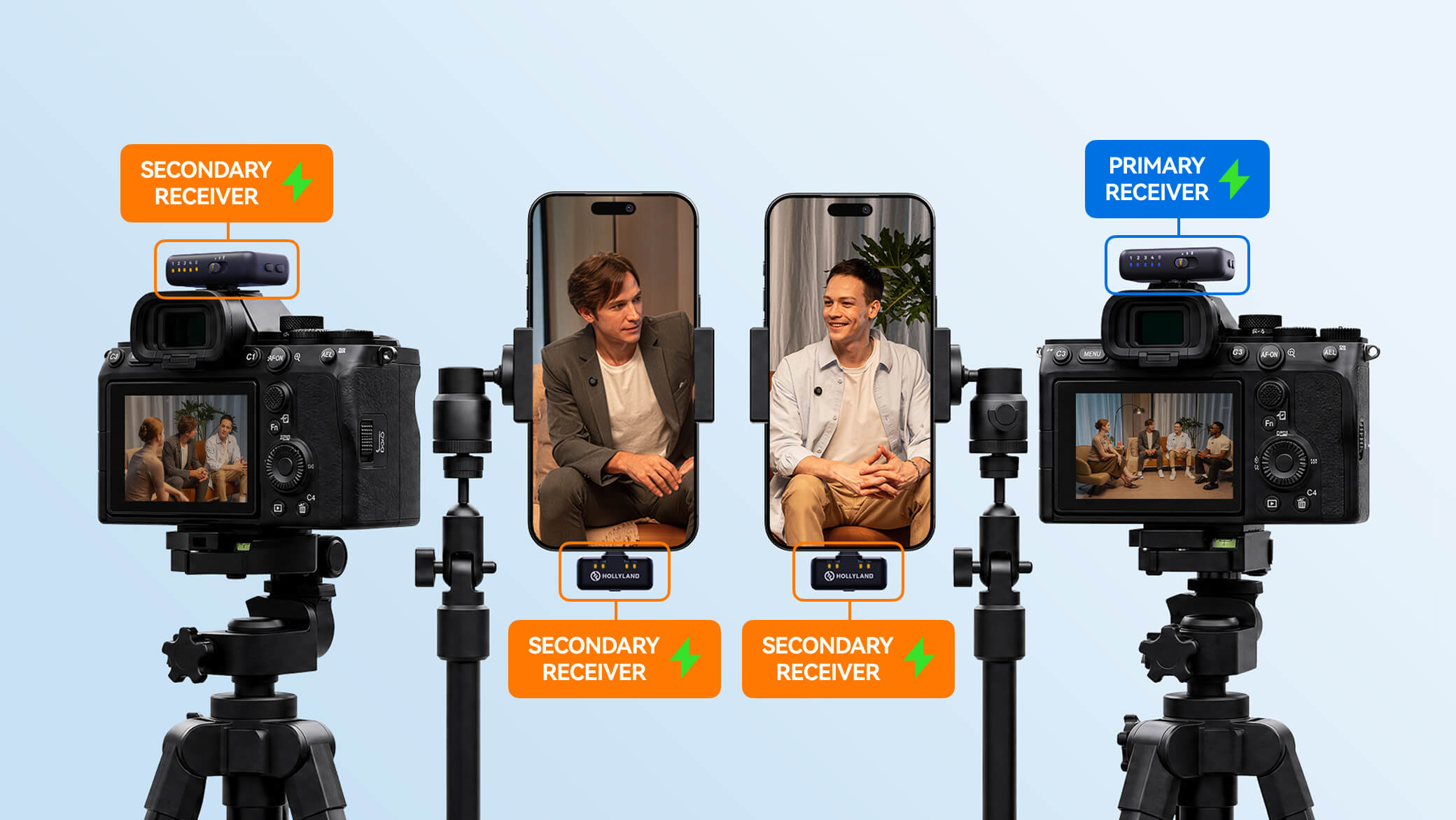
That’s ultimately what separates the LARK M3 from being just another tiny wireless microphone.
Hollyland hasn’t reinvented the lav mic. Instead, it has taken the increasingly familiar ultra-compact format and made it capable of handling productions that would normally require considerably more hardware.
For creators moving from simple one-camera content into interviews, podcasts and multi-camera production, the LARK M3’s biggest upgrade may not be how it sounds on paper — it’s how much simpler it can make everything surrounding the recording.