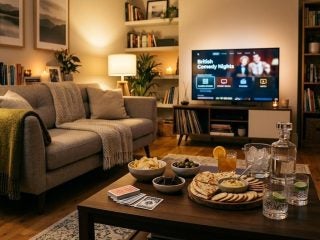

A good night at home has become something of a modern luxury.
Not because it needs to be elaborate, expensive or endlessly planned, but because it gives you a chance to choose your own pace.
Perhaps it’s a favourite album playing through decent speakers while dinner finishes in the oven. Maybe it’s a film you’ve meant to watch for ages, your phone tucked away rather than constantly demanding attention. Or it could be an hour spent moving between a podcast, a group chat and a simple digital pastime.
The point is not to fill every quiet moment. It’s to make the time feel like yours.
With on-demand television, connected speakers, smart lighting and a whole world of entertainment in our pockets, staying in can be every bit as considered as going out. The trick is turning that choice into a ritual, rather than simply scrolling until you’re too tired to decide.
Make the evening feel intentional
There’s a noticeable difference between arriving home, collapsing on the sofa and opening whichever app happens to be nearest, and creating a small sense of occasion.
You don’t need a detailed timetable. In fact, that rather defeats the purpose. A few modest decisions can do the job:
- Pick one main activity, such as a film, live set, long-form programme or social game
- Prepare any refreshments before you settle in, so the evening can run smoothly.
- Charge devices early, rather than hunting for cables halfway through
- Decide whether to keep your phone to hand or put it aside for a while.
- Set the room up for comfort, with a lamp instead of harsh overhead lighting if that suits you
I find sound makes the biggest difference. Even a familiar room feels more deliberate when a record, playlist or radio station is playing properly, rather than tinny audio coming from a handset left face-up on the arm of the sofa.
There’s also something satisfying about giving yourself permission to watch, listen or play without trying to turn it into a productive exercise. You don’t have to learn a new skill or follow a cultural talking point. Sometimes the right choice is simply the programme you’ll enjoy.
Why entertainment is easier to fit into everyday routines
Leisure has become more flexible because our devices are. We begin a series on a television, continue it on a tablet, then watch a final episode on a phone while travelling. A playlist can follow us from kitchen to train to evening walk without much thought at all.
That convenience has changed expectations. We’re used to entertainment being ready when we are, not arriving at a fixed time. The communications regulator Ofcom oversees television, radio and video-on-demand sectors in the UK, reflecting just how central connected media has become to everyday life.
Mobile-first design is a big part of this shift. A phone screen is not merely a smaller television, it has its own habits. We tap, swipe, pause and return in short windows of time. Services that work well on mobile tend to make choices easy to understand, keep text readable and remember where you left off.
Then there’s the influence of game-like design. Progress bars, personalised recommendations, streaks, playlists and visual prompts all make digital spaces feel responsive. Used thoughtfully, these touches can help people find what they want. Used without a bit of self-awareness, they can leave you hopping between options without actually settling into any of them.
That’s why the elevated night in is less about having access to everything and more about curating a smaller selection. Think of it as editing your entertainment menu.
A polished experience is about fewer little frictions
The best digital experiences often feel almost invisible. You notice them when they’re missing: a confusing menu, a search function that can’t find an obvious title, a volume level that changes wildly between programmes, or a platform that takes ages to load.
User experience design, often shortened to UX, looks at how a person actually uses a product, not just how attractive it appears. As Wikipedia’s overview of UX design explains, it covers usability, usefulness, perceived quality and overall performance. That may sound technical, but it translates neatly into everyday comfort.
For a night in, good design might mean:
- Clear choices
- A consistent visual feel
- Sound with purpose
- Easy switching between activities
- Personal control
Themes and sound design deserve more credit than they usually get. The soft click of an interface, the warm palette of a streaming app or the clean organisation of a music library can gently shape the mood. None of these details needs to shout. Their value lies in making the experience feel settled.
It’s also worth resisting the idea that every evening needs one perfect activity. Some people genuinely enjoy a mix: half an album, a short documentary, a few messages with friends and a casual digital game. A connected home setup gives you the freedom to move between those moments without turning the evening into a complicated operation.
**Contextual note:** For adults seeking a regulated UK slots option as part of a wider entertainment mix, [Virgin Games](https://www.virgingames.com/uk/slots)’ slots collection is designed for mobile-friendly browsing and play.
Information for adults who choose to gamble
Any paid digital play should sit within clear personal boundaries. It’s optional entertainment, not a plan for making money or changing a difficult situation.
If you choose to include gambling in your leisure time, a few checks can help keep the decision measured and informed. The Gambling Commission regulates commercial gambling in Great Britain and provides information about consumer protections and safer-gambling expectations.
### Key information for adults who choose to gamble
- Confirm age eligibility. Gambling services in the UK are for adults aged 18 and over. Don’t use them if you are under 18.
- Use regulated platforms. Check that an operator is licensed for Great Britain through the Gambling Commission’s public register.
- Decide your time limit before starting. An alarm or calendar reminder is simple and effective. When it goes off, take that as your cue to stop.
- Set a personal deposit limit. Choose an amount you are comfortable treating entirely as the cost of entertainment, before taking part.
- Explore safer-gambling controls. Licensed operators offer tools such as deposit limits, time-outs and self-exclusion options. If gambling no longer feels comfortable or controlled, stop and seek support.
- Avoid mixing it with distraction. If you are tired, upset, rushed or drinking alcohol, it’s sensible to leave paid play for another time.
- Keep it separate from necessities. Essential household costs and everyday commitments should never be part of the decision.
For independent support and information, GamCare offers advice and a National Gambling Helpline for people affected by gambling.
The same principle applies across your digital life, really. Autoplay, notifications and endless feeds are designed to keep moving. It’s perfectly reasonable to set your own stopping point instead.
Build a night in that works for you
The best entertainment ritual is personal. One person’s ideal evening is a carefully chosen foreign film and headphones; another’s is a loud playlist, a takeaway and a relaxed chat with friends. Neither needs defending.
What matters is that your devices serve the evening, rather than dictate it. Keep the options simple, make comfort a priority and leave room for the occasional change of plan. Put on something you like the sound of. Try that programme you saved weeks ago. Let a digital game be a brief, optional part of the mix if it suits you, with clear limits in place.
A better night in isn’t about cramming more onto a screen. It’s about enjoying what you choose, then knowing when you’ve had enough.