

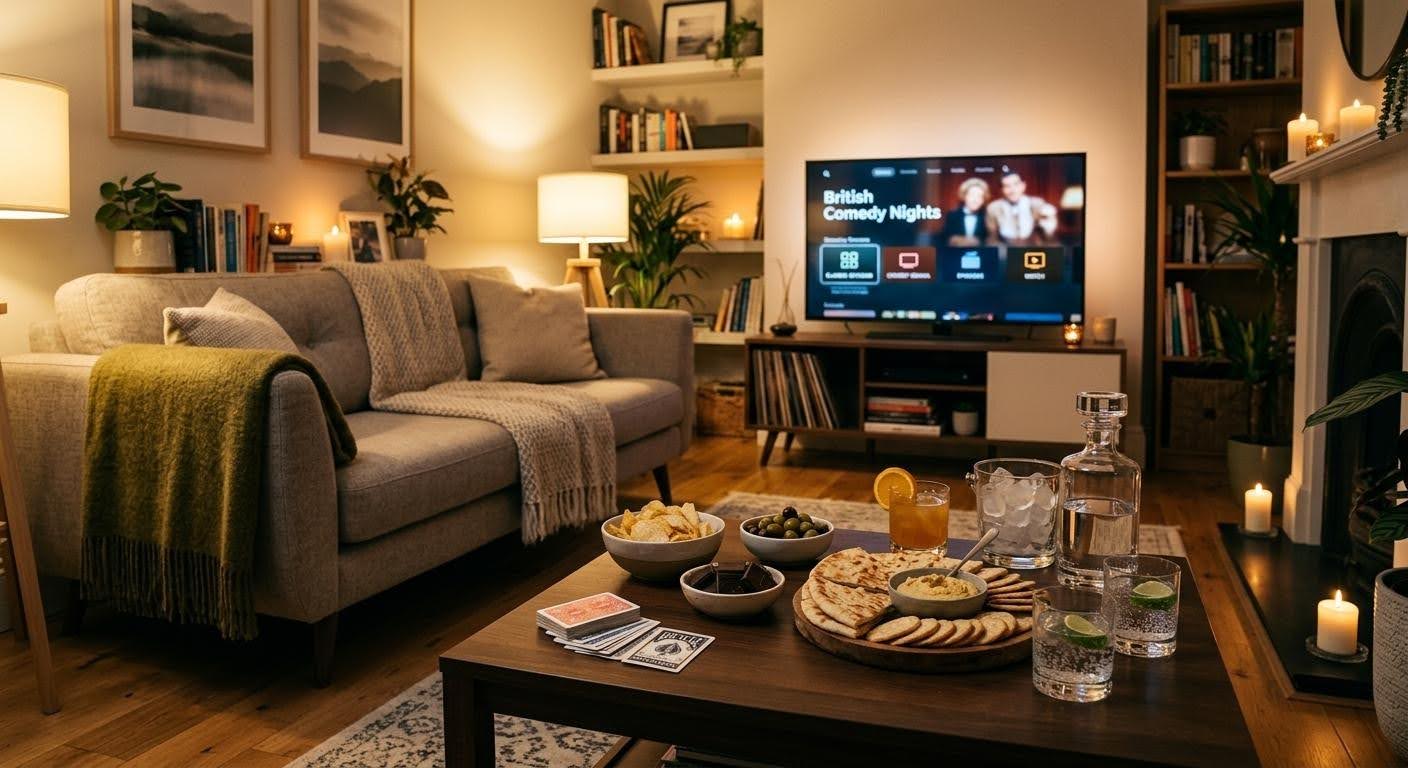
There was a time when a proper night out felt like the default answer to any social plan.
A table booked weeks ahead, a packed bar, a hurried taxi home. Lovely when it all comes together, of course, but there’s a different sort of pleasure in a well-planned evening at home.
A better night in isn’t about recreating a restaurant or turning your sitting room into a venue. It’s about making a few thoughtful choices so people can settle in, laugh properly and forget to check the time. There’s real cultural cachet in being the friend who knows how to make a home feel welcoming without making a fuss about it.
The secret is simple: curate the mood, but leave room for the evening to find its own shape.
Start with the room, not the schedule
The most memorable hosts rarely seem to be trying too hard. That’s partly because they’ve sorted the practical bits before anyone rings the bell.
Think of your home as the setting rather than the star of the show. You want it to look cared for, but still lived in. Nobody relaxes when they feel they might knock over something precious.
Get the lighting right
Overhead lights have their place, but a night in usually benefits from softer pools of light. Lamps, low lighting in the kitchen and a few candles on the table can make an ordinary Thursday feel considered.
A few easy adjustments go a long way:
- Put a lamp near the sofa rather than relying on one central light.
- Keep dining-table candles unscented, so they don’t compete with the food.
- Clear a little surface space for glasses, bowls and phones.
- Have a basket or chair available for coats and bags, rather than creating a pile by the door.
- Make sure the room isn’t too warm before everyone arrives. A full sitting room heats up quickly.
I find music matters here too, even before you’ve chosen what to watch. Something warm and familiar in the background gives the first half-hour a bit of shape while people arrive, pour a drink and catch up.
Dress for the sofa, with a bit of intention
There’s no need for a strict dress code, but it helps to give guests a sense of the mood. “Come comfortable, but bring your good jumper” says plenty. The aim is lounge-ready, not pyjamas at 7pm, unless that’s clearly the arrangement.
As host, wear something you can sit cross-legged in, carry plates in and answer the door without fuss. It sounds obvious, yet getting changed halfway through your own gathering can knock the rhythm off.
Make the screen social, rather than a roomful of scrolling
A shared screen can be brilliant. It gives people something to react to, quote and talk over, especially if guests don’t all know one another well. The trick is choosing something that supports the conversation instead of swallowing it.
A feature-length film can work beautifully for a smaller group who genuinely want to watch it. For a mixed crowd, though, shorter episodes, a light entertainment programme or a music-based show often gives you more natural stopping points.
Before people arrive, make one decision: are you watching properly, or is the television simply part of the backdrop? Both are valid, but they create different evenings.
A simple shared-screen formula
Try this loose structure:
- Arrival time: keep the screen off or play a conversational playlist.
- Food and first catch-up: choose something low-commitment, perhaps a short programme or music clips.
- The main moment: put on the agreed viewing choice once everyone has eaten.
- Later on: return to music, a game or whatever people naturally gravitate towards.
Give guests a say in the main pick beforehand, but don’t open up an endless group debate once they’re in the room. A short message with two options is enough. “Fancy a cosy mystery or a ridiculous comedy?” is far easier to answer than “What does everyone want to watch?”
Phones are part of modern life, so there’s no need for a dramatic device ban. Still, it’s worth making the room more interesting than everyone’s feed. Put charging cables somewhere handy, keep the snacks within reach and choose a programme that invites the odd comment rather than demanding total silence.
Food and drink should feel generous, not complicated
The best night-in food has one important quality: it doesn’t trap the host in the kitchen. If you’re missing half the evening while assembling tiny canapés, the plan needs a rethink.
Go for food people can help themselves to, with one or two details that make it feel more special than a standard cupboard raid.
Build a snack table people actually use
A good spread needs contrast. Something crisp, something soft, something salty and something fresh. You don’t need twelve bowls.
A reliable combination might include:
- Warm flatbreads with hummus, whipped feta or a tomato dip
- Crisps in proper serving bowls, plus nuts or olives
- A large salad with herbs and a sharp dressing
- One warm centrepiece, such as baked potatoes, a tray of roasted vegetables or a big pasta bake
- Fruit, chocolate or a simple pudding for later
For drinks, make it easy for everyone to join in. Put out sparkling water, a non-alcoholic option with proper glassware, ice, citrus and whatever else you’re serving. A jug of something made ahead can be lovely, but it’s equally fine to offer a simple choice and get back to your guests.
Pacing matters more than presentation. Put out a few nibbles at the start, serve the main food after people have settled, then bring out something sweet later. Those little shifts stop the night feeling rushed or over-planned.
Bring back games, but keep the stakes low
Games have become a quietly brilliant answer to the awkward lull. They give people a shared focus, create in-jokes and let quieter guests contribute without fighting to be heard over the loudest person in the room.
The key is choosing games with a low barrier to entry. You don’t want a ten-minute explanation followed by everyone pretending they understand the rules.
Classic card games, quiz rounds, drawing games and music-based challenges all work because people can join late, sit out for a round, or simply watch and laugh along. Nostalgia helps too. There’s something disarming about returning to a game you vaguely remember from years ago, only with better snacks and more freedom to make up the rules.
Low-pressure digital play can fit into this mix as well, particularly when it’s treated as an optional activity for adults rather than the whole point of the evening. Some guests will enjoy taking part; others may prefer chatting from the sofa. Both choices should feel equally welcome.
Beginner sidebar: Choosing an easy group game
Online bingo is one optional form of adult entertainment that may suit a small part of a social evening, though it certainly isn’t essential. It’s best approached as a personal activity, rather than something guests are expected to do together.
In the UK, common formats include 90-ball bingo, usually played across three lines on a ticket, and 75-ball bingo, which uses a different card layout. In both cases, numbers are called and players mark matching numbers on their tickets. Online versions typically show the called numbers on screen and may mark tickets automatically, depending on the site and settings.
If you’re an adult who wants a straightforward explanation of the mechanics before deciding whether it suits your evening, this guide explains Jackpotjoy’s how to play bingo online.
A sensible approach is to decide your entertainment budget and time limit before you start, then stick to them. Check the game format and rules before joining, and use chat politely. Keep conversation friendly, avoid sharing personal details and remember that nobody owes the room an explanation for choosing not to take part.
If gambling is causing concern for you or someone else, confidential support is available through GamCare and the National Gambling Helpline. Step away from play and seek support rather than trying to manage that concern alone.
Be a thoughtful digital host
Hosting has changed a little. Group chats organise plans, playlists get passed around and someone may want to cast a programme from their phone. That doesn’t mean every guest needs to be constantly connected.
The kindest thing you can do is make participation optional. If you’re planning a game, say so in the invitation, but make it clear there’s no obligation. If someone would rather watch, chat in the kitchen or head home earlier, let that be completely ordinary.
A few useful rules keep things comfortable:
- Don’t add guests to group chats without asking.
- Avoid posting photos or videos from the evening unless everyone is happy with it.
- Never share another guest’s personal information, screen or account details.
- Keep logins private and use your own device for any shared streaming.
- Let guests know the broad plan, especially if the night includes a film start time or food being served.
These small gestures create trust. People relax more when they know they won’t be pushed into a game, photographed mid-bite or left hunting for a lift home after public transport has finished.
The night-in ritual worth repeating
A better night in isn’t measured by whether every cushion was plumped or whether the playlist was flawless. It’s the feeling people take away with them. They were comfortable. They were included. Nobody had to perform.
Set the lights low, make food that lets you sit down, choose one shared thing to enjoy and leave enough space for the conversation to wander. You might have a film on, cards spread across the coffee table and a pudding someone insists on sharing. Or you might simply talk until the music runs out.
That’s the modern luxury of staying in: not doing more, but making ordinary time together feel properly chosen.