

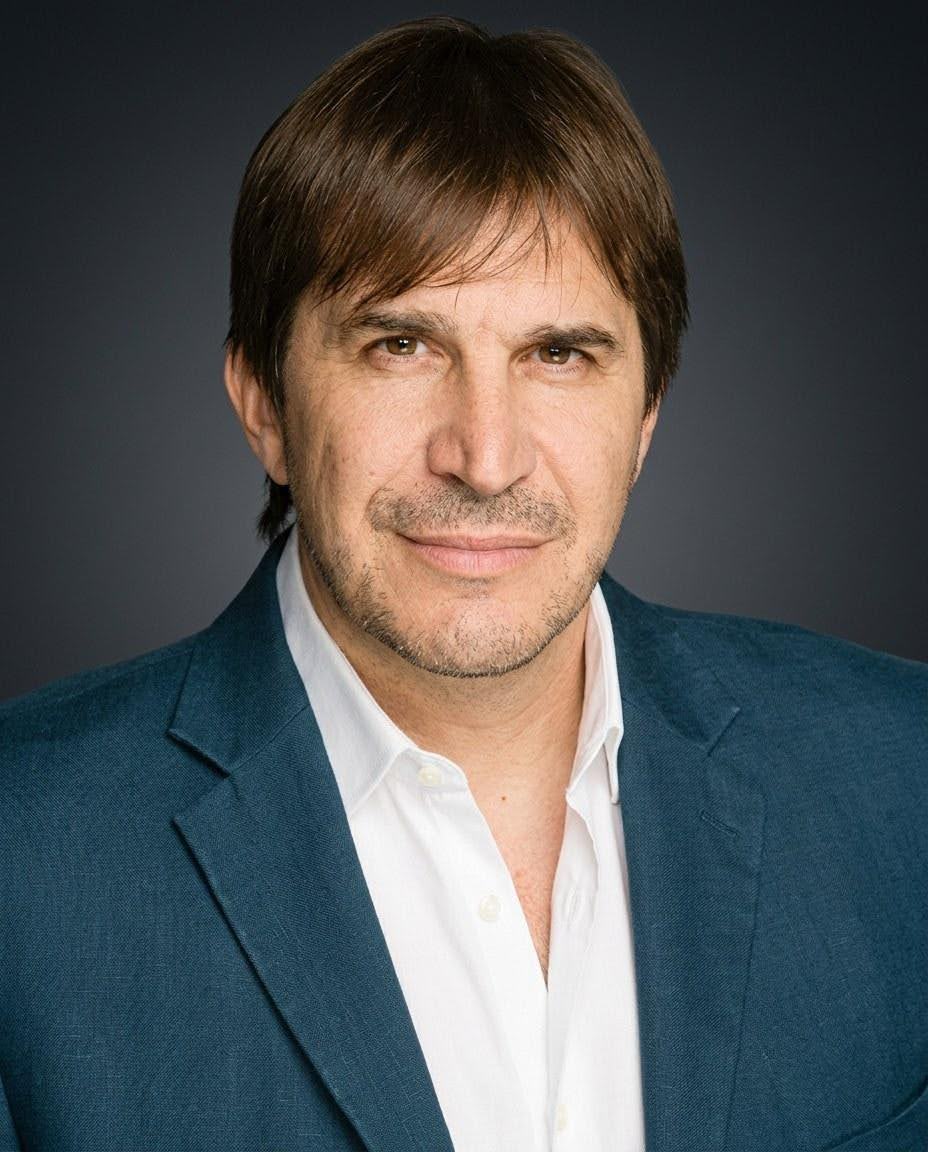
The Argentine theater producer, whose company has staged more than 300 productions, championed the restoration of the Cine Teatro Franz in General Roca, Córdoba, a small-town landmark closed for roughly three decades. It reopened in 2008, and its hall now bears his name.
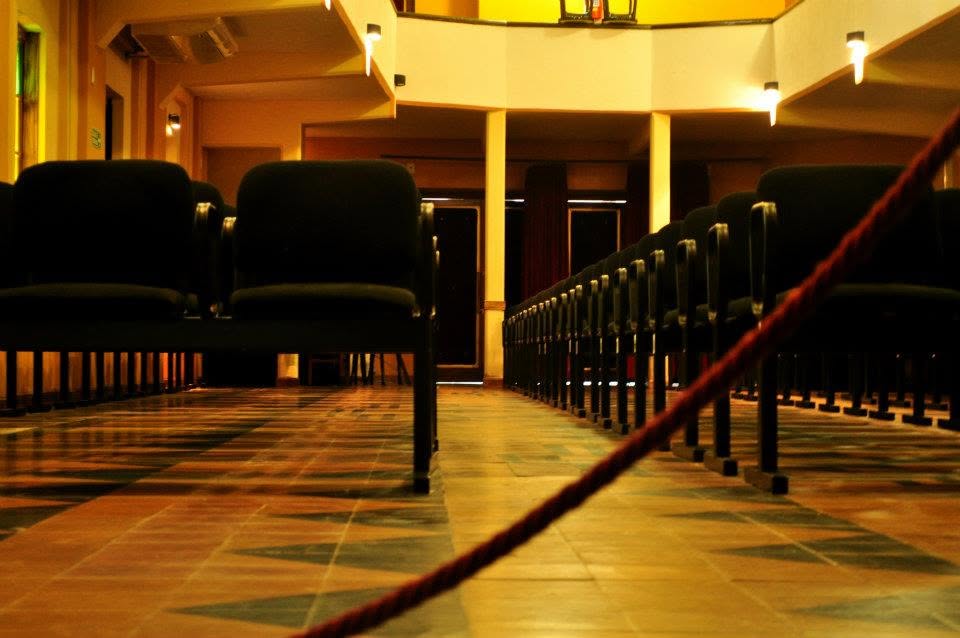
For roughly 30 years, the cinema and theater at the center of General Roca stood dark. In this town of just over 3,000 people in Argentina’s Córdoba province, a generation grew up without seeing a live performance or a film on a big screen close to home. That changed on August 30, 2008, when the restored Cine Teatro Franz reopened its doors, driven in large part by Argentine theater producer Javier Faroni, who was born in the town.
More than 700 people filled the plaza in front of the building for the reopening, according to the Mar del Plata newspaper La Capital. In recognition of Faroni’s role, the community named the restored hall Sala Javier Faroni.
A Landmark Built to Put People to Work
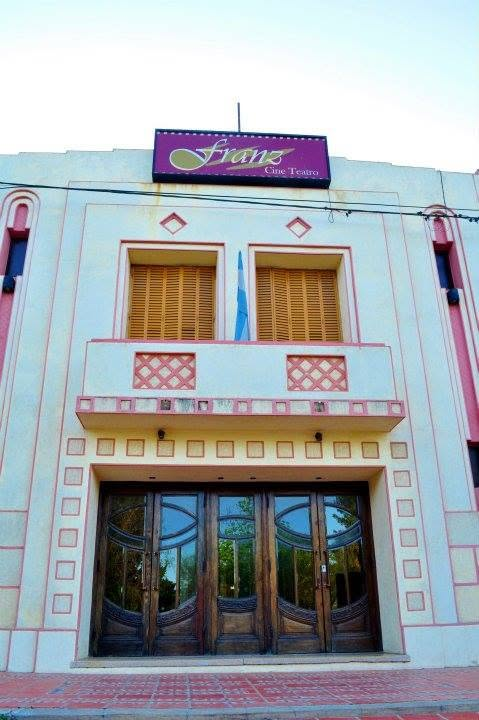
The Franz opened in 1930, an art deco building commissioned by Luisa Franz, a resident the town still remembers for her generosity. As local history tells it, when a group asked her for money to fund a soup kitchen during the economic crisis of the 1930s, she chose instead to put up buildings that would create jobs and give people somewhere to gather. The theater was one of them. The first sound film ever screened there was “Jesús de Nazareth,” according to Clarín.
For decades, the Franz anchored the social life of the town. After it closed, the building served as a party hall and, following Argentina’s 2001 economic crisis, as the home of a local barter club. By the time a restoration was proposed, it had fallen into disrepair.
“It was like watching the town’s pride fall to pieces.”
General Roca’s mayor at the time, speaking to Clarín
A Native Son With a Life in the Theater
Faroni spent his early childhood in General Roca before his family settled in the coastal city of Mar del Plata. There, at 12, a chance meeting with actor Carlos Calvo outside the Teatro Provincial led to a job backstage and a lifelong friendship. He mounted his first production at 19.
By 2010, Faroni had staged more than 120 productions on Buenos Aires’ Avenida Corrientes, across Argentina’s provinces and in the United States, Clarín reported. The catalogue has since grown past 300 titles, according to his production company, Faroni Producciones, which presents work in Buenos Aires, Mar del Plata and Villa Carlos Paz and takes its shows on the road through the provinces and into neighboring countries. Its casts have drawn many of the country’s best-known performers, among them Moria Casán, Nacha Guevara, Pepe Soriano, Osvaldo Laport and Facundo Arana.
Three Decades on the Summer Stage
Mar del Plata is where his name carries the most weight. Every summer the Atlantic resort turns into the capital of Argentine theater, and Faroni Producciones has been part of that season for more than three decades, fielding as many as 10 to 12 productions in its busiest years, according to the company. For the 2013-2014 summer alone, he brought eight titles to the city’s stages, El Día reported, among them the revue “Sorpresas” with Moria Casán and Carmen Barbieri. In 2005 he and partner Pablo Pérez Iglesias opened the renovated Teatro Güemes in the city, and his hits have kept coming since: in early 2023, his production of the comedy “El divorcio,” starring Luciano Castro, Natalie Pérez and Pablo Rago, led the season in box office receipts, according to La Nación.
The city’s own theater awards have tracked that run. Faroni won the Premio Estrella de Mar for artistic production in 2013, for “La dama de negro,” “Escandalosas” and “Fátima Florez es única”, and again in 2018, when his comedy “Como el culo” took five statuettes, more than any other show that summer. In January 2011, Mar del Plata’s city council and municipal tourism board recognized his two decades of contributions to the city’s summer stages, La Capital reported. Five years later, the tourism board gave him a special mention for 25 consecutive seasons producing in the city, noting that he had earned the respect and affection of the entire artistic community through the seriousness of his work and the value of his word.
Bringing the Franz Back
That standing among artists proved decisive in General Roca. The restoration brought together the local parish, led by Father José Alberto Cruchinho, a neighborhood commission and the municipal government. According to La Capital, it was Faroni who proposed rebuilding the theater to local officials during one of his regular visits home, and he put his network in the entertainment industry to work for the effort.
Architect Oscar Sánchez, a specialist in restoring historic theaters, led the technical work. He told Clarín that many believed the building would have to be torn down, but that careful study showed it could be saved.
Argentina’s Stars Answer the Call
Part of the restoration was financed through an auction of items donated by artists Faroni brought on board. Television icon Mirtha Legrand, ballet star Julio Bocca, actor Julio Chávez, the comedy-music ensemble Les Luthiers and singer Raúl Lavié were among the contributors, along with Miguel Ángel Rodríguez, Fabián Gianola, Hugo Arana, Betiana Blum and Carmen Flores. Lots included a jacket belonging to Legrand and the jacket Calvo wore on the television series “Amigos son los amigos.” The auction raised 6,000 pesos, according to Clarín.
Opening Night
The theater reopened on a Saturday that doubled as the feast day of the town’s patron saint, Santa Rosa de Lima. Local officials, representatives of the provincial government and members of the theater’s board attended, along with two honorary sponsors who traveled from Buenos Aires for the occasion: Calvo and theater impresario Carlos Rottemberg. The evening was chronicled in the Argentine theater press as the night an entire town returned to the theater.
During the ceremony, a town council ordinance was read naming Faroni a “Vecino Destacado,” or Distinguished Resident, of General Roca. Organizers also announced that a theater group made up of local residents would stage its first production in the hall that September.
A Stage for Local Talent
For Faroni, the value of the project went beyond the touring productions that could now reach the town from Buenos Aires. What mattered most, he told Clarín, was that General Roca would generate its own cultural events and give its own artists a place to perform.
The restoration had delivered on that before opening night, with the formation of the town’s own theater group. For residents such as Rosana Barkigijja, who celebrated her quinceañera inside the Franz in the 1980s, the reopening returned something the town had long given up for lost.