
The paperwork, the timing traps and why the return leg often takes more planning.
Leaving Miami with a pet can be much simpler by private jet than through a commercial terminal. The animal stays with its owner at the FBO and, once the operator has approved it for the cabin, boards with the rest of the group. On a private jet from Miami to the Bahamas, Nassau is around 45 to 50 minutes away, so a dog may barely have found somewhere to sleep before descent begins. A cat can stay in its familiar carrier nearby rather than being taken elsewhere for the journey.
What takes more thought happens before the aircraft leaves Florida. Crossing into the Bahamas means arranging the correct documents for the animal, choosing an arrival airport that fits the stay and checking that the operator is comfortable carrying the pet in that particular cabin.
Flying Private With Pets to the Bahamas
Dogs and cats entering the Bahamas need an import permit, microchip information and the veterinary documents requested by the local authorities. The application also asks where the animal will enter the country and which islands it is expected to visit, so the final destination is worth settling early. Nassau makes sense for New Providence, while North Eleuthera is commonly used for Harbour Island. Trips to Great Exuma or the Abacos bring different airports into consideration, particularly when the holiday revolves around a villa, resort or yacht.
Private flying gives passengers far more choice over where they land, but the pet documents still need to match those plans. Switching from Nassau to another island may be a simple change to the itinerary, yet it is sensible to check the animal’s entry details at the same time. Once the route and paperwork agree, very little of that preparation should be noticeable at the airport.
The return to Miami is relatively light for most dogs coming directly from the Bahamas. US rules require a CDC Dog Import Form receipt, a detectable microchip, a minimum age of six months and good health on arrival. Cats are covered differently under federal rules, and other species have their own conditions. Where the trip becomes more complicated is when another country is added before returning to the US, since the animal’s recent travel history can alter what is required.
Choosing a Private Jet for Pets
For a sector as short as Miami to the Bahamas, aircraft range is rarely the deciding factor. The useful question is what the cabin will feel like once everyone is inside. A couple with one small dog or cat may have plenty of room on a light jet, while two large dogs, several passengers and luggage for a week away can make the same interior feel considerably tighter than its published seat count suggests.
Floor area and baggage space deserve more attention when animals are coming along. A large dog needs somewhere to lie without filling the aisle, while a carrier needs a secure position during take-off and landing. None of this automatically calls for a larger jet; sometimes a smaller aircraft with the right layout is a better fit than moving into another category simply for extra seats.
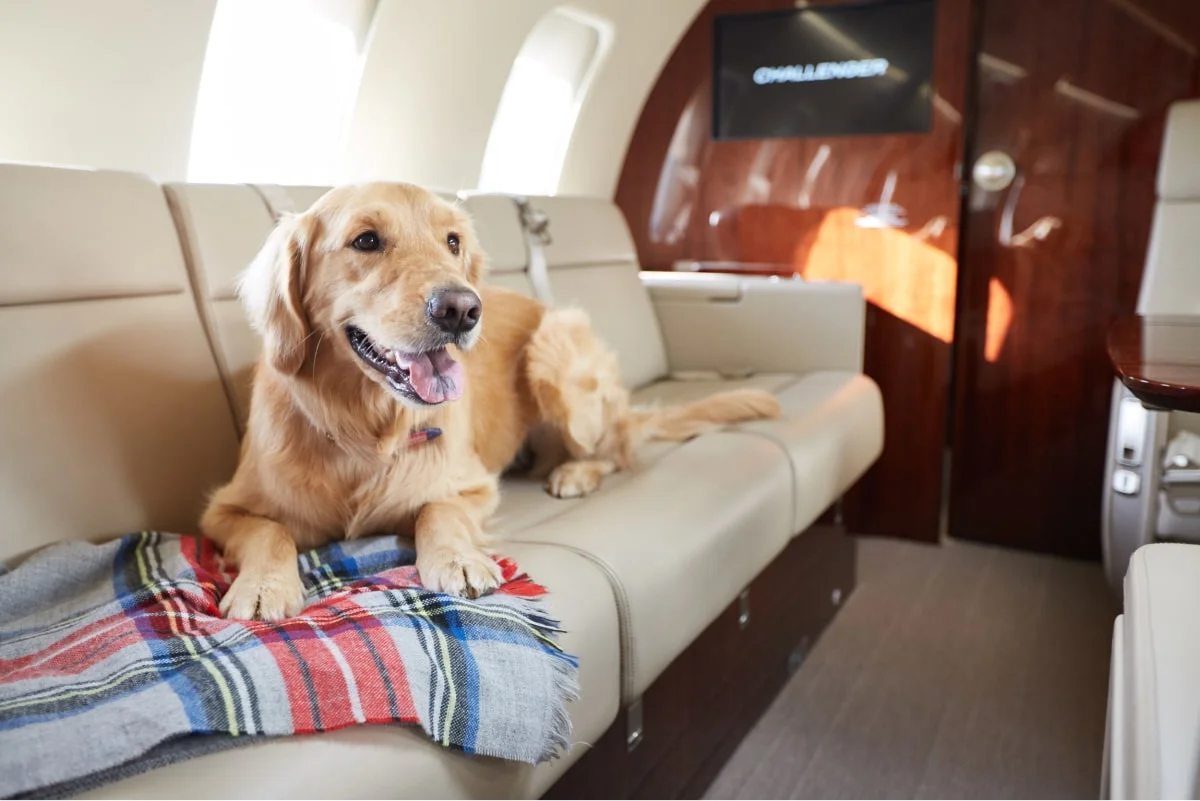
Pet policies also belong to the individual operator rather than the aircraft model alone. Some owners permit animals to move around once the jet is cruising, while others have conditions around carriers, seats or cabin protection. Global Charter checks this while sourcing the aircraft, using details such as species, breed where relevant, approximate weight and the number of pets travelling. That avoids reaching the end of an aircraft search only to discover that the chosen operator does not accept the animal.
Flying With Pets in the Cabin
Once on board, pets tend to need far less attention than the paperwork might suggest. Familiar bedding can come from home, water stays nearby and the animal remains around people it knows. On Miami to the Bahamas, the short flying time helps too. There is little opportunity for a nervous pet to become unsettled before the aircraft is already approaching the islands.
Longer sectors bring different considerations, particularly for bigger dogs that need room to change position during several hours in the air. Direct routing can also be useful because it avoids another airport, another period of ground handling and, on some international trips, another country’s animal-entry requirements. Less common pets such as birds need a little more checking before booking because both operator policies and destination rules can differ from those used for dogs and cats.
Booking a pet-friendly private jet charter is therefore easier when the animal is included in the original brief. The aircraft search can account for the space needed, operators that do not accept the pet can be removed early and the arrival airport can be considered alongside the documents being prepared.
By departure day, none of that should dominate the trip. The pet stays with its owner through the FBO, boards the same aircraft and remains close until landing. From Miami, less than an hour later, the weekend can already be starting in the Bahamas.