
If your basement mostly holds holiday bins, mystery cords, and that one treadmill everyone avoids, you’re not alone.
A basement often becomes the home’s forgotten zone. The good news is that it can turn into one of the most useful rooms you have. With a smart plan, you can create a space that feels warm, practical, and actually fun to spend time in. You don’t need a grand mansion plan either. You just need a clear idea of how you live and what would make your home work better.
Start with your goals
Before you pick paint or shop for a sofa, figure out what you want the basement to do for you. That sounds obvious, but it saves you from building a nice-looking room that nobody really uses. Look up basement remodeling near me and you’ll find several experienced professionals who can help transform your unfinished basement into a functional and stylish living space.
Think about your real life, not your fantasy life. Maybe you picture a sleek home gym, but what you actually need is a place where the family can crash after school. That’s fine. A useful basement beats a perfect one every time. You can also combine functions if the space allows.
A few common basement goals include:
- A TV and game room
- A guest bedroom area
- A home office corner
- A playroom with storage
- A hobby or workout zone
Pick one main purpose first. Then add extras if the room can handle them without feeling cramped.
Check the basics first
Basements have personality, and sometimes that personality is a little damp, dark, or chilly. Before you dream too big, look at the basics. Start with moisture. If the space smells musty or has signs of water issues, deal with that first. No stylish rug in the world can outsmart a leak.
Next, notice the ceiling height. A low ceiling doesn’t mean the room is doomed, but it does affect what kind of layout and lighting will feel best. Walk through the space and ask yourself if it feels easy to move around. Watch for awkward poles, utility areas, and narrow pathways.
Lighting matters too. Many basements have that cave vibe, and not in a charming pirate-treasure way. Check how much natural light you get from windows, then plan for overhead lights, lamps, and wall lighting to fill in the gaps.
Also think about temperature and noise. Some basements stay cool all year, which can be nice, but not if everyone needs three blankets to watch a movie. Get the comfort stuff sorted early, and the rest of the design becomes much easier.
Choose a realistic layout
A good basement layout feels natural, not forced. You want the room to match how you actually move, sit, relax, and store things. Start by dividing the basement into simple zones. For example, one side can be for lounging, while another can hold a desk, storage cabinets, or a game table.
Try not to cram too much furniture into the room. Basements often look bigger when they’re empty than they do once a sectional, shelves, and a coffee table move in. Measure first. Then measure again, because furniture has a sneaky way of being larger than expected.
If the basement includes a utility area, leave easy access. You don’t want to drag a giant chair every time someone needs to reach the panel or water heater. Open layouts usually work well in basements, but small visual dividers can help too. A rug, bookcase, or sofa placement can create zones without building walls everywhere.
The best layout is the one that makes daily life easier. If kids will use it, plan open floor space. If adults will work there, think about outlets, desks, and privacy.
Make it feel brighter
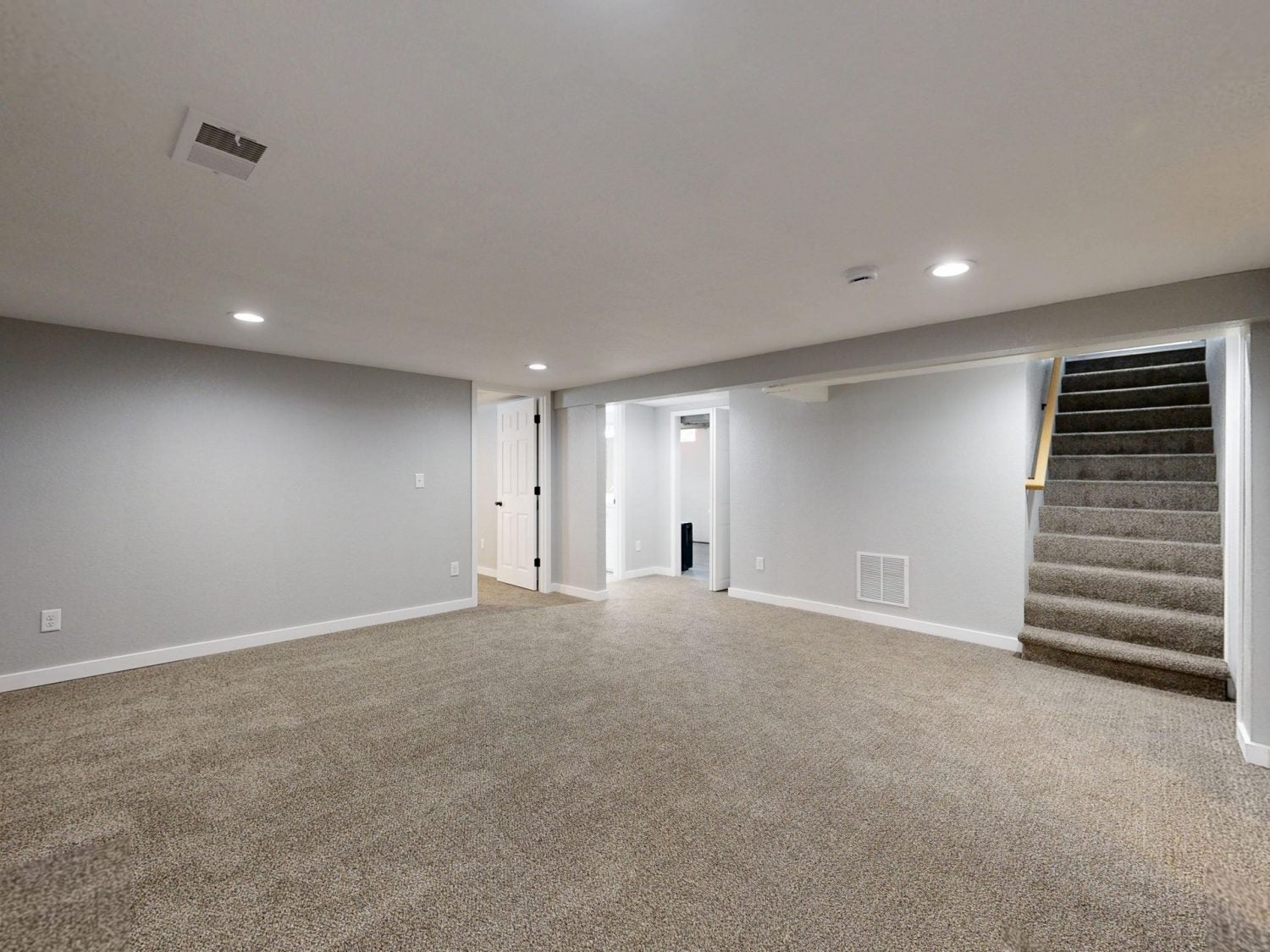
A basement doesn’t need to feel underground in the gloomy sense. A few smart design choices can make it look open and cheerful. Start with color. Light neutrals, warm whites, soft grays, and gentle beige tones can bounce light around the room. You don’t have to make everything white, but darker walls usually make a basement feel smaller.
Lighting should come from more than one source. Use overhead fixtures for general brightness, then add lamps or sconces for softer light. That layered look makes the room feel finished instead of harsh. If you can dim the lights, even better. Movie night and homework time should not feel exactly the same.
Flooring also changes the mood. Lighter wood-look floors or clean, warm-toned carpet tiles can make the space feel friendlier. Mirrors can help too, especially if they reflect a window or lamp.
A few easy ways to brighten the mood:
- Choose light paint colors
- Add floor and table lamps
- Use mirrors carefully
- Pick curtains sparingly
- Bring in soft textures
Your basement may never feel like a sunroom, but it can absolutely stop feeling like a bunker.
Add comfort that lasts
Comfort is what turns a finished basement into a room people keep using. Start with flooring that feels good underfoot. If the basement tends to stay cool, carpet or a large area rug can help a lot. If you want something easier to clean, consider durable flooring with soft rugs layered on top.
Seating matters more than people think. A stylish bench might look nice online, but if nobody wants to sit on it for more than eight minutes, it’s not doing its job. Choose seating that fits how you use the room. Deep sofas work well for family spaces. Supportive chairs make more sense for reading or working.
Noise control is another smart move. Basements can echo, especially if they have hard floors and bare walls. Rugs, curtains, upholstered furniture, and wall art all help soften sound. That’s helpful if one person is watching sports while another is trying to answer emails without hearing every single replay.
If you have kids or pets, think about easy-clean fabrics and rounded furniture edges. A basement should feel relaxed, not like a museum where everyone is scared to spill a snack.
Plan your spending
A basement project can grow fast if you don’t set limits early. One small idea suddenly becomes built-in shelving, fancy lighting, custom trim, and a mini fridge that somehow felt necessary. That’s why a simple budget plan helps.
Start with your must-haves. These are the things that make the room functional and safe, like moisture fixes, flooring, lighting, and wall finishing. After that, move to the nice-to-haves, such as custom storage, upgraded decor, or extra tech features.
It also helps to leave a little room for surprises. Basements are famous for them. You open a wall expecting a quick update and suddenly find an old issue that needs attention. It’s less stressful when you’ve planned for a few plot twists.
A practical spending order might look like this:
- Fix structural or moisture concerns
- Handle electrical and lighting
- Finish floors and walls
- Buy core furniture
- Add decor and extras
Spend where you’ll notice the benefit every day. A cozy, well-lit basement usually feels better than a flashy one with the wrong priorities.
Finish with personality
Once the big pieces are done, it’s time to make the basement feel like part of your home instead of a separate little universe. This is where personality comes in. Art, pillows, shelves, plants, and color accents can make the space feel intentional and lived in.
Try pulling design cues from the rest of your house so the basement doesn’t feel disconnected. That doesn’t mean it has to match exactly. It just helps when the style feels related. If your home is calm and modern upstairs, a neon sports bar basement might feel a bit like a plot twist.
Shelving is useful here because it adds both storage and style. You can mix books, framed photos, baskets, and small decor pieces without making the room feel cluttered. A flexible setup is smart too. Your needs may change over time. Today it might be a playroom. In a few years, it could become a teen lounge or guest space.
The best finished basement is one you’ll actually enjoy using. If it works for your life and makes your home feel bigger, that’s a win worth celebrating.