

A person scrolling through their phone seeking calm encounters endless content designed to stimulate engagement rather than soothe.
Social media prioritizes activation over relaxation, notifications over peace. Text to video generation offers a counterintuitive possibility: creating personalized visual content specifically designed to calm and center rather than excite.
Dreamina’s Seedance 2.5 model was built to understand what makes visual experiences genuinely relaxing — the pacing, the sensory qualities, the absence of jarring elements, the way time can unfold slowly without pressure. By translating text descriptions of peaceful moments into generated footage, creators can build relaxation experiences tailored to exactly what their viewers find calming.
Understanding relaxation as a design problem
Relaxation isn’t the absence of stimulation — it’s the presence of the right kind of stimulation. A person can feel relaxed listening to complex jazz or soothed by silence. Relaxation is personal and contextual. What calms one person might overstimulate another. This means effective relaxation content isn’t one-size-fits-all. It’s specifically designed for particular people seeking particular kinds of peace.
Traditional relaxation content often relies on generic nature footage or repetitive imagery. Text to video allows relaxation experiences to be far more specific. A prompt can describe exactly what elements create calm for a particular audience: “The specific visual rhythm of a particular location, the light quality that feels healing, the absence of threatening elements, the pacing that allows genuine psychological rest.” That specificity transforms generic relaxation into genuinely personal calm.
The psychology of visual pacing
How quickly images change directly affects nervous system activation. Rapid cuts trigger alertness and engagement. Slow transitions allow relaxation. Extended holds on single images permit genuine absorption and mental rest. But pacing alone isn’t enough — the content of those images matters equally. A slowly paced video of traffic remains stimulating. A quickly cut video of ocean waves can feel chaotic.
Effective relaxation content combines appropriate pacing with calming subject matter. Text-to-video allows both elements to be specified precisely. A prompt can describe “minimal visual change allowing the viewer’s attention to settle, shifts happening so gradually they’re almost imperceptible, the pacing supporting genuine relaxation rather than just slower stimulation.”
Sensory minimalism as relaxation strategy
Overwhelming sensory input prevents relaxation. Too many visual elements competing for attention, too many sounds, too much change. Effective relaxation content often works through minimalism — limiting visual elements, creating space for attention to rest, allowing the viewer’s mind to settle rather than remain active processing information.
Text-to-video excels at rendering sensory minimalism. A prompt can specify “a single element allowed to exist, all other visual information reduced to supporting that element, creating space for genuine visual rest.” That restraint is what distinguishes relaxation content from entertainment content, which typically demands active engagement.
Creating context for personal relaxation
People relax differently. Some find peace in nature, others in architectural simplicity. Some relax through movement and flow, others through stillness. Some need silence, others need ambient sound. Effective relaxation content acknowledges this diversity by allowing specificity. A prompt can describe exactly what creates calm for a particular audience: their preferred environment, their ideal pacing, the sensory elements that ground them.
This specificity is what transforms relaxation content from generic to genuinely useful. Rather than creating one relaxation video for everyone, creators can generate multiple relaxation experiences tailored to different relaxation preferences and psychological needs.

Seedance 2.5’s Relaxation-Rendering Capabilities
As a powerful video model, Seedance 2.5 was engineered specifically to render relaxation content with the visual restraint and psychological understanding that actually permits nervous system calm.
- Minimal visual stimulation — Clean compositions avoiding overwhelming elements, allowing attention to settle without competing visual information
- Appropriate pacing for genuine rest — Transitions and changes happening slowly enough to support relaxation rather than requiring active processing
- Natural sensory qualities — Light, sound, and visual texture reflecting what actually calms rather than what looks impressive
- Extended duration support — Allowing complete relaxation experiences rather than shortened versions that prevent nervous system settling
- Authentic atmosphere — Avoiding artificial or designed-looking elements that trigger defensive awareness
Crafting calm: Your personal relaxation experience
This is where intentional text becomes visual tranquility. Creating relaxation experiences through text-to-video allows you to generate personalized calm tailored to exactly what brings you peace.
Step 1: Define your relaxation vision and write your prompt
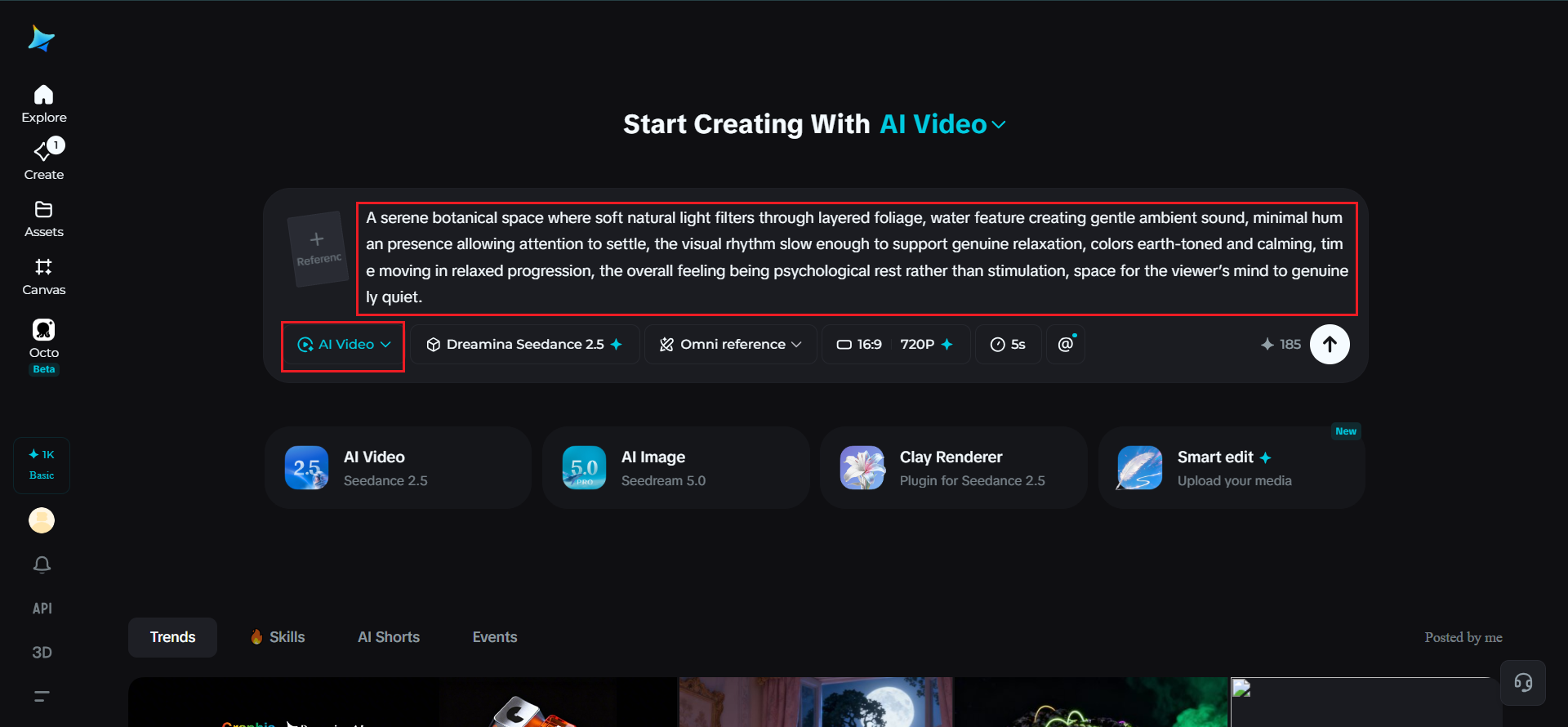
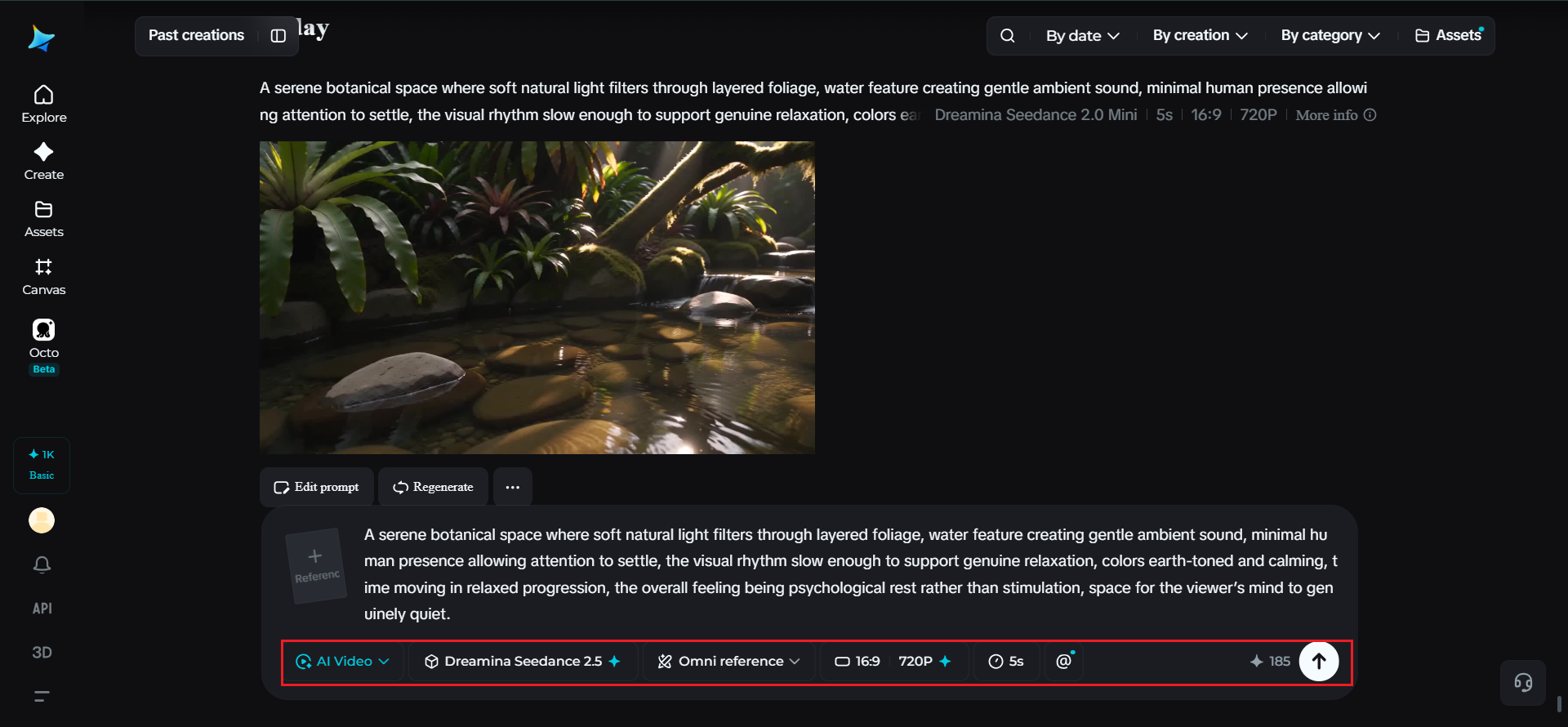
Visit Dreamina, sign in, and head to the “AI Video” section. Identify what actually relaxes you — the specific environment, the type of movement or stillness, the sensory qualities that ground you. Click “Add reference image” if you have photos of places or atmospheres that feel peaceful. Write your relaxation prompt describing the environment, pacing, sensory qualities, and psychological atmosphere.
A detailed prompt for 60 seconds might read: A serene botanical space where soft natural light filters through layered foliage, water feature creating gentle ambient sound, minimal human presence allowing attention to settle, the visual rhythm slow enough to support genuine relaxation, colors earth-toned and calming, time moving in relaxed progression, the overall feeling being psychological rest rather than stimulation, space for the viewer’s mind to genuinely quiet.
Step 2: Generate your calming experience with Seedance 2.5
Select the Seedance 2.5 model for generation. Choose a longer duration — 60-90 seconds — allowing genuine relaxation to establish rather than quick clips that only create momentary calm. Pick 16:9 for meditation or wellness contexts, 9:16 for mobile viewing. Click Dreamina’s generation icon and watch your described calm become visual reality.
Step 3: Refine and polish for maximum tranquility
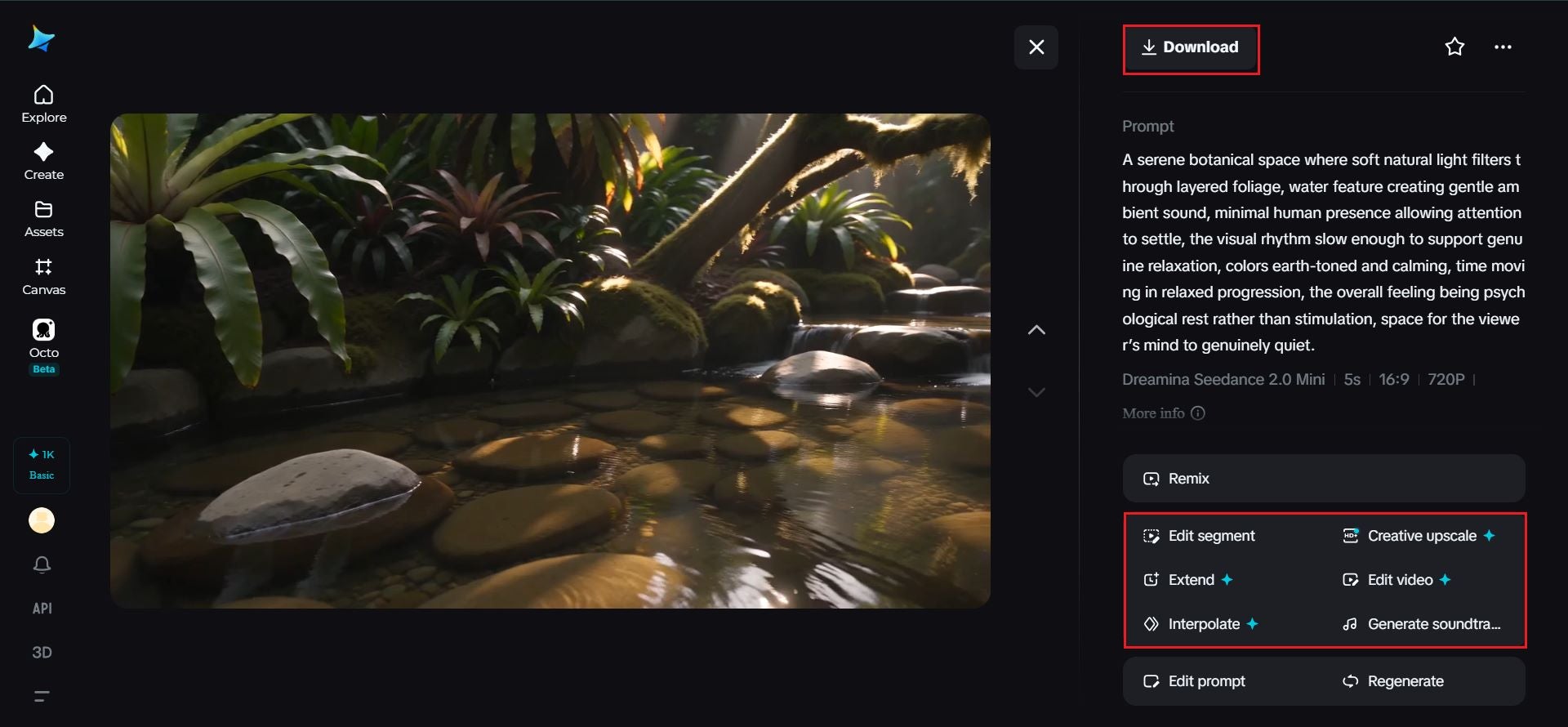
Use Dreamina’s AI editing tools to enhance relaxation elements. Upscale sharpens natural details supporting calm, while Generate Soundtrack adds appropriate ambient audio that reinforces the peaceful atmosphere — natural sounds, gentle environmental audio, silence. Review your relaxation experience, confirming pacing feels genuinely soothing and sensory elements support calm. Export and share.
Avoiding toxic positivity in relaxation
Relaxation content can fail by being aggressively cheerful or forcing positivity. Genuine calm often includes acceptance of difficulty, space for sadness or uncertainty, and acknowledgment that peace exists within complexity rather than requiring perfection. Relaxation content that denies human experience creates tension rather than resolution.
Text-to-video allows relaxation to be more psychologically sophisticated. A prompt can describe “peaceful atmosphere that acknowledges life’s complexity rather than denying it, finding calm within reality rather than requiring escape from it.” That honesty creates genuine relaxation rather than forced positivity.
When visual content becomes genuinely restful
Relaxation succeeds when viewers emerge feeling calmer than before watching. With Dreamina and its Seedance 2.5 model, text descriptions of peaceful moments become generated footage that actually permits nervous system downregulation, allowing text-to-video to create personalized relaxation experiences that offer genuine respite from an overwhelming world.