

The Traditional Approach to Brand Visuals Is Broken for Small Creators
Here is something the marketing industry rarely says directly: the conventional advice to “invest in professional branding” before launching your creative business is, for most independent creators and small sellers, functionally useless. Professional brand identity design — the kind that produces a coherent visual system across your logo, social media presence, product imagery, and promotional materials — costs thousands of dollars and takes weeks to deliver. By the time most small creators can afford it, they have already been operating for months with inconsistent, improvised visuals that have quietly undermined their credibility with every potential customer who encountered them.
The industry’s standard response to this problem — free design tools with limited templates — addresses the symptom without solving the underlying issue. Template-based design tools give you access to other people’s creative decisions. What independent creators, e-commerce sellers, and content entrepreneurs actually need is a way to generate original visual assets that reflect their specific brand aesthetic, quickly and without requiring design expertise. AI has made this possible in a way that was not realistic even two years ago.
Building Your Visual Identity With an AI Image Generator
The foundation of this approach is learning to articulate your brand aesthetic in prompt language. This is a more valuable skill than it might initially appear, because a well-defined aesthetic prompt functions as a reusable creative brief that you can apply across dozens of different content needs.
Start by identifying the three to five visual characteristics that define your brand’s intended look and feel. Consider color palette, mood and lighting style, subject matter, compositional approach, and any specific stylistic references — artistic movements, cultural aesthetics, or visual traditions — that align with your brand positioning.
Once you have these characteristics defined, translate them into prompt language and test them using Pollo AI’s AI image generator. The platform aggregates leading models including Pollo Image 2.0, GPT-4o, and Google Imagen in a single interface, allowing you to generate original, professional-quality images across a wide range of themes — from product-adjacent lifestyle imagery to character illustrations and abstract visual art. With more than two thousand commercially licensed LoRA models available, you can fine-tune the stylistic output to match specific aesthetic directions with a level of precision that generic prompts alone cannot achieve.
For a content creator building a brand around sustainable lifestyle content, for example, a core aesthetic prompt might emphasize “warm natural light, earthy color palette, minimal composition, organic textures, editorial photography style.” Running this prompt across different subject matters — food, interiors, fashion, nature — produces a visually cohesive set of images that establishes a consistent brand aesthetic without requiring a photoshoot for each piece of content.
A Step-by-Step Visual Brand Building System
Step 1 — Define Your Core Aesthetic in Prompt Language
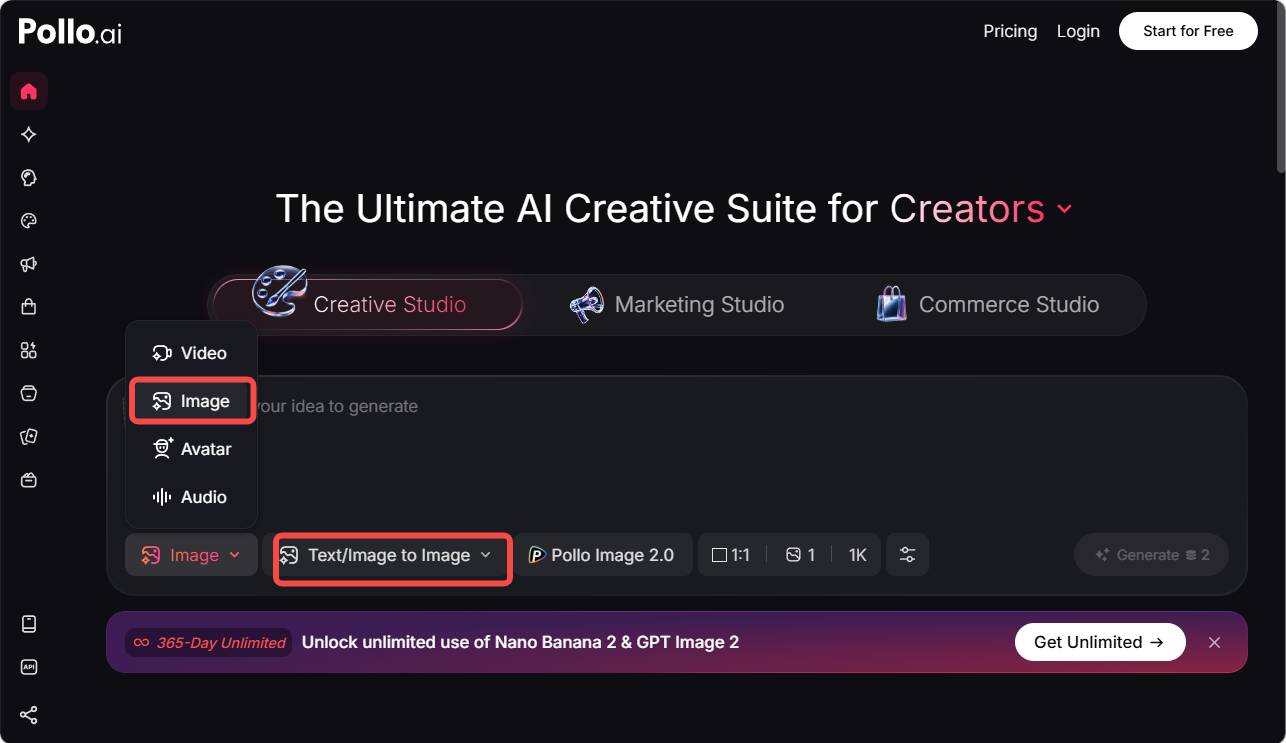
Write a master aesthetic prompt that captures the visual characteristics of your brand. Test it across five to ten different subject matters using an AI image generator and evaluate whether the outputs feel visually cohesive. Refine the prompt until the outputs consistently reflect your intended brand look.
Step 2 — Generate a Core Asset Library
Use your master aesthetic prompt to generate a library of twenty to thirty original images covering the content categories you publish most frequently — product contexts, lifestyle scenes, background textures, and any character or subject matter specific to your niche. This library becomes the visual raw material for your ongoing content production.
Step 3 — Apply Assets to Product and Promotional Formats
Take your generated imagery into Placeit AI and apply it to the product mockup and promotional template formats relevant to your business. Build a set of ten to fifteen reusable templates that encode your brand’s visual identity — these become the production system that allows you to generate new, on-brand content quickly for any occasion.
Step 4 — Establish a Consistent Publication Rhythm
With a core asset library and a set of reusable templates in place, maintaining visual consistency across your social media presence, product listings, and promotional materials becomes a matter of production rhythm rather than creative effort. Batch-generate new content assets weekly using your established aesthetic prompt, apply them to your template system, and publish on a consistent schedule.
Applying Your Brand Visuals to Product and Promotional Templates
Generating original brand imagery is the first half of the challenge. The second half is applying those visuals across the specific content formats your business requires — product listings, social media posts, promotional videos, and marketing materials — in a way that maintains visual quality and professional presentation.
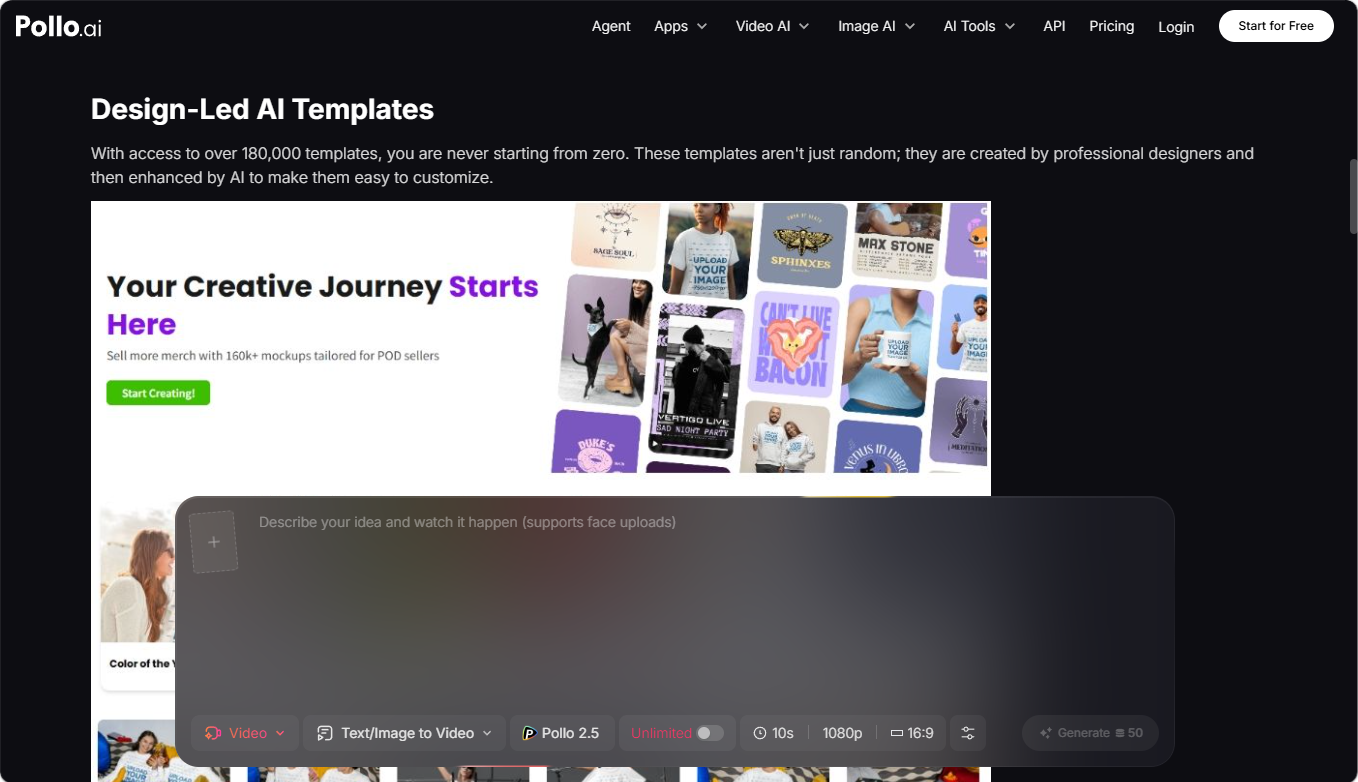
This is where Placeit AI becomes a central part of the workflow. With over 180,000 professionally designed, AI-optimized templates covering product mockups, social media formats, video templates, and marketing materials, Placeit AI allows you to apply your generated brand visuals to professional presentation formats without design software or photography equipment. The platform’s product model engine places your artwork on physical products — apparel, accessories, packaging, devices — with realistic perspective, lighting, and texture rendering that produces mockups indistinguishable from genuine product photography.
For e-commerce sellers and print-on-demand brands, this capability directly addresses one of the most persistent challenges in online retail: presenting products in a way that gives buyers a realistic sense of what they are purchasing. Placeit AI’s e-commerce visual optimizer generates lifestyle-context product images that help customers visualize the product in use — a proven driver of conversion rate improvement for online stores.
Advanced Techniques for Visual Brand Consistency
The most effective way to maintain visual coherence across AI-generated content over time is to treat your aesthetic prompt as a living document that you refine based on output quality. When a generation produces something that feels particularly on-brand, analyze what specific prompt elements contributed to that result and reinforce them in your master prompt.
For creators operating across multiple platforms with different format requirements, develop platform-specific variations of your core template set rather than adapting a single template to every context. Instagram carousel posts, TikTok thumbnails, Etsy listing images, and email headers each have distinct compositional requirements, and templates built specifically for each format produce significantly better results than one-size-fits-all adaptations.
Consider building seasonal or campaign-specific prompt variations on top of your core aesthetic. A holiday campaign might add “warm candlelight, deep jewel tones, festive botanical elements” to your standard aesthetic prompt, producing content that feels seasonally relevant while remaining visually consistent with your established brand look.
Conclusion: Visual Branding Is Now a Production Challenge, Not a Design Challenge
The fundamental shift that AI creative tools have introduced is this: building a coherent visual brand identity no longer requires design expertise or a significant budget. It requires a clearly articulated aesthetic vision and the discipline to apply it consistently across every piece of content you publish.
The workflow described in this guide — defining your core aesthetic in prompt language, generating an original asset library with an AI image generator, and applying those assets to professional presentation formats — gives independent creators, e-commerce sellers, and content entrepreneurs a practical system for building visual brand authority without a design team.
The tools are accessible, the learning curve is short, and the competitive advantage of a visually coherent brand presence is real and measurable. Define your aesthetic, generate your first asset library, build your template system, and start publishing with consistency. The results compound over time in ways that improvised, inconsistent visual content never can.