
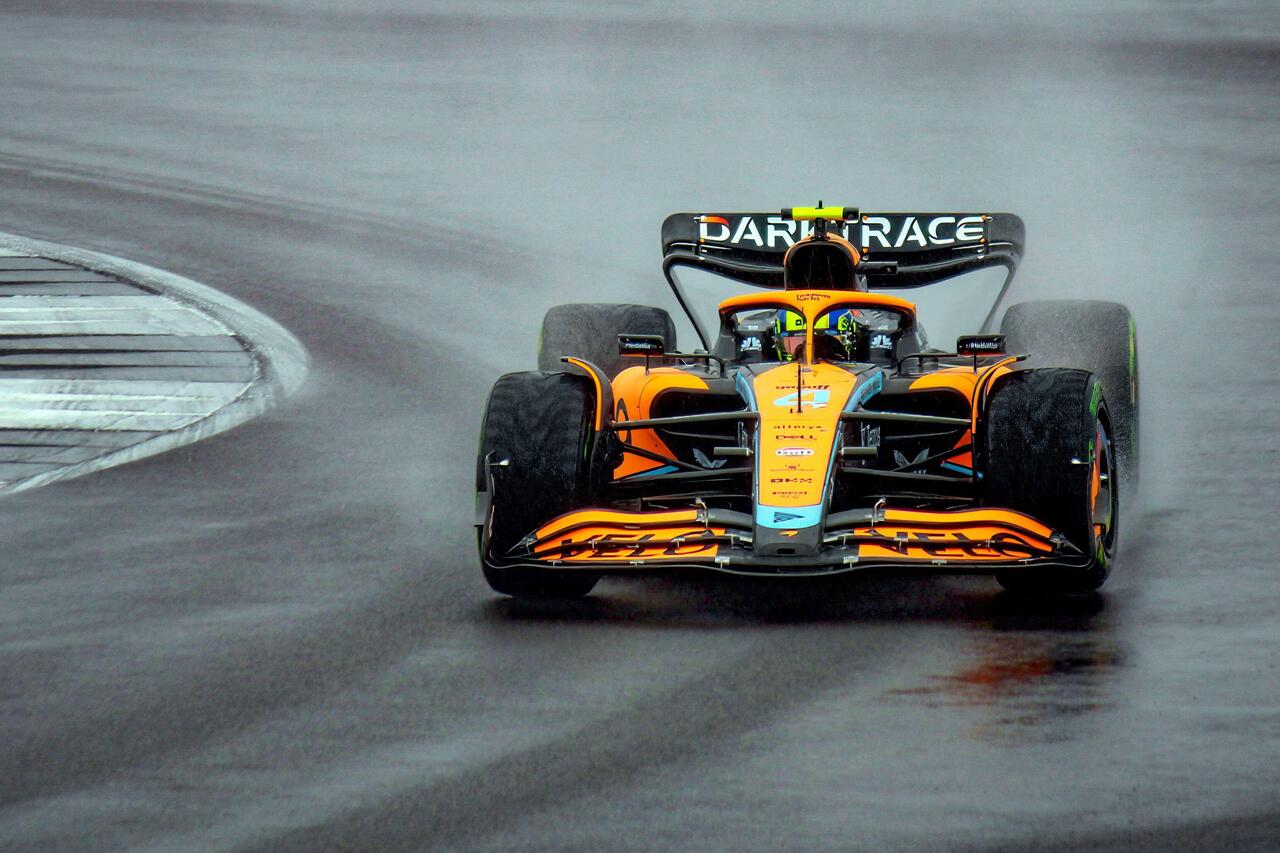
Formula 1 has never been more popular in the United States.
There are now three races across the country, with others in Canada and Mexico equally popular among American fans. This is something that many observers thought would never be possible, especially after F1 imploded at Indianapolis in 2005.
There’s no denying that F1 comes from a predominantly European background. Seven of the eleven teams have bases in the UK, and it remains one of the most popular sports in the country. Hundreds of thousands of people flock to Silverstone for the British Grand Prix each year, while others back the action on trusted betting sites in the UK.
With the possible exception of Monaco, though, it’s the paddocks at the American races that are the places to be seen. Hospitality areas at the races in Austin, Las Vegas, and Miami are filled with representatives from the world’s leading tech companies, making deals and rubbing shoulders with celebrities.
It all adds up to a remarkable turnaround for Formula 1 in North America.
F1 reinvents itself in the USA
Formula 1’s long history in the USA came crashing down in 2005 at the United States Grand Prix. Held on the Indianapolis road course, the cars still went through some of the circuit’s banked oval corners. This proved too much for the tires supplied by Michelin, highlighted by a huge crash by Ralf Schumacher during Friday practice.
No solution could be found, with in-fighting between the teams killing ideas like adding a temporary chicane to slow the cars down before the banked turns. In the end, only the six cars running Bridgestone tires started, and the fans revolted. The race carried on until 2007, but the sport was not forgiven.
There was a tentative return to the USA at the custom-built Circuit of the Americas (COTA) in Austin, Texas, in 2012. The race proved popular but was never a major American sporting highlight.
Things started to change in 2017 when American mass media company Liberty Media purchased F1’s commercial rights for $4.4 billion. The company transformed how F1 marketed itself, with a much bigger focus on social media and launching the award-winning documentary series Drive to Survive on Netflix.
This helped F1 connect to new fans across the USA and reignited the passion for the sport among those who lapsed after 2005. As proof, the United States Grand Prix held at COTA saw a huge bump in attendance. The race drew around 250,000 fans across all three days in the 2010s. By the 2020s, it was well over 420,000.
Liberty had transformed America’s relationship with F1. It then capitalized on this by adding races in some of the most desirable and ambitious locations around the country.
New races in the US’s most fashionable cities
Formula 1 usually has a strict rule of one race per country. This works well in Europe, as the nations are small. America, though, is a different beast. Liberty upped this to three races in the United States, adding Miami in 2022 and Las Vegas in 2023. This not only increased the number of North American races to five, helping fans feel more connected to F1, but also put the action in the heart of some of the country’s most fashionable places.
Miami is one of the country’s most vibrant and glamorous cities, renowned for having one of the best nightlife scenes. Adding the race here, held around Hard Rock Stadium, brought one of the world’s most popular sports to one of America’s best-known party locations.
This was followed up by one of the most ambitious races ever, with the Las Vegas Strip being turned into the main straight for a Grand Prix around Sin City. One of the most electric and extravagant locations in the US was now a Formula 1 racetrack.
Adding locations like this helped accelerate the influx of tech sponsorships into the sport. Leading companies such as Oracle, HP, Google, Microsoft, AWS, and Anthropic all have sponsorships and technical deals with the teams. Along with visibility to fans, the networking access in the paddock’s most exclusive hospitality areas is unmatched.
This is what makes F1’s paddock the place to be seen. There is still the glamour, with celebrities from every form of entertainment being invited as guests. Access to the paddock, too, is an immensely exclusive thing.
To be seen there puts people among tech’s biggest dealmakers, rubbing shoulders with the most influential figures alongside celebrities and other industry leaders. Liberty has completely rehabilitated and reinvented F1’s presence in the United States and has ensured it’s the place to be seen.