
There is something quietly fascinating about the journey a fine watch takes after leaving its first owner’s wrist.
Unlike most possessions, a well-made luxury timepiece rarely disappears; it circulates, changes hands, and accumulates a history that can, paradoxically, make it more desirable over time. Understanding that journey is not just interesting for collectors; it is increasingly relevant for anyone navigating today’s secondary watch market, whether as a seller, a buyer, or simply a curious enthusiast.
The Moment of Parting
Every luxury watch eventually reaches an inflection point: a change in lifestyle, a need for liquidity, an upgrade, or simply a drawer full of unworn pieces. At that moment, owners face a surprisingly wide range of options, each with its own trade-offs in speed, price, and effort.
Auction houses sit at one end of the spectrum: high-profile, potentially high-return, but slow (consignment cycles can run months) and unpredictable in outcome. Private sales and dealer consignments offer more control but demand patience and a network. At the faster end sits collateral lending , the model used by a luxury watches pawn shop, where the owner receives a loan against the piece and retains the right to reclaim it, rather than selling outright. It is a structurally different transaction from a sale, and for some owners, the distinction matters considerably.
The channel you choose at this first moment of parting shapes everything that follows for the piece.
Authentication: The Gatekeeper of the Secondary Market
Before a watch changes hands in any reputable context, it passes through authentication. This is where the secondary market separates itself from the grey and counterfeit trade, and it is considerably more involved than most people imagine.
A thorough authentication covers the movement (serial numbers, service history, originality of parts), the case and dial (correct patina, no unadvised polishing, original indices and hands), and paperwork (box, papers, and warranty cards, though their absence does not disqualify a genuine piece). For complicated watches, perpetual calendars, tourbillons, and minute repeaters, the process extends to verifying that complications function correctly and that no non-original parts have been substituted.
It is at this stage that watches with murky provenance or undisclosed service histories begin to lose value. Conversely, pieces with clean, documented histories , serviced by the manufacturer, with original parts , command meaningful premiums. This is one of the strongest arguments for retaining all documentation from the moment of purchase, a point that aligns closely with the financial case that experienced collectors have long made for treating fine watches as long-term assets rather than depreciating goods.
The Grading System Nobody Talks About
Once authenticated, a watch is assessed for condition, and this grading, while not standardized across the industry the way diamond grading is, follows broadly understood conventions among serious dealers and auction specialists.
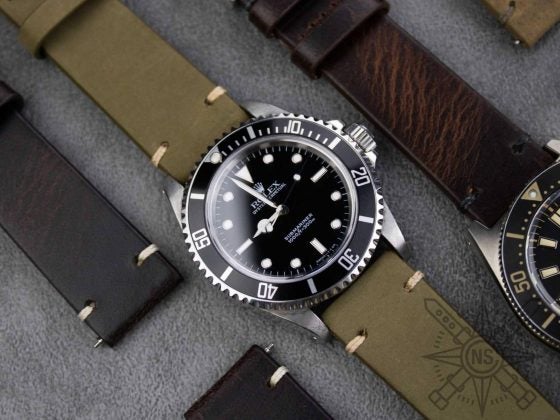
Unworn or “new old stock” pieces sit at the top, followed by “mint” examples with no visible wear, “excellent” condition with only faint signs of use, and descending grades from there. The key nuances collectors learn quickly: an original, unpolished case in “very good” condition often commands more than a polished case in “excellent” condition, because polishing erases the crisp edges and angles that are integral to the watch’s original design. Similarly, an original “tropical” dial , one that has developed warm brown tones through UV exposure, can transform a standard reference into a trophy piece worth multiples of its nominal value.
Understanding these nuances matters enormously, whether you are selling or buying. Condition grading is one of several factors worth familiarising yourself with before entering the market, alongside authentication and sourcing, topics explored further in this guide to buying men’s second-hand watches.
Where Watches End Up, and Why It Matters
After passing authentication and grading, a watch enters one of several secondary-market streams. The destination shapes its price and, often, its next chapter:
Specialist dealers and boutiques acquire watches outright to sell at retail margins, offering buyers a degree of trust and warranty, but at a price that reflects that service.
Auction platforms , both the traditional houses and newer online-native platforms , match sellers with collector audiences globally, creating competitive bidding that can push exceptional pieces well above estimate.
Private collector networks are the least visible channel but often the most efficient for high-value, well-documented references where both parties are sophisticated.
Pawn and collateral lending sit in its own category, functioning not necessarily as a final sale but as a financial tool: the owner retains the right to recover the piece, making it a way to unlock the asset value of a watch without permanently parting with it.
Each of these channels has its own price-setting dynamics, and savvy sellers often approach more than one simultaneously.
The Role of Provenance in Value Creation
Perhaps the most underappreciated aspect of a luxury watch’s secondary life is how provenance accumulates. A watch that belonged to a known collector, featured in a manufacturer’s historical archive, or carries an original receipt from an interesting period in a brand’s history is worth considerably more than an identical reference without that story.
This is part of why the secondary market for fine watches is so different from that for, say, jewelry or furniture. The mechanical watch is a complete, closed object; every component that leaves the manufacturer’s hands is documented and traceable. That traceability creates an evidential chain that directly affects value, in a way that is not always true for other luxury categories.
For buyers who are approaching a first luxury watch purchase and wondering whether to buy new or pre-owned, this provenance dynamic is worth understanding early: a well-documented pre-owned piece from the right period can be simultaneously more affordable and more meaningful than a current production equivalent.
The Circular Economy of Fine Watchmaking
What emerges from all of this is a picture of the luxury watch market as genuinely circular in a way that most luxury goods markets are not. A well-made mechanical watch purchased decades ago is, with proper care and servicing, as functional today as when it left the factory , and in many cases more valuable. That durability, combined with the traceability built into mechanical movements, creates a secondary market with real depth and liquidity.
The brands themselves have come to recognize and even embrace this. Several major manufacturers have invested significantly in certified pre-owned programs, positioning themselves as participants in rather than bystanders to the secondary market. It is a shift that validates what collectors and dealers have understood for decades: the afterlife of a luxury watch is not an afterthought; it is part of the object’s essential value proposition.
For those following the broader financial case for pre-owned luxury watches, this manufacturer participation is a meaningful signal: it suggests the secondary market has matured to a point where even the original makers see it as an asset rather than a threat.
A Final Word on Timing
The secondary watch market, like any asset market, has cycles. Certain references that commanded extraordinary premiums in 2021 have since corrected; others that were overlooked then have quietly appreciated. What remains consistent is that condition, documentation, and provenance hold their relative value regardless of broader market movements.
Whatever brings you into contact with the secondary market, curiosity, a collection to manage, a piece to acquire, or a need for short-term liquidity, the watches themselves tend to reward those who take the time to understand their full story. The second chapter of a luxury watch’s life is often its most interesting one.