

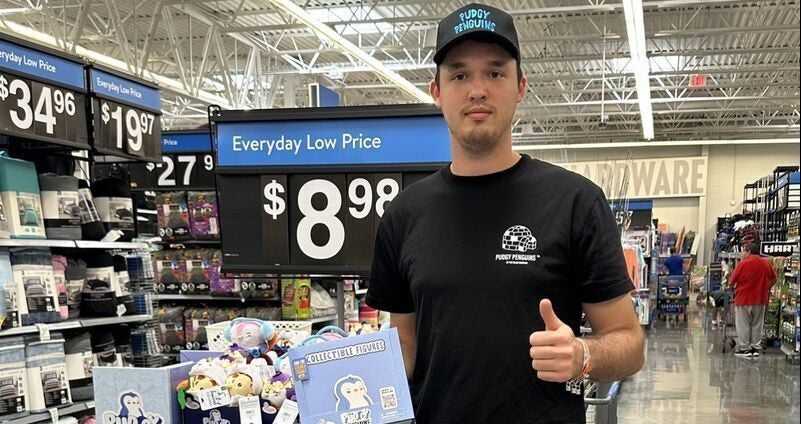
The acquisition that made his name reads like a single bold call. The fifteen years behind it explain why it was a calculated one.
There is a version of the Pudgy Penguins story that gets told constantly, and it leaves out the part that actually matters. A young entrepreneur buys an internet collectible for a few million dollars at a moment most people are running the other way, and it works. Good story. It also skips the only thing that predicts the outcome, which is everything he had already done before he made the offer.
Luca Schnetzler, who built his public reputation under the name Luca Netz, did not walk into that 2022 deal as a newcomer placing a speculative bet. He walked in having spent roughly a decade inside consumer businesses, learning how they grow and how they are turned around. The pattern recognition he brought to the table was not instinct. It was experience. He had seen versions of this problem before, and he knew what an underpriced brand looked like when most of the market could not.

The Ring Education
The formative experience came early and from a warehouse floor. Schnetzler joined Ring, the connected-doorbell company, as a teenager, when the team was small. He stayed as it scaled toward the size that would attract a roughly one-billion-dollar Amazon acquisition. As Refresh Miami reported, he was one of the company’s earliest employees and watched it grow from around twenty people to roughly two thousand during his tenure. That is not a line on a resume. It is a front-row seat to how a company finds escape velocity, burns capital getting there, and survives the gap in between.
The detail that matters is what he was paying attention to. By his own telling he was less focused on the shift in front of him than on the machinery of the company around it: how it raised money, how it spent it, how it kept moving as it scaled. Most teenagers in that role take home a paycheck. He took home a working model of how value gets created at scale, and he had it years before he had anything of his own to apply it to.
People who witness that kind of growth usually call it inspiring. He treated it as a manual, and he kept it.
A Resume That Reads as a Curriculum
What came next can look, at a glance, like a series of unrelated moves. A drop-ship jewelry business. A marketing role rebuilding a fashion brand. A chief marketing officer seat at a fast-growing toy company. Fortune later catalogued the run: jack of all trades at Ring, founder of a drop-ship business, CMO of Gel Blaster, then CEO of Pudgy Penguins. As a list it looks varied. As a curriculum it is remarkably coherent. Every role was the same question asked in a different category, which is how you find an audience and sell it something it genuinely wants.
The Gel Blaster seat is the one that matters most for what came later. He and an investing partner became the toy company’s largest investor before he took the marketing role, which means he had already run the precise problem the penguins would hand him: move a physical product to a mass audience that first heard about it online. The fashion turnaround taught the other half. A brand with cultural equity and weak execution is not finished. It is undervalued. He would need both lessons, and he had already earned them.
The jewelry business is the clearest signal. By his account to Fortune, selling jewelry online made him his first million by eighteen. The product was not the point. The mechanism was. He had learned, with real money on the line, how attention on the internet converts into revenue, and he learned it in a plain commercial category that rewarded skill rather than narrative. That is unusually clean training, because it leaves only the competence behind it.
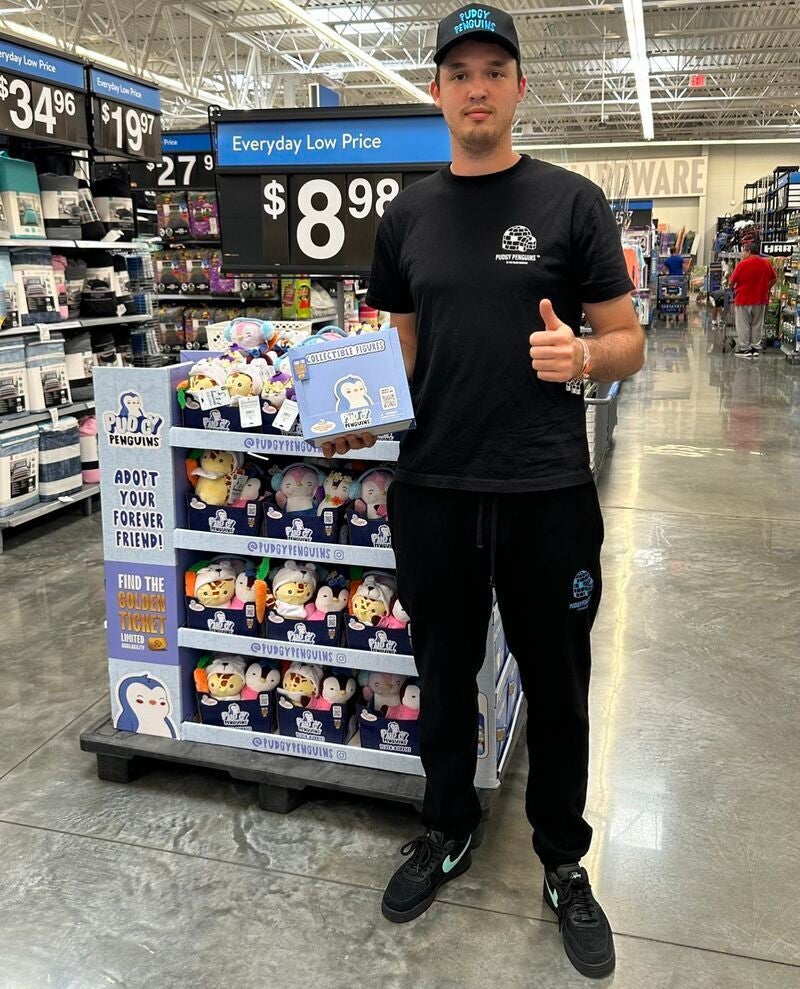
The Acquisition, Reconsidered
By early 2022 Pudgy Penguins had lost its footing, the original community’s trust gone after the founders failed to deliver what they had promised. Schnetzler bought it for roughly 2.5 million dollars, a number Blockworks later pegged at 750 ETH, just before the category cooled. The expected move was to clean it up and resell it. He chose the longer path instead, and he committed to it. He and his team reportedly went a year without salaries and reinvested their own capital to give the brand room to rebuild.
That choice makes sense the moment you account for the previous decade. An operator who has run e-commerce, fashion, and toys does not see a dead collectible. He sees an undervalued brand with a loyal audience and no one experienced steering it. That is a turnaround, and turnarounds were already a discipline he had practiced at lower stakes. He has also been candid that the math worked because the asset carried a royalty stream that could sustain the company while the consumer-product and content lines were built. That is the kind of structural read an experienced operator runs first.
There is a shorter way to say all of this. He had done the same kind of work before. Not at this size, and not with this asset, but the shape of the problem was familiar, and familiarity with the shape of a problem is most of the advantage anyone gets.
Builder First
He has been clear about the ambition under the work. “I want to build one of the biggest IP companies the world has ever seen,” he told one interviewer, and he describes his own skill set directly, as a product mover and a marketer. The framing is deliberate. It puts the emphasis where the record actually is. He is a consumer operator who identified something the consumer world had priced wrong, and the resume supports that reading on its own terms.
It also explains a habit that surprised people early on. He has said that in his earlier companies he rarely talked publicly about his wins, he just delivered them, and that learning to articulate a vision out loud was a deliberate adjustment to the CEO role rather than something instinctive. That is the profile of an operator who added communication as a skill, not a personality who added operations as an afterthought. The order is the point, and it is the part the popular telling tends to miss.
Fifteen years of record make the case more clearly than any single deal could. The constant skill across all of it has been the same one: take attention that already exists somewhere online and turn it into something that exists in a house, on a shelf, in a hand. The penguins were the largest time he did it. They were not the first, and that is exactly why it worked.
Which is what the popular version has backwards. The acquisition did not make the operator. The operator is the reason the acquisition made sense.