
A big bedroom sounds like an unqualified gift until a person actually tries to furnish one.
Push everything to the walls and the middle becomes a cold, echoing void. Scatter furniture loosely about and it floats, disconnected, with no relationship to anything else. A large room needs a plan in a way a small one does not, and the plan has to start with scale, because scale is what most people get wrong when they finally have space to spare.
Scale is everything
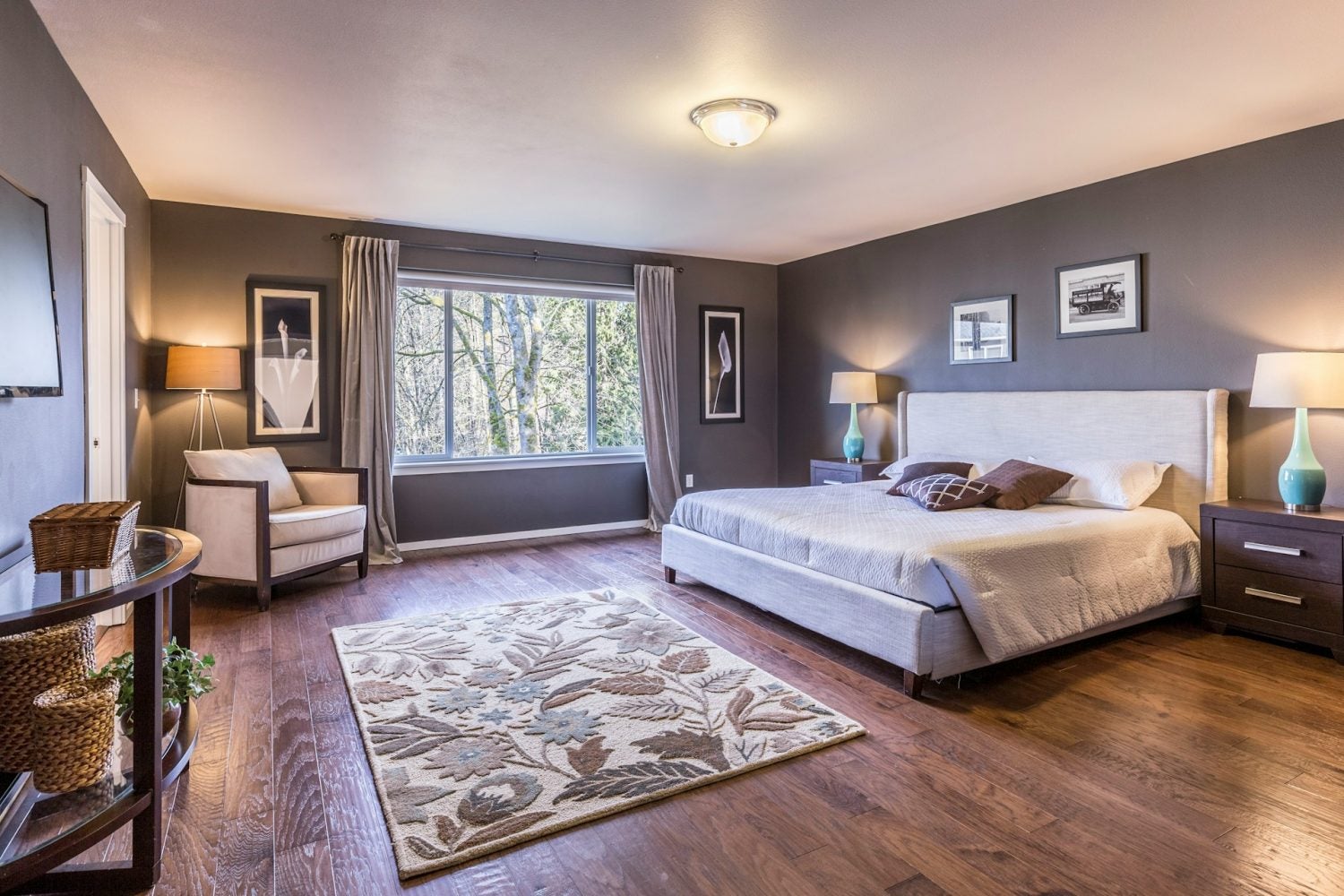
The most common mistake is keeping the same furniture that suited a smaller room and simply moving it into the larger one. A standard double bed marooned in a generous space looks lost, and no amount of clever styling around it can fix the underlying proportions. The fix is to scale up the anchor piece itself. Sizing up to a king size mattress for a roomy bedroom is the simplest way to give a large room a centre of gravity, because the bed grows to match the space and, suddenly, everything else in the room has something substantial to relate to.
Zone the space
Once the bed is right, the next task is to zone the rest of the room. A large bedroom can comfortably hold more than a place to sleep, and treating it as a single-purpose space wastes its potential. A reading chair in a corner, a bench at the foot of the bed, a dressing area along one wall, each of these gives a stretch of the room a clear job. Defining these small zones, grounding a seating spot with a rug or marking a reading nook with a lamp, breaks the floor into purposeful areas rather than one large blank expanse.
Rugs and height
Rugs are an underused ally in a big room. A rug large enough to sit partly under the bed and extend well past it visually ties the sleeping zone together and stops the bed from looking adrift on a sea of empty floor. A rug that is too small does precisely the opposite, shrinking the bed and drawing attention to the bareness around it. In a generous room, the instinct to buy a modest rug should be firmly resisted; bigger almost always reads better here.
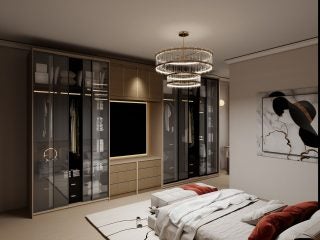
Height is the dimension people forget when filling a large room, and a generous bedroom usually has it in abundance. Tall headboards, a substantial wardrobe, and curtains hung high and wide all fill the vertical volume that low, scattered furniture leaves empty. A room furnished only with low pieces can feel oddly hollow above waist height, as though the upper half has been abandoned. Drawing the eye upward with taller elements makes the whole space feel intentional and complete.
Lighting and proportion
Lighting needs layering in a large bedroom more than in a small one. A single central fixture cannot light a big room evenly, leaving corners gloomy and the space feeling cavernous after dark. A combination of sources, bedside lamps, a floor lamp by the reading chair, perhaps a soft wash on the walls, fills the room with pools of warm light that make it feel inhabited and cosy rather than vast and chilly. Light defines the zones as effectively as furniture does.
Proportion should guide the smaller furnishings too, not only the bed. Tiny bedside tables flanking a large bed look like an afterthought, and a delicate little chair in a big corner reads as token. The supporting pieces in a generous room can afford to be generous themselves, substantial nightstands, a proper armchair, art at a scale that holds a large wall. Furnishings that match the room’s proportions look deliberate; ones that ignore them look stranded.
Balance and breathing room
Balance keeps a large room from feeling lopsided, since empty space is far more visible when there is so much of it. Distributing visual weight around the room, rather than crowding one end and leaving the other bare, makes the whole space feel considered. This does not mean filling every corner, which would defeat the purpose of having room to breathe, but rather placing things so the eye travels comfortably around the space without snagging on a sudden void.
Negative space is worth protecting deliberately, because a large bedroom’s luxury lies partly in the room it gives a person to move. The goal is never to cram the space full simply because it can be filled. A well-furnished large bedroom keeps generous, intentional gaps between its zones, so the eye and the body both have somewhere to rest. The emptiness becomes a feature rather than a problem once it is clearly purposeful rather than accidental.
Put the extra room to work
A large bedroom is also a chance to reclaim functions that smaller homes scatter elsewhere. A proper dressing area along one wall, a writing desk in a quiet corner, or a comfortable chair by a window can all live in a generous bedroom without crowding the sleeping zone, turning a single-use room into a genuine retreat. The trick is to give each of these functions its own defined patch, anchored by a rug or a light, so they read as deliberate areas rather than furniture that has wandered in. Used this way, the extra space stops being an awkward void and starts earning its keep every day.
Intentional, not bare
The overall aim is a large bedroom that feels intentional and warm rather than grand and bare. Getting the scale of the bed right comes first, because it sets the standard everything else is measured against. Zone the space, ground it with properly sized rugs, fill the height, and layer the light, and a room that once echoed begins to feel like somewhere a person genuinely wants to spend time, which is the whole point of having the space in the first place.