
The Nile River, which we have all heard and read about, has been the lifeblood of Egyptian civilization for millennia.
Cutting through the vast and golden Sahara Desert, the Nile appears like a shimmering blue ribbon. While you can, of course, visit the river, the joy and immersion lie in cruising. This is why most Egyptian travel guides are incomplete without a Nile cruise experience.
However, a Nile Cruise Vacation is not just drifting through the waters; it is an essential link and pathway to the portal of colossal statues, ancient temples, and celestial myths.
Why a Nile River Cruise?
Cruising offers an experience that cannot be obtained by travelling on a bus or train. It is a complete combination of a grand floating hotel and exclusive amenities, and the excitement of waking up to a new location every morning. What you get is:
- Seamless logistics: You don’t have to fret over packing and unpacking. Your private room for the duration of the trip moves with you.
- Optimal sightseeing: Nile river cruises follow a strict timeline for their itineraries. Whether it’s early morning or late afternoon, they are especially timed to avoid the midday sun and peak crowds, offering exclusivity.
- Cultural immersion: While you visit temples in designated locations, you can also watch life unfold on the riverbank.
Must-visit Temples along the route
Between Luxor and Aswan, a standard cruise covers most tourist sites across the 200-kilometer stretch. Here are the must-visit architectural marvels along the way:
The Karnak Temple Complex (Luxor)
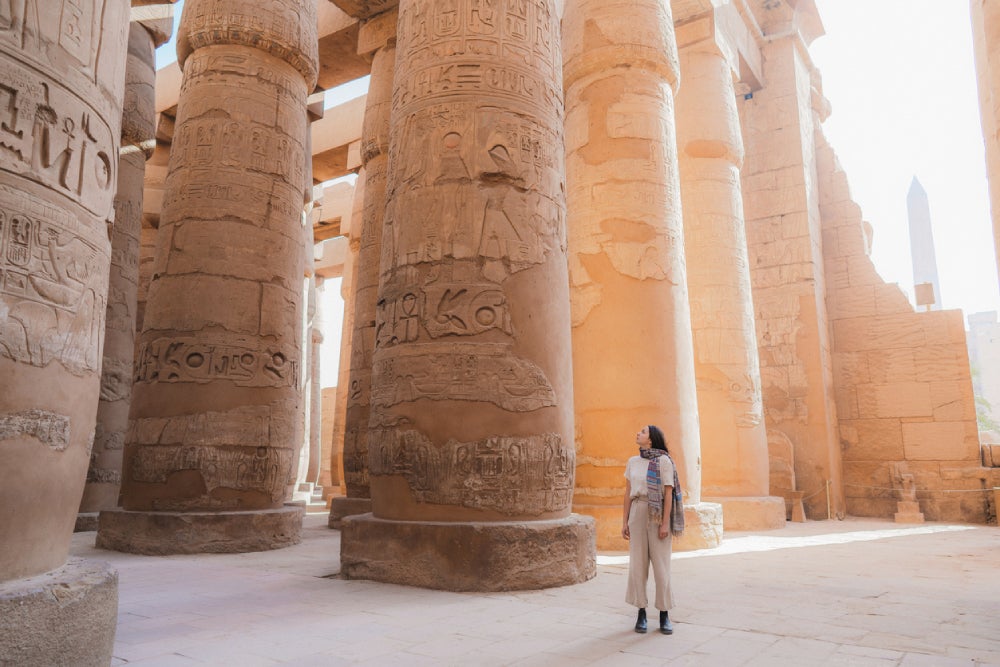
Known as the “Vatican” of its time, Karnak is the largest religious complex to be built. Its Great Hypostyle Hall features 134 giant sandstone columns, each carved with intricate hieroglyphs. While you can be amazed at the temple during the daytime, the later part of the evening is actually overtaken by the Sound and Light Show, where tales of Thebes are narrated under the stars.
Luxor Temple (Luxor)
Today, the Luxor Temple sits in the heart of the city. But once upon a time, it was connected to Karnak by a lengthy Avenue of Sphinxes. Its highlight is the towering Ramses II and other preserved statues.
The Temple of Horus (Edfu)
The Temple of Horus is one of the best-preserved temples across Egypt. Its main attraction is the massive pylon entrance and the stone statue of Horus. After embarking from your ship, you can reach the temple via a traditional horse-drawn carriage ride. You can also witness the chaotic lives through the streets of Edfu.
The Double Temple of Kom Ombo
Dedicated to the two Gods, Sobek and Horus the Elder, this temple is strangely symmetrical in design. It’s the Crocodile Museum that amazes the crowd with its collection of mummified crocodiles, usually seen on the nearby riverbanks. For the history fanatics, look closely at the rear walls for carvings of ancient medical tools. This is proof of the site as a place of healing long ago.
Philae Temple (Aswan)
This Temple is located on Agilkia Island and was dedicated to the goddess Isis. Since a cruise ship cannot directly access this route, you need to get on a boat for a short distance to reach here. The major spectacle here is the Greco-Roman architectural style.
Essential tips to remember while planning for a cruise
To make the most of your Nile cruise journey, here are a few practical tips to consider:
- The ideal time: The perfect time to visit Egypt and also enjoy cruising along the Nile River is between October and April. These months deliver the ideal weather to travel to Egypt, as you can easily take long walks through sun-drenched temples, much more comfortably.
- Cabin selection: When booking your cruise package, request a cabin on the upper decks, usually on the third or fourth floor. This offers the best views and the quietest sleep. Make sure to avoid cabins near the back of the ship, or you will have to bear the constant engine vibration as well.
- Packing suggestions: Egypt is usually hot and humid. Always carry comfortable walking shoes, a wide-brimmed hat, high-SPF sunscreen, and a bottle of water. Remember, the Egyptian sun is potent even during colder seasons.
- The Galabaya party: After a day of adventuring and visiting temples, you can enjoy a themed “Galabaya night” back at the ship. For an authentic experience, purchase traditional Egyptian robes at local bazaars in Luxor or Aswan beforehand.
Frequently Asked Questions (FAQs)
Q1. Should international travelers choose a Nile cruise in 2026?
Absolutely. Beyond the aesthetics and special cruising amenities, the Nile corridor from Luxor to Aswan is a highly protected and tourist-friendly region. You can enjoy your time worry-free thanks to the cruise’s abiding strict safety protocols for its esteemed guests.
Q2. What all can I get in a standard Nile cruise package?
A typical Nile cruise package includes your accommodation, daily meals (buffet-style), entertainment, and refreshments. Curated packages also include an Egyptologist guide and chosen transport to the site, and entrance fees are usually extra, though.
Q3. Is Abu Simbel on the list of Nile cruise itineraries?
Abu Simbel does not fall on the standard sailing route of the cruise between Luxor and Aswan. However, it is a demanding add-on excursion that can be reached by taking a 3-hour van ride or by catching an early flight.
Q4. Is Wi-Fi available on the ships?
Yes, most modern cruise ships now offer WiFi, but know that signal strength can vary greatly depending on where you stand. Nonetheless, if you want a more reliable internet connection, it is highly advisable to purchase a local SIM card with a data plan upon arrival at the airport itself.
Q5. Is there a dress code to visit temples?
While there is no defined religious dress code to follow when visiting temples, it is upon your understanding to dress modestly and be respectful in the place. It is ideally better to cover your shoulders and knees, both for cultural sensitivity and heat.