
Long before Taylor Swift wore the label’s pieces during the folklore era — a choice made with no contract attached and no publicist involved —Magnolia Pearl had a devoted collector community doing something the fashion industry rarely sees.
They were reselling the brand’s garments at prices well above retail, not because they were flipping product for profit, but because they genuinely could not let the pieces go without knowing they were going somewhere equally good. The informal secondary market for Magnolia Pearl was, for years, a community project before it became a platform.
That community found each other in online groups and consignment shops. They photographed pieces, negotiated prices among themselves, and collectively arrived at a shared understanding: a Magnolia Pearl jacket purchased two or three seasons ago was worth considerably more than what its original owner had paid. The brand, founded in Fredericksburg, Texas in 2002 by Robin Brown, was producing garments in small, non-repeating batches, each one finished by hand. Once something sold out, it stayed sold out. The collectors understood what that meant before the wider market did.
What Draws Famous People and Collectors to the Same Label
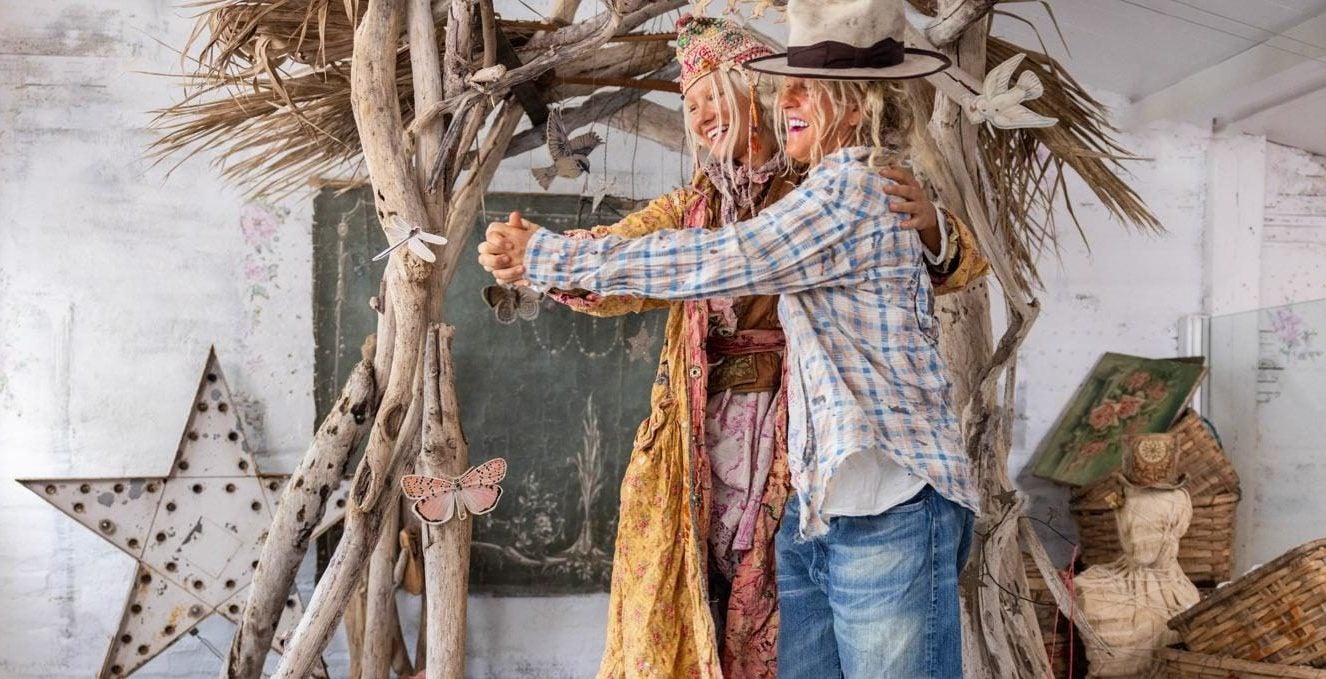
The celebrity attention and the collector culture are not separate phenomena. Both are responses to the same quality in the garments: the sense that each piece carries a history in its construction. Magnolia Pearl’s patchwork jackets, visibly mended coats, and hand-stitched lace blouses are made to look lived in because the process of making them mirrors that exactly. Whoopi Goldberg has worn the brand on television. Blake Lively has worn the label on screen. None of these were sponsored appearances. They were personal choices, and that distinction is legible to collectors who have built an entire secondary market on the premise that the brand’s pieces carry genuine rather than manufactured cultural weight.
When a famous person chooses a garment without being compensated to do so, they are confirming something the collector market already believed: that the pieces hold meaning beyond the transaction. The resale values — routinely double and triple original retail, with earlier production runs commanding the highest premiums — are the market’s way of saying the same thing.
When the Giving Structure Arrived
The Magnolia Pearl Peace Warrior Foundation was established in 2020, three years before the Trade platform launched. Robin Brown founded the nonprofit before she had a formal resale platform to fund it with, which says something about the sequence of intentions. The commercial vehicle was built to serve the giving commitment, not the other way around.
When Magnolia Pearl Trade launched in 2023, it gave the collector community’s long-standing resale activity a formal home. The platform authenticated transactions, brought rare production samples and long-sold-out pieces back into circulation through auction, and addressed the counterfeiting that had started to appear as the informal market grew. It also, by design, routed the platform’s fee structure directly to the Foundation. Every seller fee collected from third-party listings goes there. Twenty-five percent of the final sale value on the brand’s own exclusive auction pieces follows the same path. The cumulative giving since 2020 has exceeded $550,000, with GuideStar filings recording $268,293 in verified grants in 2024 alone.
Something Built Without a Blueprint
The secondary market for Magnolia Pearl garments was never engineered. It grew from the behaviour of collectors who valued the pieces enough to keep them circulating rather than let them disappear. That behaviour — reselling at fair prices, keeping the garments in good hands, treating each piece as something worth preserving — turned out to be the blueprint for a charitable funding mechanism, even though no one designing it called it that at the time.
The architecture Brown built around that pre-existing collector culture converted something informal into something lasting. What had been a community practice became, through the platform, a documented and audited giving record. The collectors who were trading pieces in private groups before any of this infrastructure existed were, without planning to, building the Foundation’s funding engine. The brand formalised what they had already made, pointed it somewhere specific, and made the giving visible. Which is, as it happens, exactly what Magnolia Pearl does with its stitching.
Byline: Tom Vickers
Photo Courtesy of: Marcus Blackwood